One drooping lily needs an empty drip tray and a root check before it needs another ingredient from the kitchen.
The source article Water a Weak Peace Lily With This Solution and Revive It brings yeast, sugar, and warm water being promoted as a tonic that revives any lily and triggers lush leaves and flowers into this peace-lily root-and-light rescue setup. It promises one sweet yeast drench repairs weak roots, cures every droop, and forces a lily to bloom.
Make Six Compact Moves: Rebuild the Root-to-Leaf Route in Six Moves
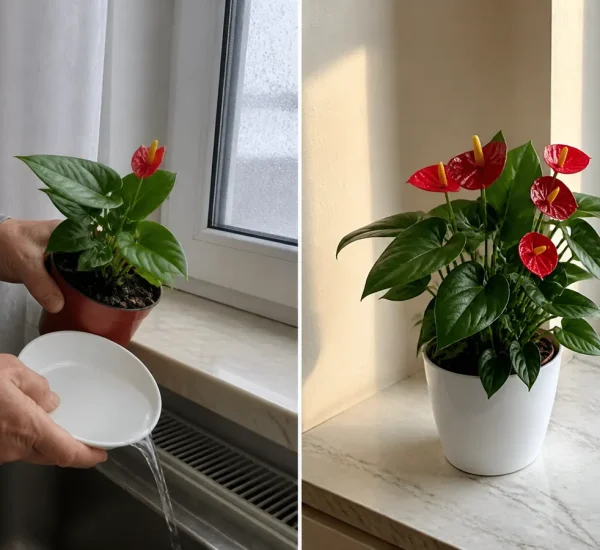
- Lift before watering. Compare flowerpot weight, topsoil, lower moisture, and drip tray water before deciding whether the droop is thirst.
- Inspect suspicious roots. When wet soil smells sour or stays heavy, remove the flowerpot carefully and keep firm pale roots while trimming confirmed rot with sterile tools.
- Restore a draining pot. Use a suitable organic houseplant mix and a pot with open holes, then empty all runoff from the drip tray.
Closing move 4: Set bright indirect light
Place the plant where it receives useful filtered light without hot direct sun or a cold draft.
Closing move 5: Reset water and salts
Water thoroughly at the true dry point, drain completely, and flush accumulated fertilizer salts with suitable water.
Closing move 6: Wait for living proof
Track upright new growth and a fresh center leaf before using weak labeled fertilizer or expecting another spathe.
Finish the Small Job Safely: Handle Irritating Sap and Damaged Roots Carefully
Compact cleanup: lily contains irritating calcium oxalate crystals. Keep leaves, sap, roots, and flowerpot water away from children and pets, wear gloves when cutting damaged tissue, wash hands, and seek appropriate advice after significant exposure. Sterilize tools between plants and stop for spreading rot, severe pests, or persistent decline.
Empty the drip tray, clean the root tools, wash away sap, and return the lily where children and pets cannot chew it.
Clear and Check One Setup: Let Pot Weight and Roots Settle the Water Question
One-area check: feel the top and lower mix, lift the flowerpot, look over drainage and drip tray water, smell the root zone, examine roots when rot is likely, and note leaf angle, yellowing, brown tips, pests, room temperature, drafts, direct sun, fertilizer salts, and last watering. Separate simple thirst from wet-root wilt.
Clear the lily area first. Keep only the essential lily tool or material needed for this check. Mark the current center leaf and photograph the plant from flowerpot level. A quick lift after true thirst and a later fresh center leaf tell two different but useful parts of the recovery story.
Give the Change Enough Time: Separate the Quick Lift From the Long Recovery
Small-space timing: a thirsty but otherwise healthy lily may lift within hours after correct watering and drainage. Root-rot recovery, new leaves, and a flower take weeks or months. Yellow leaves do not become green again. A plant that stays limp in wet soil needs root inspection rather than another drench.
During the lily wait, put supplies away. Keep the lily setup stable. Wait for the first honest lily checkpoint.
Leave Four Shortcuts Out: Four Peace-Lily Fixes That Deepen the Droop
- Pouring yeast and sugar into wet soil. Small-space risk: a sweet drench in already wet soil adds residue while damaged roots still lack oxygen.
- Treating every droop as thirst. Clutter risk: wilt in wet soil points toward root trouble, so another full watering may accelerate the loss.
- Leaving runoff in the saucer. Containment risk: standing runoff keeps the lowest roots submerged long after the surface appears normal.
- Feeding before damaged roots recover. Cleanup risk: fertilizer salts burden weak roots and cannot turn yellow damaged leaves green again.
Let the Simple Routine Work: Why Yeast Cannot Repair Oxygen-Starved Roots
Why the simple setup works: leaves stay upright only when roots can take up water and oxygen. Dry roots may respond quickly to a thorough drink, while waterlogged damaged roots need air, clean tissue, and time. Sugar and yeast add material to the flowerpot without correcting either failure.
The compact routine succeeds by matching water to actual flowerpot moisture, preserving firm roots, restoring drainage and bright indirect light, flushing excess salts, and using only dilute labeled nutrition during active growth instead of yeast and sugar. Anything unrelated to the lily can leave the work area.
Keep One Strong Promise: The Fastest Rescue Depends on Why the Leaves Fell
Small-space limit: peace lilies droop from both dryness and root trouble, so the flowerpot must be checked before watering. They prefer moist but not soggy organic mix, good drainage, warm conditions, and indirect light. Very weak labeled fertilizer may support active growth, but yeast and sugar are not complete plant food and can encourage odor, mold, or pests.
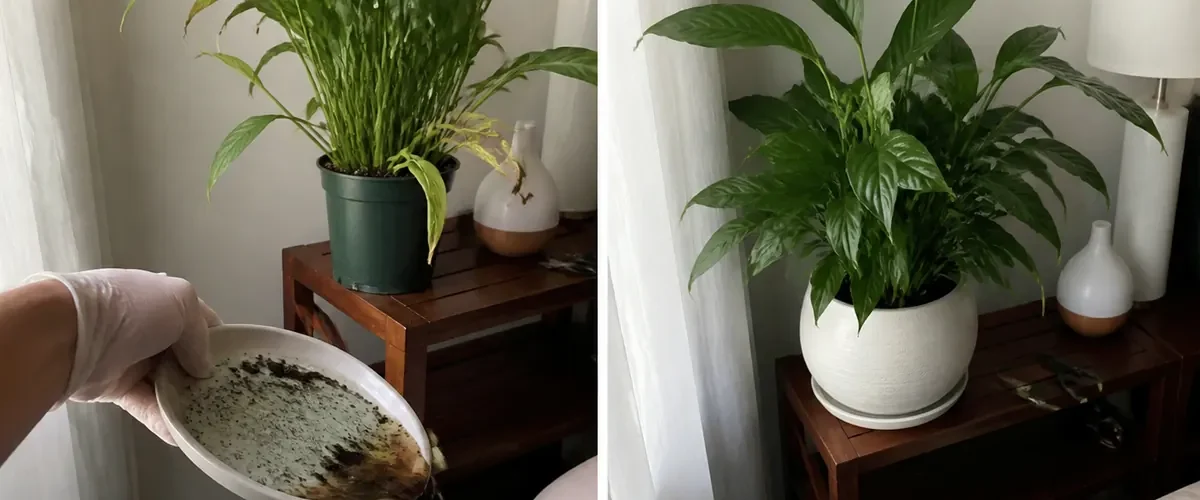
In one contained peace-lily root-and-light rescue setup, keep this satisfying finish: a badly drooping lily restored to upright glossy leaves and one fresh white spathe after root moisture and indirect light are corrected. Keep only lily steps that support that finish.
Let Give Your Tired Peace Lily This Drink for Stunning Recovery Become a Lasting Peace Lily Win
Begin with one clear lily move: lift before watering. Keep the lily setup simple and aim for a badly drooping lily restored to upright glossy leaves and one fresh white spathe after root moisture and indirect light are corrected. That finish leaves the lily area clean for normal use.