Some orchid problems begin quietly. The leaves lose their shine, the roots look tired, and the bark in the pot seems old even though the plant is still hanging on. It is tempting to reach for a strong fertilizer, but orchids often need a lighter touch.
That is where rice husks for orchids can sound surprisingly useful. Instead of throwing away every rice by-product, some gardeners use clean husks as a light top dressing or mix a small amount of rice bran with compost during repotting. The idea is simple: feed slowly, improve the pot environment, and avoid harsh chemicals.
But this trick needs care. Rice materials can help an orchid bounce back only when the roots are healthy enough to use them and the potting mix still drains freely. Too much can create mold, sour smells, and root stress.
Why Rice Husks Are Different From Rice Water
Rice water is a liquid made from rinsing or soaking rice. Rice husks are the dry outer shells from rice grains. They break down slowly and can add a light, airy texture when used in the right way.
Orchids need a chunky potting mix because their roots like oxygen. A dense soil that stays wet can suffocate them. Clean rice husks are not a magic fertilizer, but a thin layer can help protect the surface of the bark and slowly add organic matter as it ages.
Rice bran is different again. It is richer and finer than husks, which means it can spoil if used heavily. For orchids, rice bran should be used only in small amounts and preferably blended with finished compost during repotting, not dumped raw on top of the pot.
When This Trick Makes Sense
Use rice husks only on an orchid that is stable, rooted, and growing in a proper orchid mix. The bark should smell fresh, and the roots should be firm, not mushy.
This method is useful when the plant looks a little tired after blooming, when the bark dries too quickly on top, or when you want a gentle organic support instead of another dose of bottled fertilizer.
Do not use it on a plant with root rot, heavy mold, or a pot that already stays wet for too long. In those cases, the orchid needs fresh bark and better drainage first.
How to Use Rice Husks Safely
Choose Clean, Dry Husks
Use plain rice husks that are dry, clean, and free from seasoning, oil, salt, or pests. If the husks smell musty, do not put them near your orchid. Indoor pots need clean materials because there is less sun and airflow to correct mistakes.
Add Only a Thin Layer
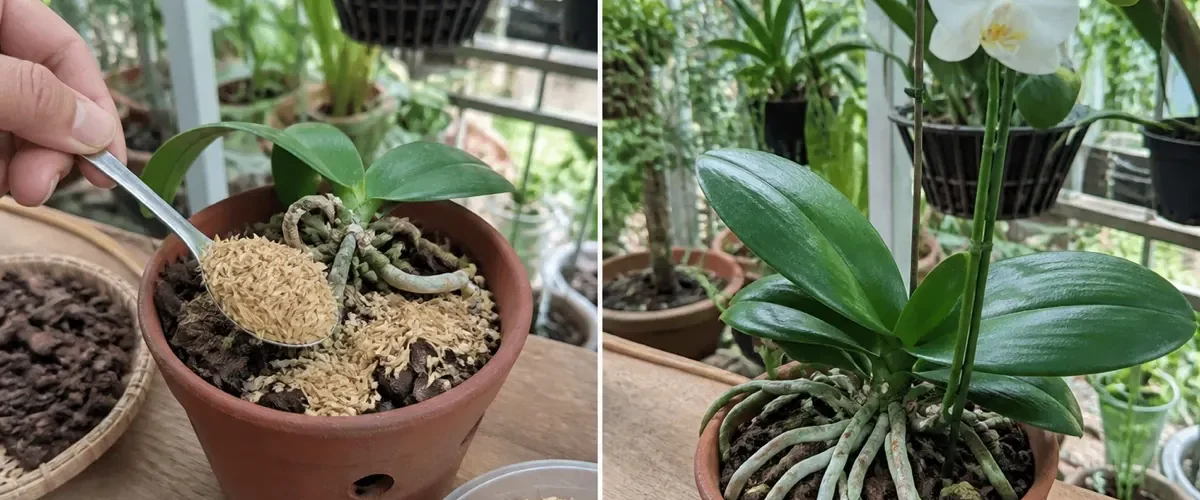
Spoon a light layer over the top of the orchid bark. You should still be able to see some bark beneath it. A thick blanket can trap too much moisture and reduce airflow around the surface roots.
Keep husks away from the crown, which is the center point where the leaves meet. Moisture trapped in the crown can lead to rot, especially in moth orchids.
Water Normally
After adding husks, water the orchid the same way you usually do. Let water run through the pot and drain completely. Never leave the pot sitting in water just because you added an organic top dressing.
Where Rice Bran Fits In
Rice bran can be useful, but it is stronger than it looks. Because it is fine and nutrient-rich, it can heat up, sour, or attract pests if used carelessly in a small orchid pot.
The safest way is to mix a very small amount of rice bran with finished compost, then use that blend only when refreshing a potting mix. For a small orchid, a pinch is enough. The main potting material should still be orchid bark, not compost or bran.
If you are a beginner, start with rice water or clean rice husks before trying rice bran. Orchids forgive light experiments better than heavy ones.
Signs the Orchid Likes It
A positive response is usually slow. Look for firm leaves, active green root tips, and bark that smells clean after watering. If the plant later sends up a flower spike, the rice husk layer may have supported the routine, but light and root health still did most of the work.
Remember that orchids do not bloom because of one secret ingredient. They bloom when they have stored enough energy and the growing conditions tell them it is time.
Warning Signs to Remove It
Remove the husks if you see fuzzy mold, tiny gnats, a sour smell, or bark that stays damp for many days. Also remove them if surface roots begin to soften or darken.
After removing the husks, flush the pot with plain water and let it dry normally. If the smell remains, repot in fresh orchid bark.
A Simple Bounce-Back Routine
Give the orchid bright indirect light. Water only when the bark is nearly dry. Add a thin layer of clean rice husks, then observe for a month. If the plant stays clean and firm, keep the layer in place. If anything smells off, remove it quickly.
For extra support, use a balanced orchid fertilizer at weak strength during active growth. Natural tricks work best when they support good care, not when they replace it completely.
Conclusion
The rice husk trick can help orchids bounce back, but it works because it is careful. A thin, clean layer may support moisture balance and slow organic feeding. A heavy layer can do the opposite.
Use less than you think, keep the crown dry, watch the roots, and let the orchid decide. When the roots stay firm and the leaves shine again, you know the plant is moving in the right direction.