Three drooping patio crops do not need a crowded tonic when one careful root check reveals the real limit.
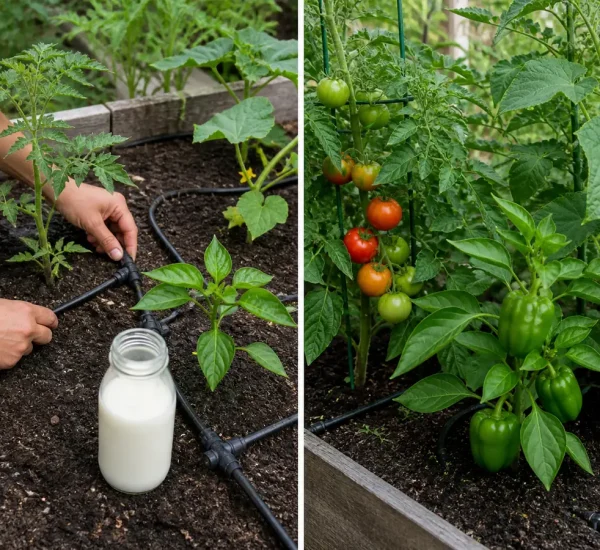
The article Pour One Liter Under Cucumbers, Tomatoes, and Peppers to Restart Fruiting suggests pouring a warm mixture of wood ash, baking soda, sugar, and optional magnesium, iodine, or potassium permanganate under every struggling summer vegetable. The appealing claim is that one liter of kitchen tonic can revive weak tomatoes, peppers, and cucumbers and make them harvest quickly.
Keep the Compact Promise Honest: Keep the Dramatic Comeback and Drop the Mystery Brew
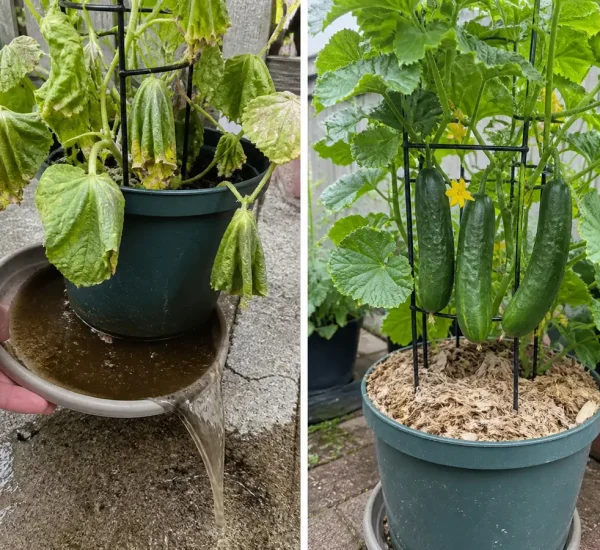
Wilting and stalled harvest can come from dry mix, waterlogged rootlets, heat, disease, pests, or poor pollination. One sweet alkaline brew cannot diagnose them. Sugar can feed unwanted microbes, baking soda adds sodium, and improvised iodine or potassium permanganate does not belong in edible-crop mix. Recovery starts when the actual limit is corrected.
For one contained job, aim for three once-stalled crops holding firmer tops, healthy growing tips, and a believable new wave of flowers or young harvest. Keep the summer vegetable row clear enough to see the fresh tip growth and new harvest set without another shortcut in the way.
Let Every Item Earn Its Place: Why Water, Air, Temperature, and Nutrition Must Agree
The compact fresh tip growth and new harvest set setup works for a clear reason. Rootlets need both moisture and oxygen. Dry mix interrupts water movement, while saturated mix blocks the air rootlets need. Heat can stop pollen from working even when foliage looks healthy. A mix report separates a real nutrient shortage from symptoms caused by damaged rootlets, so the correction reaches the cause instead of adding another stress.
The compact routine works by restoring irrigation, cooling rootlets, improving airflow, using test-guided nutrition, and removing unrecoverable crops. Every unused ingredient can leave the summer vegetable row while that cause stays easy to see.
Complete the Small-Space Sequence: Move Three Summer Crops Back Into Productive Growth
Opening move 1: Read the root zone before watering
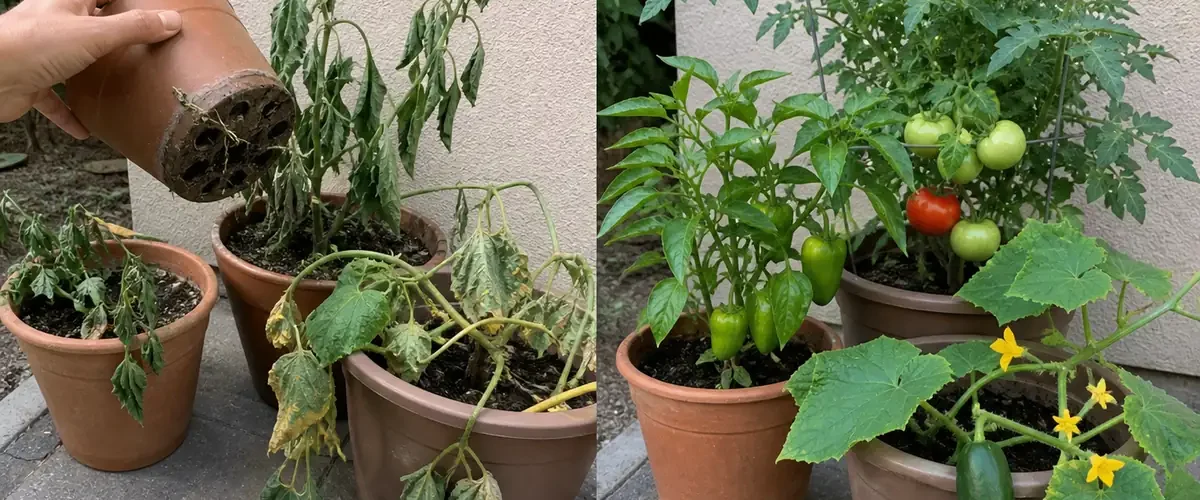
Compare moisture two inches down at several crops and confirm that drainage, not surface color, explains the wilt.
Opening move 2: Give dry roots one deep drink
Apply plain suitable water slowly across the root area, stopping if runoff or ponding shows that the mix cannot absorb more.
- Cool the bed without burying stems. Add a modest organic mulch layer while leaving clear space around tomato, pepper, and cucumber crowns.
- Separate heat from hunger. Check recent temperature and blossom drop, then use a mix test or local crop guidance before choosing fertilizer.
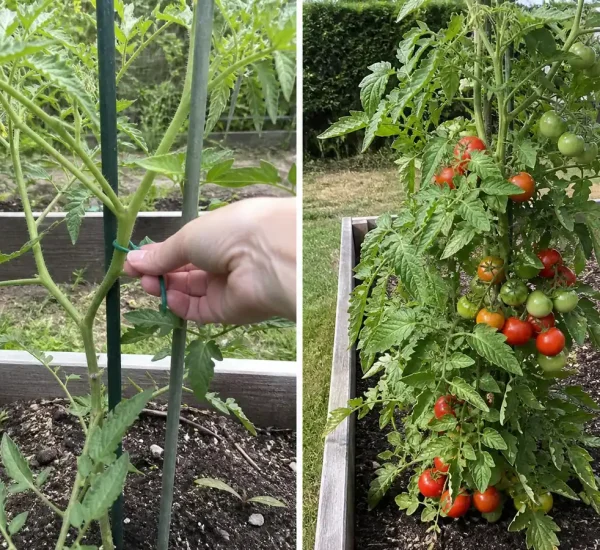
- Protect clean leaves and airflow. Water near mix level, support crowded vines, and clear away only clearly diseased tissue with clean tools.
- Track the next growth cycle. Keep irrigation steady and judge fresh tips, retained blossoms, and young harvest before making another correction.
Clear and Read One Work Area: Find the Limit Shared by Leaves, Roots, and Flowers
Small-area review: probe several root zones, then open one narrow inspection hole without tearing major rootlets. Look for dry pockets, sour saturated mix, stem lesions, leaf spots, insects, blossom drop, heat, and irrigation gaps. Test mix before blaming a nutrient.
Clear loose bottles and tools from the summer vegetable row. Keep only the struggling fruiting vegetable bed item. Set out a clean fresh tip growth and new harvest set measure when needed. Keep the struggling fruiting vegetable bed anchor visible.
Leave Four Problems Outside: Four One-Liter Errors That Can Stall the Bed Again
- Adding sugar to garden soil. It does not feed crops directly and can encourage microbial growth around stressed rootlets.
- Treating three crops as identical. Tomatoes, peppers, and cucumbers share some needs but respond differently to heat, moisture, and disease.
- Fertilizing a waterlogged bed. Damaged oxygen-starved rootlets cannot use a stronger dose safely.
- Calling blossom drop a deficiency. Hot days and warm nights can interrupt harvest set even in fertile mix.
Plan One Simple Return Check: Watch Fresh Tips Turn Into a New Fruit Set
Waiting plan: heat-stressed tops may look firmer by the next cool morning after correct soaking. New tip growth takes several days, and flowers or harvest set require suitable weather and pollination. Nutrient corrections show in new tissue over weeks. A dead crown, badly rotted root system, or vascular disease will not reverse after one liter of water.
Leave the summer vegetable row simple while waiting. Review its fresh tip growth and new harvest set once at the planned struggling fruiting vegetable bed time. Because that fresh tip growth and new harvest set finish is not instant, resist another struggling fruiting vegetable bed shortcut.
Compact proof: Mark one tomato, pepper, and cucumber. Photograph the same growing tip every three days, note morning mix moisture, and count new flowers and harvest that remain attached. Compare new tops rather than old scars. The reset succeeds when growth resumes without salt crust, worsening spots, or repeated midday collapse.
Close the Job Cleanly: Keep Improvised Chemicals Away From Edible Roots
Compact cleanup: keep iodine, potassium permanganate, cleaning chemicals, and unlabeled homemade brews away from edible crops. Follow fertilizer and pesticide labels, wash harvests, wear gloves around diseased crops, and keep children and pets away from products and tools. Ask a local extension or plant clinic to identify spreading wilt before composting affected tissue.
Rinse the soaking can, store every product, and leave the small vegetable row with plain water and one clear next check.
Let Give These Three Crops a Liter and Watch Fruit Return Become the Struggling Fruiting Vegetable Bed Win That Stays
Begin by checking moisture and rootlets before adding anything to the soaking can. Keep the summer vegetable row uncluttered and aim for three once-stalled crops holding firmer tops, healthy growing tips, and a believable new wave of flowers or young harvest. That practical fresh tip growth and new harvest set finish tops one struggling fruiting vegetable bed routine small enough to repeat.