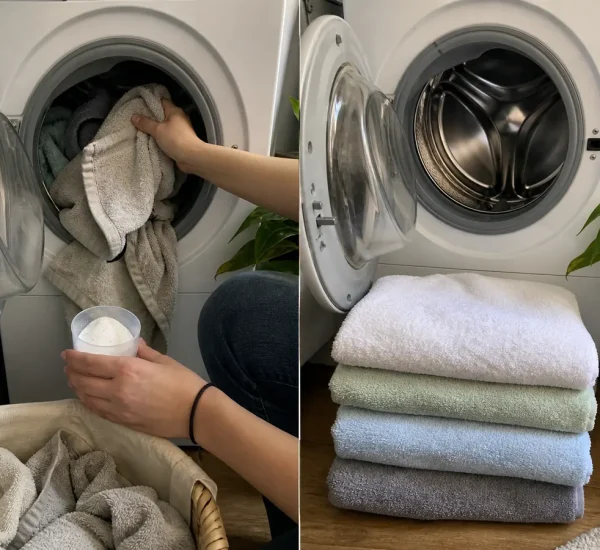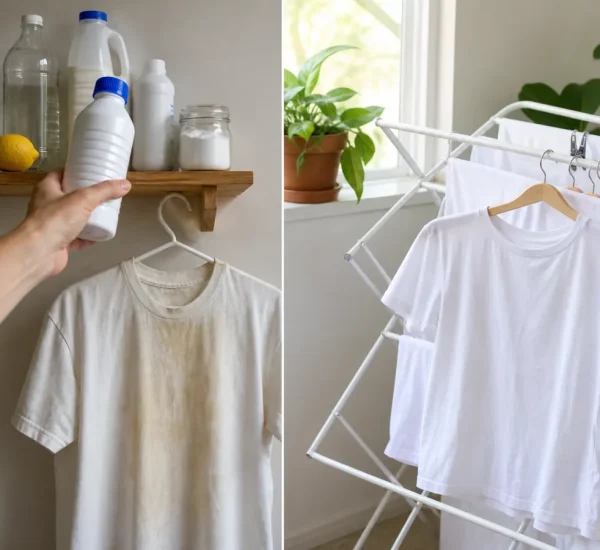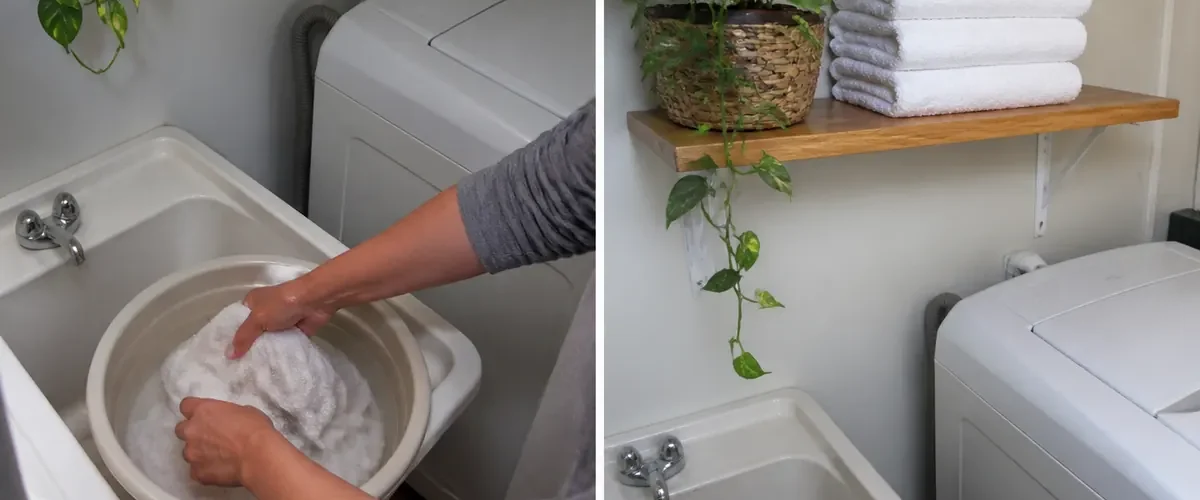
One basin can revive scratchy cotton towels while keeping vinegar completely outside the washing machine.
The article Use Vinegar for Softer Towels, Brighter Whites, and Fresher Laundry suggests pouring vinegar into ordinary wash cycles as a universal softener, whitener, deodorizer, and disinfectant. The appealing claim is that one cup of vinegar safely makes every towel softer, brighter, fresher, and germ-free inside any machine.
Keep the Compact Promise Honest: Promise Softer Towels Without Promising Disinfection
Diluted white vinegar can help loosen some hard-water or detergent residue during a separate cloth pretreat, but it is not a registered laundry disinfectant. Repeated acid exposure may harm elastic, finishes, machine seals, or hoses, and manufacturers differ. The safest strong promise is a label-approved soak followed by a thorough rinse and normal detergent wash.
For one contained job, aim for a set of dull scratchy cotton towels becoming noticeably softer, cleaner-looking, and fresher after one controlled pretreat and correct wash. Keep the laundry sink clear enough to see the hidden cloth test patch without another shortcut in the way.
Leave Four Problems Outside: Four Laundry Shortcuts That Create a Bigger Risk
- Mixing vinegar with bleach. Acid and chlorine bleach can release dangerous toxic gas.
- Pouring acid into every washer load. Repeated exposure can harm rubber parts, and some manufacturers advise against it.
- Treating delicate or elastic fabric. Acid may damage certain fibers, dyes, finishes, or stretch components.
- Calling vinegar a disinfectant. Odor reduction does not prove that disease-causing germs were killed.
Let Every Item Earn Its Place: Why Diluted Acid Can Release Hard-Water Buildup
The compact hidden cloth test patch setup works for a clear reason. Acetic acid can dissolve some alkaline mineral and detergent deposits that make cotton feel rough. Dilution and a separate basin limit exposure to cloth and keep acid away from vulnerable machine parts. Rinsing prevents the acid from disrupting detergent chemistry, while correct detergent and water temperature complete the cleaning.
The compact routine works by checking labels and the appliance manual, separating suitable cotton towels, testing a hidden area, using diluted distilled white vinegar only in a separate plastic basin, rinsing it away completely, washing with the correct detergent dose, and drying without overheating. Every unused ingredient can leave the laundry sink while that cause stays easy to see.
Clear and Read One Work Area: Check Fabric, Residue, Bleach, and Appliance Rules
Small-area review: read the textile care tag and appliance manual. Separate plain colorfast cotton towels from elastic, delicate, acetate, wool, silk, and special-finish items. Check for chlorine bleach in the room, identify mineral or detergent residue, look over stains, smell the dry towel, and test diluted vinegar on a hidden corner.
Clear loose bottles and tools from the laundry sink. Keep only the mineral-stiff towel set item. Set out a clean hidden cloth test patch measure when needed. Keep the mineral-stiff towel set anchor visible.
Plan One Simple Return Check: Compare Dry Towels After One Complete Wash
Waiting plan: a hidden patch should dry fully before evaluation. A thirty-minute diluted soak can loosen residue, followed by a complete rinse and the hottest normal wash allowed by the care label. Judge softness only after drying without excess heat. Deep stains, damaged fibers, mildew, or heavy buildup may need a different product or professional advice.
Leave the laundry sink simple while waiting. Review its hidden cloth test patch once at the planned mineral-stiff towel set time. Because that hidden cloth test patch finish is not instant, resist another mineral-stiff towel set shortcut.
Compact proof: Choose two comparable towels and label them only in the laundry note, not on the cloth. Photograph both dry under the same light, compare weight and stiffness by the same fold test, and note odor after drying. Stop if color changes, elastic weakens, or the hidden patch feels damaged.
Complete the Small-Space Sequence: Run the Vinegar Pretreat Outside the Washer
Opening move 1: Read two sets of instructions
Check the towel care tag and machine manual before vinegar or any other treatment reaches the laundry area.
Opening move 2: Remove bleach from the job
Do not proceed while chlorine bleach or a product containing it is in the basin, dispenser, or planned load.
- Test one hidden corner. Apply the planned diluted solution to a concealed area, rinse, dry, and look over for color or texture change.
- Pretreat in a plastic basin. For suitable cotton, use one cup of white vinegar in one gallon of warm water and soak up to thirty minutes.
- Rinse before the washer. Drain the basin, rinse the towels thoroughly with plain water, and never pour the leftover solution into the machine.
- Wash and dry by the labels. Use the correct detergent amount and permitted cycle, then avoid overdrying so cotton loops remain flexible.
Close the Job Cleanly: Prevent Toxic Gas, Fabric Damage, and Slippery Spills
Compact cleanup: never mix vinegar with chlorine bleach or any chlorine-containing cleaner. Ventilate the room, wear gloves if skin is sensitive, and keep products in original labeled containers away from children and pets. If cleaners are accidentally mixed or fumes cause symptoms, leave the area and contact local emergency or poison-control services.
Rinse the basin, close the bottle, dry the floor, and keep the machine free of leftover vinegar solution.
Let Never Wash Whites Without Knowing This Powerful Vinegar Laundry Trick Become the Mineral-Stiff Towel Set Win That Stays
Begin by reading both the towel care label and machine manual. Keep the laundry sink uncluttered and aim for a set of dull scratchy cotton towels becoming noticeably softer, cleaner-looking, and fresher after one controlled pretreat and correct wash. That practical hidden cloth test patch finish leaves one mineral-stiff towel set routine small enough to repeat.