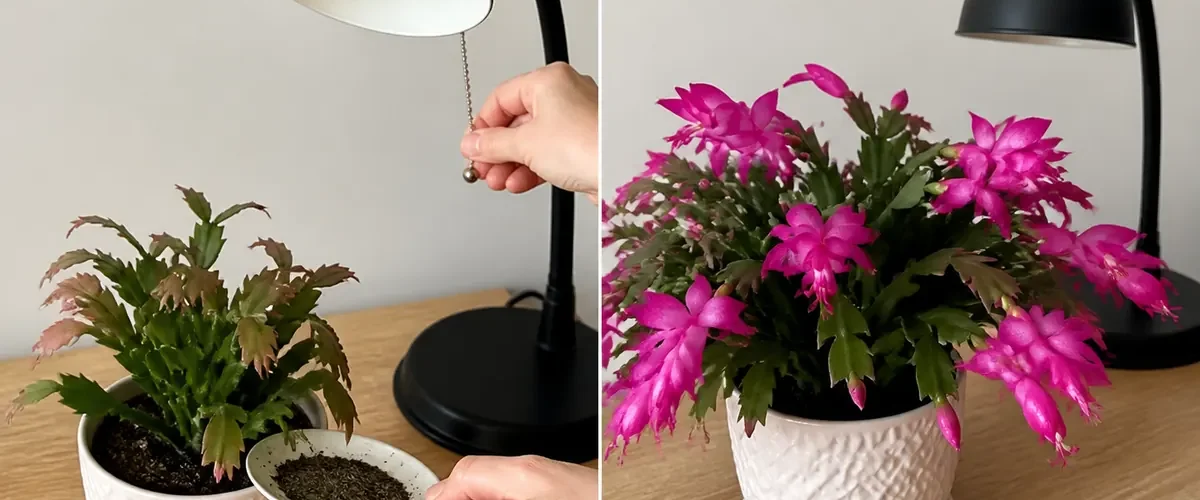
Leave the work area open. One lamp switched off each evening can do more for a small holiday cactus than a shelf of bloom boosters.
Put every tool away afterward. The article Give Christmas Cactus This Flower Booster for an Incredible Bloom suggests watering holiday cactus with brewed tea, mixing dry used tea leaves into soil, misting often, and spraying monthly hydrogen peroxide. The appealing claim is that tea nutrients and oxygenated water quickly grow new segments and guarantee a huge autumn bloom display.
Keep the Compact Promise Honest: Keep the Huge Bloom and Replace Tea With a Seasonal Clock
Keep one item in view. Tea is not a complete predictable fertilizer, dry leaves can mold or attract gnats, and hydrogen peroxide is not a routine bloom cure. A mature healthy Schlumbergera sets buds after repeated long uninterrupted nights and suitable cool temperatures. Bright filtered daytime light, draining mix, careful moisture, and stability then help those buds remain attached and open.
Clear the nearby shelf. For one contained job, aim for a once-bare holiday cactus carrying a rich but believable ring of firm pink buds and open blooms after a stable six-week seasonal routine. Keep the cool evening plant corner clear enough to see the first firm bud at a segment tip without another shortcut in the way.
Complete the Small-Space Sequence: Run Six Stable Weeks From Darkness to Firm Buds
- Confirm health before induction
- Begin with firm mature segments, working drainage, and no active root rot or pest problem.
- Choose a truly dark location
- Protect the plant from room lamps and bright outdoor light during its repeated night interval.
- Keep daytime light useful
- Return or maintain bright filtered exposure without hot direct sun that scorches segments.
- Match water to cooler growth
- Check the mix and container weight, water thoroughly when needed, and drain every saucer.
- Hold the clock for six weeks
- Keep the long-night and cool-temperature pattern consistent until firm tip buds are visible.
- Protect buds from sudden change
- Avoid rotating, moving, overheating, flooding, or drying the plant once its display is forming.
Leave Four Problems Outside: Four Popular Boosters That Disrupt the Bud Cycle
Mistake 1: Burying wet tea leaves
Place only the essentials nearby. Food residue can mold, attract gnats, and change moisture around fine rootlets.
Mistake 2: Misting as the bloom signal
Return at the planned time. Humidity does not replace uninterrupted darkness and suitable temperature.
Mistake 3: Spraying routine peroxide
Use one uncluttered corner. An oxidizer can injure living tissue and does not program fresh buds.
Mistake 4: Moving a budded plant
Finish the small task cleanly. Abrupt changes in direction, heat, water, or drafts can trigger bud drop.
Plan One Simple Return Check: Follow Six Segment Tips Until the Bloom Ring Opens
Keep the setup small. Waiting plan: healthy plants often need several weeks of dark evenings and cooler conditions before buds become visible. Once buds form, sudden moves, drought, heat, or saturation can cause drop. New summer segments mature before fall induction, so tea added at the last minute cannot explain a bud already programmed by the seasonal clock.
Stay with this short routine. Compact proof: Mark six segment tips and record dark hours, minimum temperature, container moisture, moves, new buds, and dropped buds. Photograph the same crown weekly before the night interval ends. The routine succeeds when firm buds appear after consistent nights and continue enlarging without sticky soil, sour odor, or chemical spotting.
Clear and Read One Work Area: Read Segment Maturity, Roots, Night Light, and Temperature
Use one simple check. Small-area review: identify the plant first. Note its maturity and last bloom, then inspect segment firmness, rootlets, mix, drainage, light, night interruption, temperature, buds, pests, and recent moves. Check whether a lamp, television, streetlight, or warm vent reaches the plant during its intended night interval.
Let Every Item Earn Its Place: Why Long Nights Program Flowers Before Tea Can Claim Them
Make the final pass once. The compact first firm bud at a segment tip setup works for a clear reason. Schlumbergera responds to day length and temperature. Dark evenings shift the plant toward bloom initiation when it has mature segments and enough stored energy. Tea residue does not replace that signal. Stable rootlets and daytime light support the energy needed to carry developing buds through opening.
Leave the work area open. The compact routine works by keeping the cactus healthy through summer, providing bright filtered days, allowing the mix to approach dryness without prolonged wilt, giving roughly six weeks of long uninterrupted nights and suitable cool conditions. Then holding water, light direction, and location steady while buds develop. Every unused ingredient can leave the cool evening plant corner while that cause stays easy to see.
Close the Job Cleanly: Control Peroxide, Electrical Water, Covers, Pets, and Heat
Put every tool away afterward. Compact cleanup: keep tea residue, fertilizer, and hydrogen peroxide out of the container unless a reliable label supports their use. Store peroxide away from children, pets, skin, eyes, and other cleaners. Never mix it with household products. Prevent water around electrical lamps, use breathable darkness rather than airtight covers, and inspect for overheating.
Keep one item in view. Switch off the lamp, empty the saucer, clear the tea, and leave the small cactus quietly in its cool corner.
Let Switch Off One Evening Lamp and Wake a Ring of Cactus Buds Become the Healthy Bloomless Christmas Cactus Win That Stays
Clear the nearby shelf. Begin by moving the plant away from evening lamps and leaving used tea leaves out of the container. Keep the cool evening plant corner uncluttered and aim for a once-bare holiday cactus carrying a rich but believable ring of firm pink buds and open blooms after a stable six-week seasonal routine. That practical first firm bud at a segment tip finish leaves one healthy bloomless holiday cactus routine small enough to repeat.