One papaya scrap can serve a small patio pot best by taking the longer route through finished compost.
The article Pour This Cup and Flowers Stay Lush for Three Years suggests blending fruit scrap with water and pouring it into flower pots as a guaranteed three-year plant food. The appealing claim is that one cup of fruit-peel liquid keeps unrelated flowers lush and healthy for years.
Keep the Compact Promise Honest: Keep the Lush Promise and Drop the Three-Year Guarantee
Fruit scrap contains plant nutrients, but fresh blended peel has an unknown concentration, decomposes rapidly, and is not complete plant food. It can attract flies or reduce air in a wet pot. Managed compost turns food scraps into a more stable amendment, while light, roots, water, pruning, and measured feeding still control the bloom cycle.
For one contained job, aim for a tired group of flower pots returning to dense clean foliage and a rich believable flush after stable compost and species-matched care. Keep the patio potting area clear enough to see the finished compost texture without another shortcut in the way.
Complete the Small-Space Sequence: Turn Papaya Peel Into a Stable Root Amendment
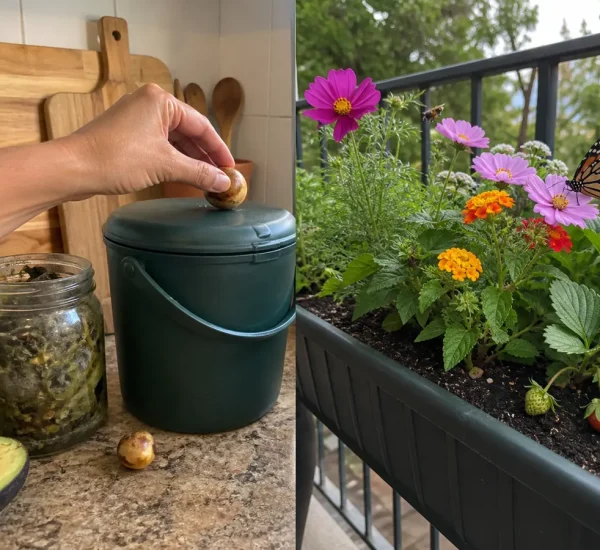
Opening move 1: Cut peel into the compost stream
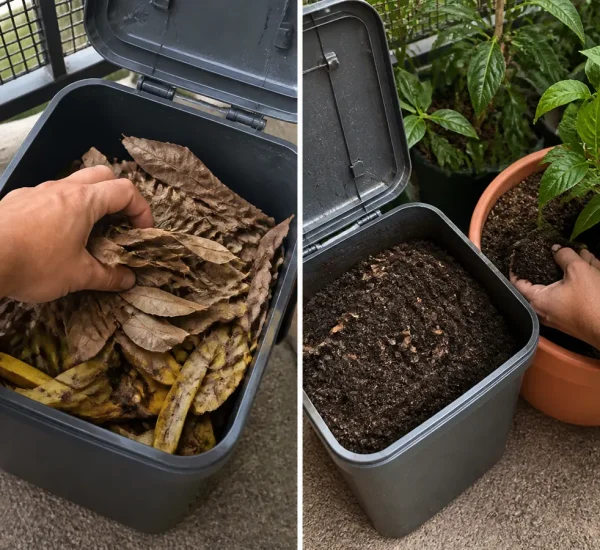
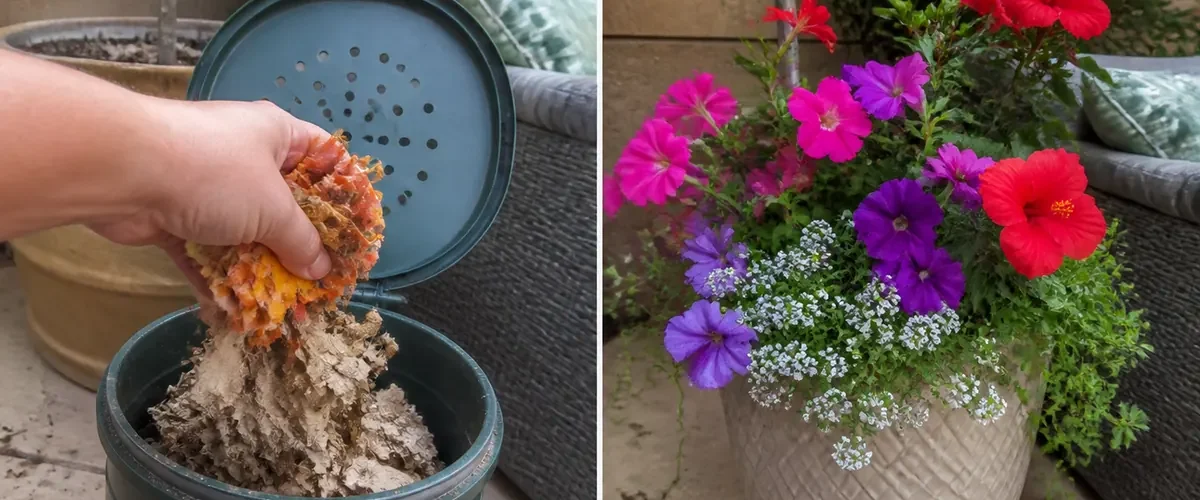
Combine small papaya pieces with several handfuls of dry leaves, shredded plain cardboard, or another carbon-rich material.
Opening move 2: Keep the pile damp and airy
Aim for moisture like a wrung sponge, turn when compacted, and add dry material if it smells sour.
- Wait for a stable finish. Use the compost only when it is cool, dark, crumbly, earthy-smelling, and no fresh peel remains.
- Refresh the pot correctly. Replace collapsed mix or blend a modest portion of finished compost into a suitable draining medium.
- Correct the strongest bloom limit. Improve light gradually, empty runoff, prune at the right time, and address pests before adding more nutrition.
- Feed for the actual species. Use a complete labeled product during active growth when container plants need nutrients beyond the compost.
Leave Four Problems Outside: Four Peel Uses That Invite Odor Instead of Flowers
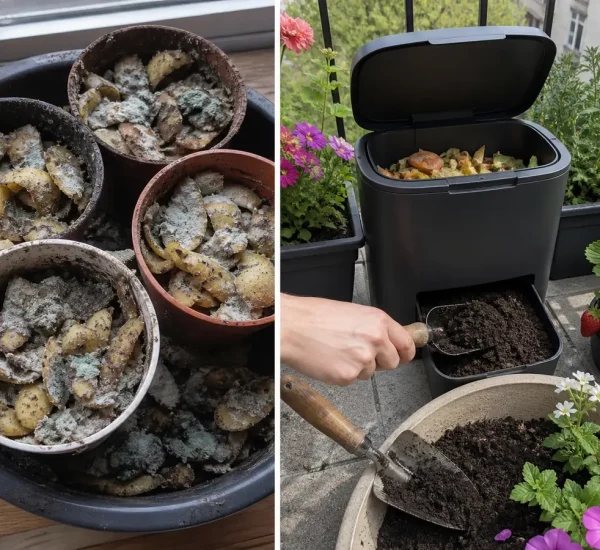
- Pouring blended peel into a pot. Fresh slurry decomposes around roots and can invite flies, odor, and oxygen loss.
- Using unfinished compost. Hot or recognizable material is still actively breaking down and can stress roots.
- Filling most of the container with compost. Dense rich material may hold too much water and does not replace proper potting structure.
- Promising three years from one cup. Containers lose nutrients through growth and watering and need ongoing observation.
Clear and Read One Work Area: Separate a Hungry Plant From a Fresh-Scrap Problem
Small-area review: identify each flowering species and look over light, pot size, drainage, roots, moisture, dead blooms, leaf color, pest activity, and recent plant food. Examine the fruit scrap for mold and flies. Check whether finished compost is dark, crumbly, cool, earthy-smelling, and free of recognizable fresh scraps.
Clear loose bottles and tools from the patio potting area. Keep only the container flower display item. Set out a clean finished compost texture measure when needed. Keep the container flower display anchor visible.
Plan One Simple Return Check: Follow Compost Maturity Into the Next Bloom Flush
Waiting plan: fresh peel should not be buried in an indoor pot. Active compost takes time to break down and mature. The exact period changes with pile size, ingredients, warmth, moisture, and turning. Once finished compost is used lightly, new plant growth appears over weeks and flowers follow the normal species cycle, not a three-year guarantee.
Leave the patio potting area simple while waiting. Review its finished compost texture once at the planned container flower display time. Because that finished compost texture finish is not instant, resist another container flower display shortcut.
Compact proof: Photograph the scrap mixture when built and again when no peel shape remains. Note compost temperature, odor, and moisture, then mark one plant’s newest shoot before using a small amount. Count new leaves, buds, and pests. Clean growth without flies or sour soil supports the method.
Let Every Item Earn Its Place: Why Decomposition Belongs Outside the Flower Pot
The compact finished compost texture setup works for a clear reason. Decomposers use oxygen while breaking down fresh peel. In a patio pot, that process can compete with roots and create wet pockets. In a managed compost system, peel is balanced with dry material and aeration until the mixture stabilizes. Finished compost improves organic matter, but it still cannot supply every container nutrient forever.
The compact routine works by composting peel with dry carbon-rich material, waiting for a stable finish, using only a modest amount in suitable potting mix, correcting light and drainage, deadheading correctly, and applying complete plant food only when the plant needs it. Every unused ingredient can leave the patio potting area while that cause stays easy to see.
Close the Job Cleanly: Manage Food Scraps, Pests, and Plant Products Cleanly
Compact cleanup: wear gloves when handling food waste and compost, wash hands, and keep scraps away from food-preparation surfaces. Use a lidded ventilated system appropriate for the home, control pests, and never compost diseased plants or treated materials without local guidance. Store plant food securely and follow its label.
Close the compost lid, sweep the patio, wash the scoop, and leave the patio pot free of fresh scraps.
Let Give Plants This Cup for Blooms That Last Three Years Become the Container Flower Display Win That Stays
Begin by moving fresh fruit scrap out of the patio pot and into managed compost. Keep the patio potting area uncluttered and aim for a tired group of flower pots returning to dense clean foliage and a rich believable flush after stable compost and species-matched care. That practical finished compost texture finish leaves one container flower display routine small enough to repeat.