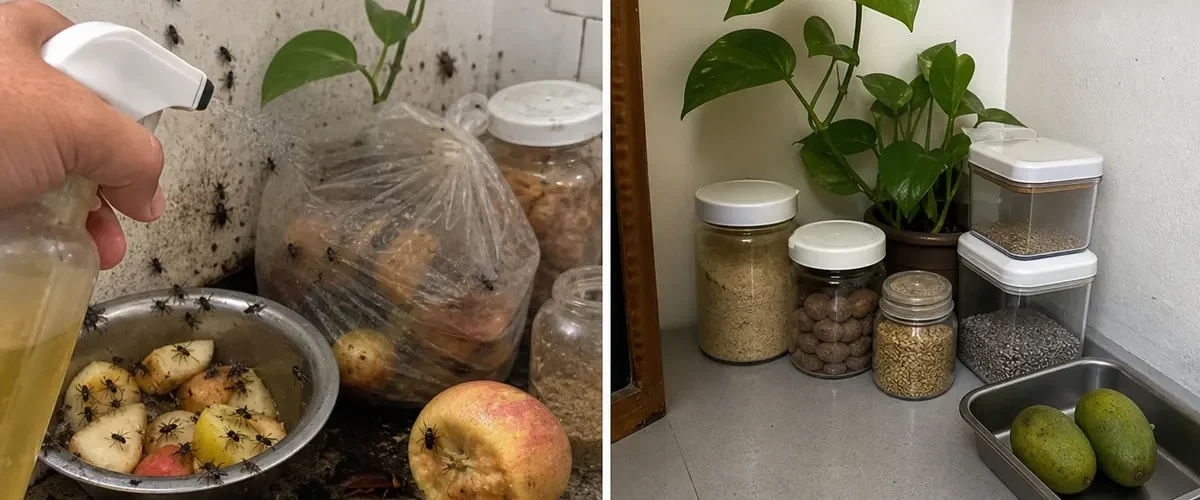
A compact fly control setup can deliver a big change when naming the pest earns its place. The starting point is vinegar traps, fruit bowls, oily shampoo spray, lavender sponges, lemon cloves, bay leaves, and potted herbs offered for household insects. The source frames the idea as Apply this simple tip at home: there will be no more flies or cockroaches after an hour.
For control flies and cockroaches, the practical sequence begins with naming the pest. Track a cleaner home with fewer pests against the small-space promise; repeat naming the pest and only the fly control steps that produce visible progress.
A Bold but Supported Result From Name the Pest
The source centers on vinegar traps, fruit bowls, oily shampoo spray, lavender sponges, lemon cloves, bay leaves, and potted herbs offered for household insects and promises natural kitchen mixtures eliminate flies and cockroaches within one hour without risk to health or the environment. For control flies and cockroaches, that hook becomes useful only when naming the pest matches the real cause.
The supported fly control promise: begin with naming the pest and expect a clean dry kitchen with sealed food, repaired moisture, closed gaps, monitoring traps, and sharply reduced realistic fly or cockroach activity.
That fly control result stays bold and practical. Because naming the pest anchors the plan, progress toward a cleaner home with fewer pests can outlast a temporary fly control reaction and this source’s wishful timing.
The Missing Link Between the Claim and Result
Fruit-fly traps attract instead of repel, scented materials have limited evidence, and vinegar, oil, or shampoo spray is not a labeled cockroach treatment. Lasting control depends on pest identification, sanitation, exclusion, moisture repair, and targeted products.
Dry the fly control source before removing loose soil or food. During naming the pest, protect nearby finishes and choose one label-matched product; foam alone cannot prove cleanliness.
The fly control method succeeds when naming the pest removes its main limit. To reach a cleaner home with fewer pests, it must protect sound fly control material while the correction continues.
The First Fly Control Check Changes Everything
Name the insect and where it appears. Fruit flies breed near fermenting food, drain flies near plumbing, fungus gnats in wet soil, and cockroaches hide near food, water, warmth, and cracks.
The Naming The Pest Clue That Sets the Direction
Check the material before naming the pest, then trace moisture around the fly control. The compact test records ventilation and food access; entry points stay visible until the evidence is clear. Photograph the fly control before naming the pest. Note recent fly control care and cleaning; its maintenance history gives naming the pest a fair baseline.
The Complete Fly Control Action Plan
- Name the pest: Use a close photo, body shape, location, and activity time to separate flies, gnats, mosquitoes, and cockroaches.
- Take away food and residue: Seal ingredients, refrigerate ripe produce, clean grease and crumbs, wash dishes, and empty waste often.
- Eliminate moisture: Repair leaks, dry sinks and saucers, scrub appropriate drains, and take away outdoor standing water.
- Seal entry and shelter: Close gaps around pipes, screens, cabinets, and doors while reducing cardboard and clutter.
- Watch strategically: Place pest-specific monitors where children and pets cannot reach them and count activity over time.
- Use targeted control: Pick a labeled bait or treatment for the identified pest, or call a licensed professional for persistent infestation.
A Simple Decision Rule for Your Fly Control
If the fly control improves after naming the pest, keep those conditions steady. If nothing changes, return to the diagnosis instead of doubling the amount.
Pause When the Fly Control Evidence Changes
New rot, scorch, residue, odor, pests, or stalled growth can overturn the diagnosis. Remove the optional input around naming the pest, protect sound material, and choose the next move from fresh evidence.
Where This Promising Method Usually Goes Wrong
- Spraying oily shampoo around the house.
- Expecting scent to kill cockroaches.
- Using fly attractants near food.
- Stopping when finished with one quiet hour.
Each fly control mistake changes conditions around naming the pest without proving the cause. Correct the earliest error, then wait for the response before adding another variable.
How to Know the Method Is Really Working
Compare the dry fly control area after naming the pest. Use similar light for residue and odor; record moisture, pest counts, and finish changes separately.
Use More Than One Fly Control Sign
- Record the fly control change.
- Check around naming the pest for a second fly control problem.
- Compare the fly control result after normal care resumes.
The promise is fulfilled when a cleaner home with fewer pests becomes visible. Around naming the pest, the surrounding fly control system must remain healthy, clean, or controlled.
Turn One Good Result Into a Reliable Routine
Keep the fly control area dry after naming the pest. Close its access points and store products correctly; inspect after normal use instead of following a treatment calendar.
Once the fly control improves beyond naming the pest, stop chasing a faster picture. Keep those conditions stable so the promising response becomes repeatable.
Use the Fly Control Method Without Preventable Harm
Never mix cleaners or improvise insecticides, keep traps and baits away from children and pets, ventilate, follow pesticide labels exactly, and seek professional help for a large or recurring cockroach problem.
Natural origin cannot guarantee a gentle fly control result. After naming the pest, soft tissue ends the test. A changed finish, stronger odor, spreading pests, or irritation does the same.
Keep the Fly Control Plan Result Going in Small Spaces
Keep the fly control goal bold, but earn it through naming the pest. The finish should be a clean dry kitchen with sealed food, repaired moisture, closed gaps, monitoring traps, and sharply reduced realistic fly or cockroach activity.
The control flies and cockroaches transformation remains an impressive promise. Beginning with naming the pest makes this fly control finish specific; verify a cleaner home with fewer pests before repeating it.