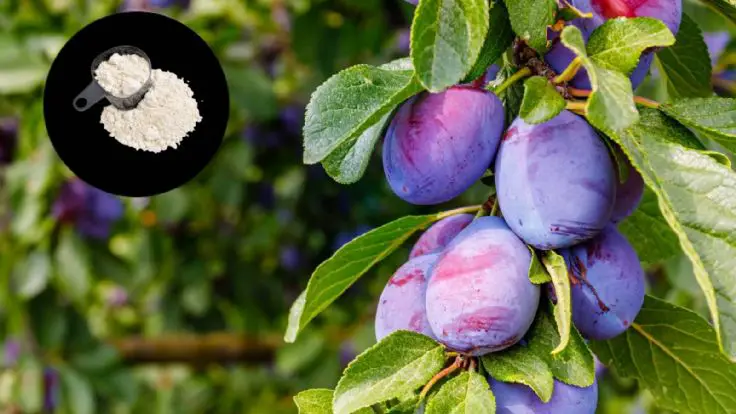
Lime is a natural resource that can significantly benefit the plum tree (Prunus domestica). This gardening technique, recommended by urban garden experts, enhances soil conditions and promotes healthy growth.

Reasons to Add Lime to Fruit Trees
Applying lime directly to the substrate offers numerous benefits, including:
- Achieving an optimal pH between 6.0 and 7.0.
- Improving the availability of nutrients such as phosphorus and calcium.
- Contributing to the growth and production of fruits.
- Preventing root rot.
- Detering pests caused by insects or fungi.
To maximize these benefits for your plum tree, it’s essential to use lime correctly without harming the crop.
How to Apply Lime

To enhance the quality of your plum fruit, follow these steps:
- Use approximately 20-30 grams of lime (calcium hydroxide or quicklime).
- Sprinkle the lime around the tree substrate, mixing it with the soil.
- For quick absorption, hydrate the area with a little water.
This technique should be applied once during the flowering season to avoid damaging the roots, ensuring your plum tree yields larger and better fruits.
Since lime is a natural product, it’s important to apply it sporadically and with caution, allowing the plum tree to thrive in your urban garden or home landscape.