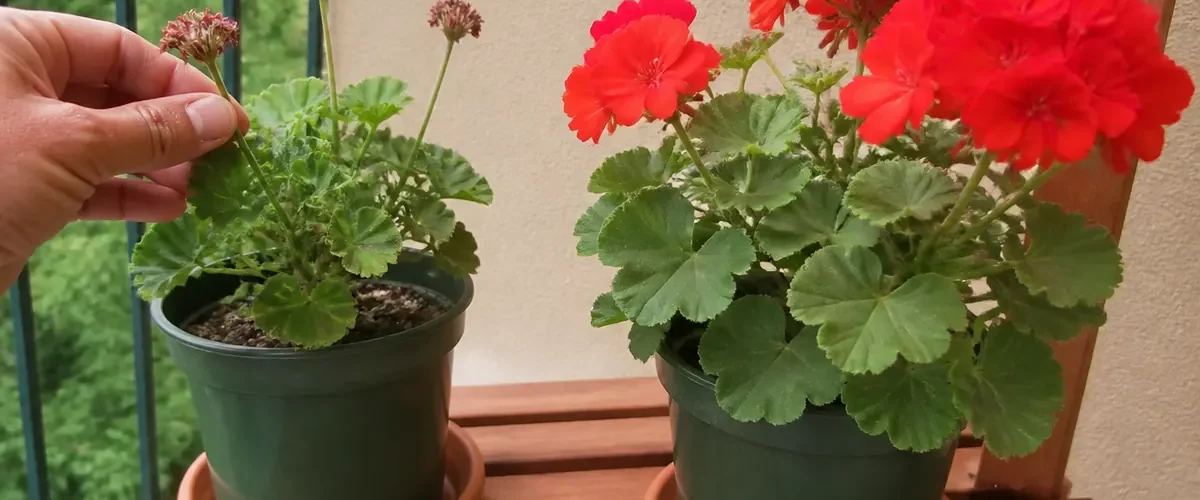
One sunny geranium pot can keep replacing old clusters with new color without banana water filling the shelf. Make Geraniums Bloom Like Crazy With Kitchen Ingredients presents baking soda, banana-peel water, cooking water, and other kitchen recipes being promoted as a little-known way to keep geraniums flowering all year and claims that regular homemade tonics make every geranium produce nonstop flowers in every season.
The compact goal is to keep geraniums blooming all season. A compact flower relay can produce a healthy geranium sending up repeated clusters of vivid flowers through its active season because each spent head is replaced by well-lit, well-fed new growth.
Clear One Geranium Flower Relay Work Zone
For the compact geranium flower relay check, count flower clusters and buds, then record hours of direct sun, stem spacing, leaf color, pot drainage, moisture at depth, root condition, spent heads, temperature, recent pruning, fertilizer dose, and whether blooms fail during heat or low winter light.
While testing geranium flower relay, keep nearby plants, food, tools, and personal items outside the work area. One clear before photograph and one marked check point are enough to make the compact result honest.
Make the Geranium Flower Relay Fit the Same Footprint
Start with give six useful sun hours, clear every spent cluster, read moisture below the surface; they address the cause before another bottle, pot, or tool is added. Return unused materials to storage as soon as the first correction is complete.
Finish with open the canopy, feed a measured complete formula, count each flower relay. That compact chain supports creating a reliable relay in which sunlight, deadheading, steady roots, and measured complete feeding replace each fading flower cluster with another and leaves the small area with a healthy geranium sending up repeated clusters of vivid flowers through its active season because each spent head is replaced by well-lit, well-fed new growth, not a second cleanup project.
Choose the Small-Space Geranium Flower Relay Promise
Inside this compact setup, pelargonium geraniums flower best with strong useful light, good drainage, careful watering, regular deadheading, and balanced dilute fertilizer during active growth. Kitchen waters vary, can add salts or decomposing food, and cannot replace complete nutrition. Cold, extreme heat, low winter light, root trouble, and species limits can pause flowering.
For one contained setup, the result to chase is a healthy geranium sending up repeated clusters of vivid flowers through its active season because each spent head is replaced by well-lit, well-fed new growth. Keep every move tied to creating a reliable relay in which sunlight, deadheading, steady roots, and measured complete feeding replace each fading flower cluster with another, so the method remains easy to stop, clean, and repeat.
The Six-Move Geranium Flower Relay Routine
Compact Move 1: Give six useful sun hours
In the compact setup, move the geranium gradually toward at least about six hours of strong light where climate and the plant’s condition allow, preventing sudden scorch.
Compact Move 2: Clear every spent cluster
In the compact setup, follow the flower stem to its base and remove the finished head cleanly without tearing healthy shoots or leaves.
Compact Move 3: Read moisture below the surface
In the compact setup, water thoroughly when the root zone needs it, drain fully, and let the upper medium begin drying rather than keeping it constantly wet.
Compact Move 4: Open the canopy
In the compact setup, remove dead or diseased material and lightly shape crowded growth so leaves receive light and air without severe stress pruning.
Compact Move 5: Feed a measured complete formula
In the compact setup, during active growth, use a complete fertilizer suitable for container flowers at a dilute label rate instead of banana or cooking water.
Compact Move 6: Count each flower relay
In the compact setup, mark three shoots, record buds and open clusters weekly, and adjust one care limit at a time through the productive season.
Close the Geranium Flower Relay Routine Cleanly
For a safe compact geranium flower relay routine, do not use food liquids that contain salt, oil, dairy, or seasoning. Keep fertilizer off leaves and skin, prevent runoff, and follow its label. Clean pruning tools, watch for brittle stems, and protect geraniums from frost, severe heat, children, and pets according to the household setting.
After geranium flower relay, remove waste responsibly and clean the tools, and return the area to normal use. The method has not worked if it leaves a hidden hazard behind.
Keep These Four Geranium Flower Relay Problems Out
- pouring salted cooking water into the pot. For geranium flower relay, it adds clutter without solving the strongest limit.
- using baking soda as routine fertilizer. For geranium flower relay, it can spread residue, moisture, pests, or stress beyond the test area.
- leaving spent heads on the plant. For geranium flower relay, it turns one contained routine into repeated cleanup.
- keeping roots permanently wet. For geranium flower relay, it sacrifices a stable result for a fast-looking change.
Wait for the Geranium Flower Relay Without Adding Clutter
For this small geranium flower relay setup, removing spent clusters and correcting watering protects developing shoots immediately, but a new flower cluster takes time to form and open. Better light and balanced feeding show in new growth over several weeks. Seasonal slowdown is normal where light or temperature falls outside the plant’s productive range.
During the geranium flower relay wait, leave only the essential setup in place. Do not pour another kitchen liquid before the three marked geranium shoots complete their next cluster count.
One Kitchen Secret Covers Geraniums in More Blooms Than Ever: Keep the Compact Win
Keep the routine only when it leaves a healthy geranium sending up repeated clusters of vivid flowers through its active season because each spent head is replaced by well-lit, well-fed new growth inside the same clean footprint. Start at give six useful sun hours, Preserve the sun, water, and measured feed that completed the flower relay, then clear kitchen liquids from the balcony.