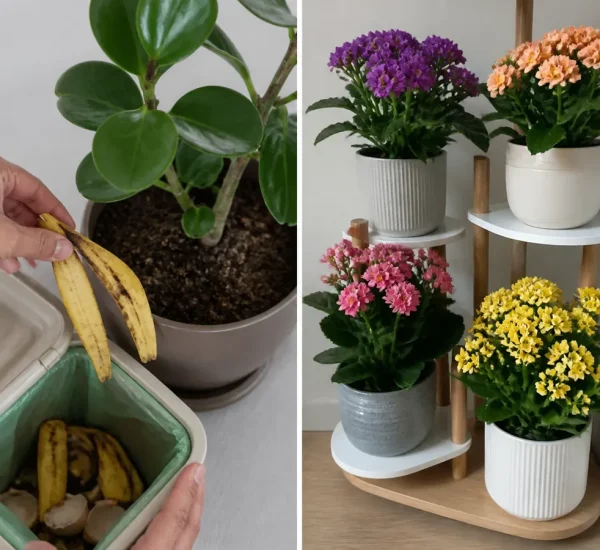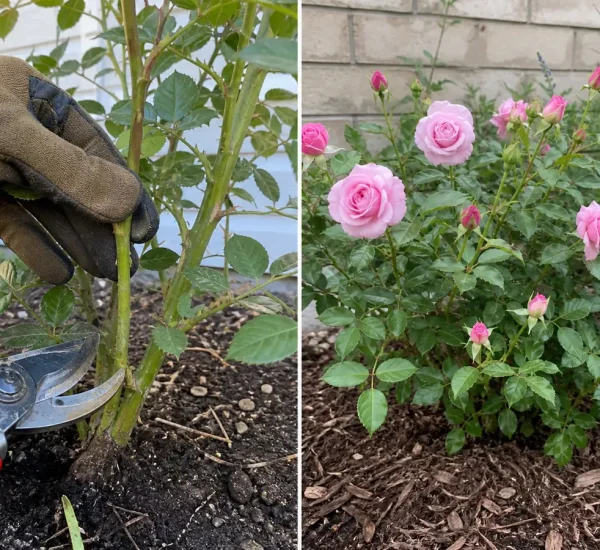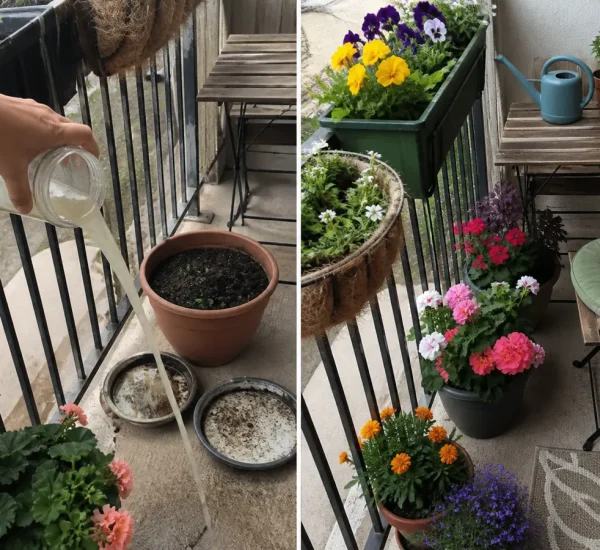
One tired balcony geranium can become a rounded flower mound after its roots receive air and its stems receive purposeful cuts. Give Your Geraniums New Life With Just One Spoonful: A Natural Soil Revitalizer presents one spoonful of banana-peel powder being mixed into exhausted geranium soil as a natural revitalizer and claims that the potassium-rich spoon rapidly restores yellow leaves, fresh growth, and abundant geranium flowers without other changes.
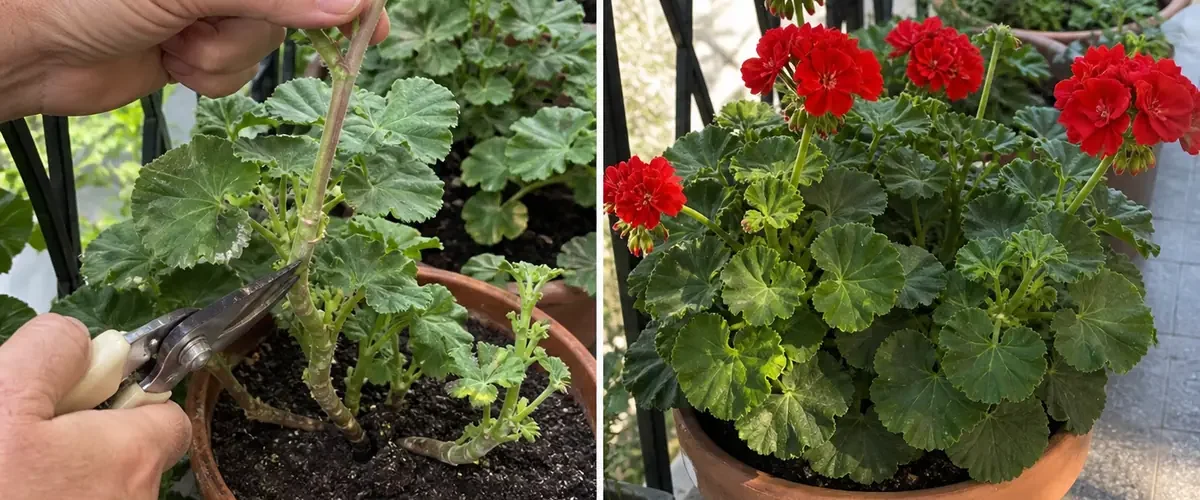
The compact goal is to revive a tired geranium. A tidy root-zone rebuild can deliver a leggy yellowing geranium becoming a compact branched mound with firm green leaves and an impressive believable ring of new flower clusters.
Clear One Geranium Root-Zone Rebuild Work Zone
For the compact geranium root-zone rebuild check, inspect hours of direct light, stem spacing, leaf-node distance, yellow-leaf position, pests, spent blooms, pot drainage, root firmness, soil compaction, moisture before watering, fertilizer strength and date, temperature, drafts, and whether the plant is actively growing or resting.
While testing geranium root-zone rebuild, keep nearby plants, food, tools, and personal items outside the work area. One clear before photograph and one marked check point are enough to make the compact result honest.
The Six-Move Geranium Root-Zone Rebuild Routine
- Remove food from the pot. Clear banana powder and undecomposed scraps from the soil surface before they mold, attract flies, or confuse the moisture check.
- Inspect roots and drainage. Slide out the root ball only when needed, trim clearly failed roots, open blocked holes, and repot in clean draining mix if the old soil is compacted or sour.
- Move toward stronger light. Increase exposure gradually to the bright conditions the geranium needs, while avoiding abrupt scorch through hot glass.
Compact Move 4: Pinch above living nodes
In the compact setup, shorten leggy healthy stems just above selected leaf nodes with clean tools so new side shoots can build a fuller canopy.
Compact Move 5: Water from soil evidence
In the compact setup, feel the mix before watering, soak the root ball when it is ready, let excess drain, and never keep the pot sitting in water.
Compact Move 6: Feed modest active growth
In the compact setup, after roots are moist and new growth is visible, apply a complete water-soluble fertilizer at about half the labeled strength and only at the labeled or locally recommended interval.
Choose the Small-Space Geranium Root-Zone Rebuild Promise
Inside this compact setup, banana peel does not supply a complete, measured geranium diet, and fresh or powdered food waste can mold, attract pests, or alter moisture in a pot. Geraniums often decline from low light, poor drainage, compacted mix, irregular water, crowding, pests, or excess fertilizer. Rebuilding air around the roots and feeding active growth modestly can produce a rounded plant covered in fresh flowers.
For one contained setup, the result to chase is a leggy yellowing geranium becoming a compact branched mound with firm green leaves and an impressive believable ring of new flower clusters. Keep every move tied to restoring a bright, airy, evenly moist but drained root zone that supports compact geranium branching and repeated flower formation without overfeeding, so the method remains easy to stop, clean, and repeat.
Make the Geranium Root-Zone Rebuild Fit the Same Footprint
Start with remove food from the pot, inspect roots and drainage, move toward stronger light; they address the cause before another bottle, pot, or tool is added. Return unused materials to storage as soon as the first correction is complete.
Finish with pinch above living nodes, water from soil evidence, feed modest active growth. That compact chain supports restoring a bright, airy, evenly moist but drained root zone that supports compact geranium branching and repeated flower formation without overfeeding and leaves the small area with a leggy yellowing geranium becoming a compact branched mound with firm green leaves and an impressive believable ring of new flower clusters, not a second cleanup project.
Close the Geranium Root-Zone Rebuild Routine Cleanly
For a safe compact geranium root-zone rebuild routine, use clean pruners and keep sap, mold, and fertilizer away from eyes and mouths. Follow product labels, dispose of infested or rotten material responsibly, secure balcony pots, and keep tools, plants, fertilizers, children, and pets separated.
After geranium root-zone rebuild, remove waste responsibly and clean the tools, and return the area to normal use. The method has not worked if it leaves a hidden hazard behind.
Wait for the Geranium Root-Zone Rebuild Without Adding Clutter
For this small geranium root-zone rebuild setup, correct water and drainage can improve posture within days, while pruning and better light reveal compact new shoots over several weeks. Feed only active growth; new flower clusters follow healthy branching and the plant’s season rather than appearing overnight from a spoonful.
During the geranium root-zone rebuild wait, leave only the essential setup in place. Do not add another soil amendment while the geranium’s new branches and roots respond.
Keep These Four Geranium Root-Zone Rebuild Problems Out
- burying banana peel in a pot. For geranium root-zone rebuild, it adds clutter without solving the strongest limit.
- fertilizing a dry wilted plant. For geranium root-zone rebuild, it can spread residue, moisture, pests, or stress beyond the test area.
- keeping geranium soil constantly wet. For geranium root-zone rebuild, it turns one contained routine into repeated cleanup.
- using heavy feed to force flowers. For geranium root-zone rebuild, it sacrifices a stable result for a fast-looking change.
Just One Spoon Gives Weak Geraniums Fresh Growth and New Strength: Keep the Compact Win
Keep the routine only when it leaves a leggy yellowing geranium becoming a compact branched mound with firm green leaves and an impressive believable ring of new flower clusters inside the same clean footprint. Start at remove food from the pot, remove everything that did not help, and repeat the smallest successful version when the next normal-care cycle calls for it.