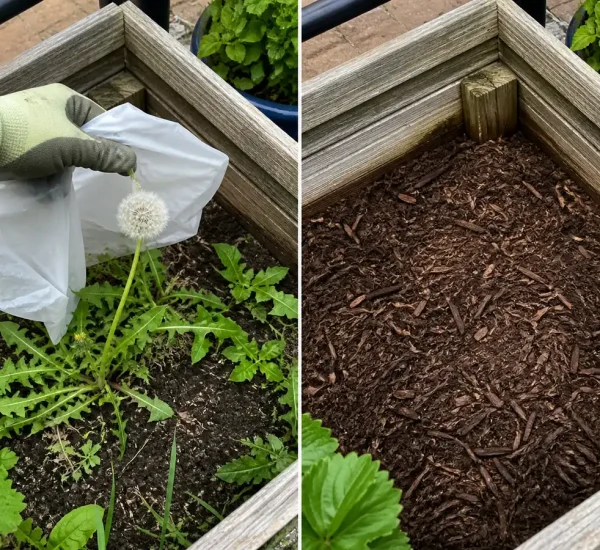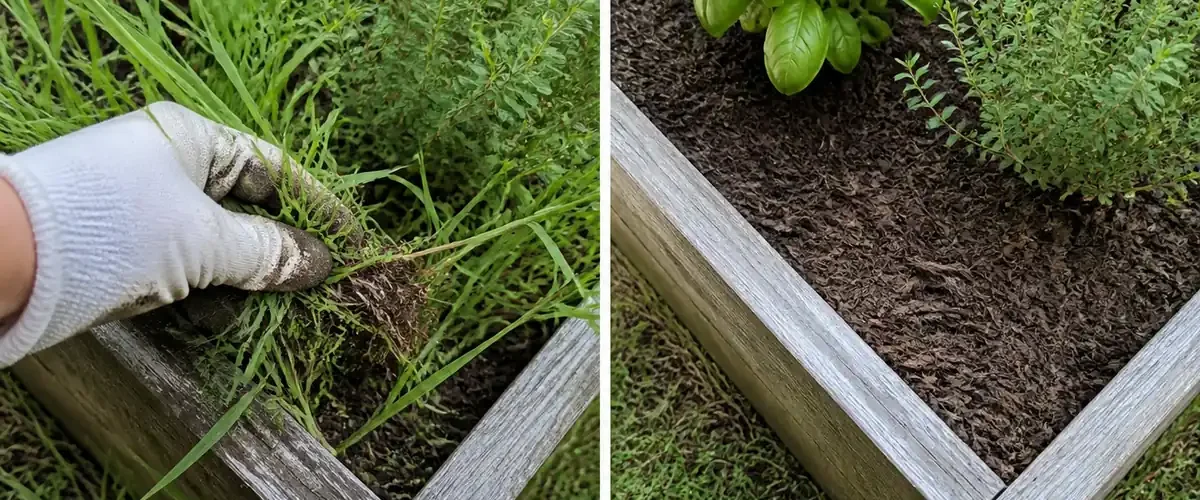
One raised-bed corner can lose its sticky goose-grass mat without turning an uncertain weed into homemade medicine.
The source article The Healing Power of Goose Grass for Ten Common Ailments brings cleavers being promoted as a tea, poultice, and daily remedy for skin, digestion, infections, stress, and other ailments into this goose-grass seed-stop cleanup setup. It promises an unidentified sticky backyard weed safely treats ten health problems when brewed or applied at home.
Clear and Check One Setup: Confirm Every Hook, Whorl, Flower, and Burr
One-area check: confirm whorled leaves, clinging hairs, sprawling weak shoots, tiny flowers, paired fruits, square-feeling shoots, emergence pattern, soil moisture, nearby wanted plants, seed maturity, pet traffic, pesticide history, and local weed guidance. Do not taste an unknown plant as an identification test.
Clear the cleavers area first. Keep only the essential cleavers tool or material needed for this check. Photograph the plant’s whorled leaves and hooked fruits before removal, then mark the cleared edge. Follow-up images after rain reveal new seedlings before they tangle through vegetables.
Make Six Compact Moves: Untangle the Mat Before Pulling at the Root
- Confirm the clinging plant
- Match whorled narrow leaves, hooked hairs, sprawling shoots, tiny flowers, and paired fruits with a local plant guide.
- Protect wanted stems
- Trace goose-grass strands through crops and lift the tangled mat gently before pulling at the base.
- Work moist not saturated soil
- Water dry ground lightly when appropriate so roots release without compacting or damaging a soaked bed.
- Pull before burrs mature
- Grip low with gloves, remove the root system, and catch attached fruits before they transfer to clothing or fur.
- Choose disposal by seed stage
- Compost only young seed-free material where local guidance allows and bag mature burr-bearing plants for approved disposal.
- Close and revisit the gap
- Mulch or replant bare soil, clean tools and clothing, and look over the edge again as new seedlings appear.
Keep One Strong Promise: The Reliable Goose-Grass Result Happens in the Garden
Small-space limit: cleavers, Galium aparine, is recognized by clinging hooked hairs, whorled narrow leaves, sprawling shoots, tiny flowers, and paired burr-like fruits. Traditional use does not prove a home remedy is safe or effective. The reliable garden finish is early identification and removal before mature fruits spread through beds, clothing, and animal fur.
In one contained goose-grass seed-stop cleanup setup, keep this satisfying finish: a vegetable-bed edge cleared of a dense clinging goose-grass mat before hooked fruits mature, with wanted plants standing clean and undamaged. Keep only cleavers steps that support that finish.
Let the Simple Routine Work: Why Early Removal Prevents the Next Sticky Wave
Why the simple setup works: cleavers spreads by sprawling through other plants and attaching hooked fruits to animals, clothing, and tools. Removing it before those fruits mature interrupts that route immediately. Mulch or wanted cover then occupies the open ground where another flush would establish.
The compact routine succeeds by identifying Galium aparine accurately, untangling shoots before pulling, removing roots and immature fruits, protecting crops and pets, disposing of seed-bearing material safely, and closing open soil with mulch or desired cover. Anything unrelated to the cleavers can leave the work area.
Leave Four Shortcuts Out: Four Mistakes That Spread Burrs or Risk Health
1. Brewing an unidentified sticky weed
Small-space risk: a sticky plant is not automatically Galium aparine, and taste is never a safe identification test.
2. Pulling tangled stems through vegetables
Clutter risk: yanking the outer mat can snap wanted shoots and scatter attached fruits through the crop.
3. Composting mature burrs carelessly
Containment risk: mature hooked fruits may survive a casual compost pile and return with finished material.
4. Leaving cleared soil bare
Cleanup risk: open disturbed ground gives the next wave of weed seedlings an immediate advantage.
Give the Change Enough Time: Return After Rain and Catch the Seedlings You Missed
Small-space timing: young cleavers pulls quickly from moist soil, while a tangled flowering mat takes longer to separate from crops. Removing plants before fruits mature prevents the current crop from spreading. Seeds already in soil can emerge in later seasons, so follow-up checks are needed even after one dramatic cleanup.
During the cleavers wait, put supplies away. Keep the cleavers setup stable. Wait for the first honest cleavers checkpoint.
Finish the Small Job Safely: Wear Gloves and Keep Unknown Plants Out of Remedies
Compact cleanup: wear gloves and long sleeves because hooked hairs can irritate skin and catch clothing. Keep hooked fruits from pets’ eyes, ears, and coats, follow pesticide labels, and wash after handling plants from contaminated ground. Do not eat, brew, or apply an unidentified wild plant as medicine. Seek qualified medical advice for health symptoms.
Bag mature hooked fruits, clean gloves and tools, check pets’ coats, and keep the cleared goose-grass patch out of the kitchen.
Let Few People Know Goose Grass Can Help With These 10 Ailments Become a Lasting Goose Grass Win
Begin with one clear cleavers move: confirm the clinging plant. Keep the cleavers setup simple and aim for a vegetable-bed edge cleared of a dense clinging goose-grass mat before hooked fruits mature, with wanted plants standing clean and undamaged. That finish leaves the cleavers area clean for normal use.