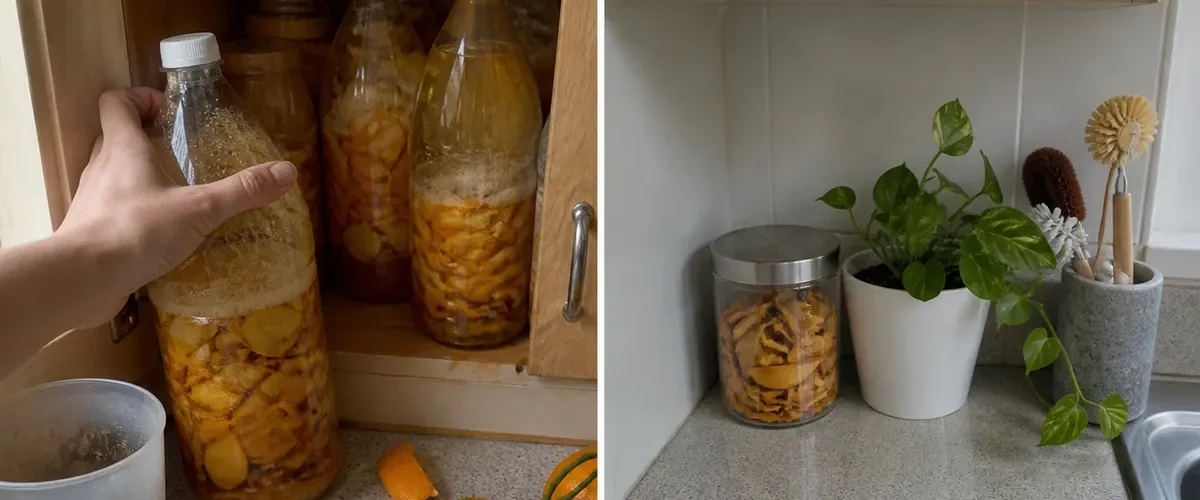
In a small home, kitchen, or garden, one struggling subject can dominate the whole space. Here the starting point is orange peels, baking soda, and water left to ferment in a bottle for a multipurpose cleaner. The source, I put orange peels in a bottle: I do everything with them! Since I discovered this method I no longer throw them away, answers it with a tempting promise: the fermented bottle stays safe for months and powerfully cleans dishes, floors, kitchens, bathrooms, and every finish.
A compact space needs a method that earns its footprint. The plan below aims for clean finishes without bottle pressure, with steps that are tidy, measurable, and easier to stop if the result turns the wrong way. That is how a dramatic change becomes useful instead of merely photogenic.
Why These Moves Create Clean Finishes without Bottle Pressure
This sequence works because it matches the response to the material, pest, residue, or entry route involved. The first move, retire the fermenting bottle, establishes the baseline. The next two moves, name the finish and begin with dish soap, remove guesswork before wider treatment begins.
The fifth move, clean small sections, addresses the source; the final move, rinse, dry, and compost, verifies the finish. That is more dependable than relying on a strong smell, a harsh mixture, or one clean-looking photo to produce clean finishes without bottle pressure.
What the Bold Citrus Cleaning Claim Leaves Out
A food-and-water mixture has variable acidity and microbial growth, an active bottle can build gas, and no homemade liquid is automatically safe for stone, wood, paint, food-contact surfaces, or dishwashing.
In limited space, a weak method creates odor, clutter, runoff, or repeated work very quickly. A cleaner sequence can still reach clean finishes without bottle pressure without adding a second problem.
One Careful Check Changes the Whole Plan
Never open a swollen bottle near the face. Name the finish, finish, soil type, food-contact status, manufacturer instructions, and the smallest hidden patch available.
Clear a small citrus cleaning work zone and protect nearby floors, fabrics, plants, food, and shared air. Test one subject or one hidden area before treating the entire space.
Follow This Citrus Cleaning Sequence From Start to Finish
- Retire the fermenting bottle. Never store orange peels, sugar residue, water, and baking soda in a closed container for weeks.
- Name the finish. Separate sealed laminate, painted wood, natural stone, grout, stainless steel, and food-contact items ahead of choosing a cleaner.
- Begin with dish soap. Mix a small amount of plain dish soap into warm water according to its label and prepare only what the job needs.
Patch Test
Wipe a hidden spot, wait, and look at for dulling, color transfer, softening, swelling, or sticky residue.
Clean Small Sections
Use a damp microfiber cloth, gentle pressure, and fresh cloth faces instead of soaking seams or spreading old grease.
Rinse, Dry, and Compost
Rinse food-contact areas as required, dry finishes promptly, and compost clean peels in a managed system.
Prove the Citrus Cleaning Result With More Than One Signal
Use one pot, tile, pan, or monitored citrus cleaning zone as the first trial. Mark it discreetly and keep neighboring items out so runoff, odor, insects, or residue cannot confuse the result.
Repeat only after the test area stays stable through normal use. In a small space, the best proof is clean finishes without bottle pressure with easy cleanup and no spillover into the rest of the room or garden.
Avoid These Errors Before Repeating the Method
- Sealing active food fermentation. It changes too many citrus cleaning conditions to show what truly worked.
- Calling one liquid safe for every finish. It turns the measured routine back into an unsupported citrus cleaning promise.
- Using it to wash dishes without validation. It weakens the evidence needed to repeat the citrus cleaning result.
- Storing it for months. It may improve one photograph while the wider citrus cleaning system declines.
A Believable Timeline for Clean Finishes without Bottle Pressure
Warm dish-soap solution can lift fresh grease during one cleaning pass. Waiting a week for food scraps to ferment adds uncertainty instead of proven cleaning power.
Keep the citrus cleaning setup steady while you wait. Repeatedly moving, feeding, spraying, or scrubbing can hide which action helped and spread the problem nearby.
Stop the Test if Any of These Limits Are Crossed
Never open a swollen container near eyes, heat, or flame. Never mix homemade liquids with bleach, disinfectants, ammonia, or other cleaners, and discard uncertain spoiled mixtures safely.
Ventilate the citrus cleaning area, control runoff, and store every material away from food, children, and pets. Clean the work zone before normal use resumes.
Save Orange Peels This Way and Stop Wasting Money at Home: The Result Worth Keeping
The best small-space transformation is impressive because it stays controlled. Begin by retire the fermenting bottle, change one important condition at a time, and keep the routine only when it delivers clean finishes without bottle pressure without creating extra work nearby.