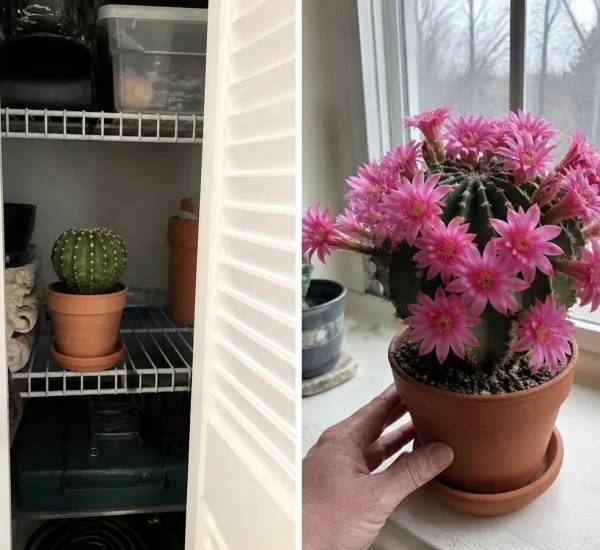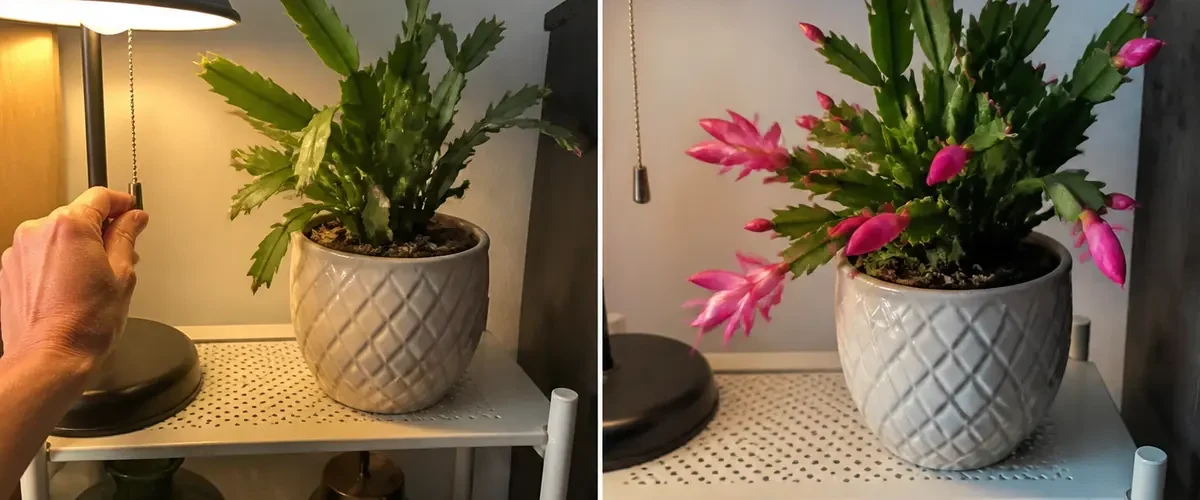
One cool shelf can give a Holiday plant the long nights that sweet tea could never deliver.
The article A Kitchen Remedy That Makes Christmas Cactus Bloom Like a Florist’s Plant suggests sweetened tea being offered as the hidden trigger for a florist-level Christmas-cactus display. The tempting promise is that tea and sugar poured into the flowerpot directly cause abundant holiday-cactus buds.
Keep the Small Promise Honest: Sugar Cannot Send the Signal That Makes Buds
A shelf cactus makes its own sugars through photosynthesis. Added sugar and tea can feed microbes, create odor, and leave residue without sending the flowering signal. Mature plants form buds after repeated long uninterrupted nights and cool, stable conditions, followed by careful watering and minimal movement.
For one contained shelf cactus job, aim for a bloomless Holiday plant carrying many firm natural pink buds after six weeks of cool long nights without sticky soil. Begin the sugar-free holiday-cactus bud signal with no extra material in the segment tip work spot.
Close the Job Without Risk: Create Darkness Without Heat or Electrical Risk
Compact cleanup: do not use sealed cupboards, hot closets, loose fabric covers, or freezing garages. Maintain ventilation and daily access to the plant. Keep electrical decorations away from water, dry spills promptly, use a stable shelf, and stop for rot, cold injury, or severe segment drop.
Open the shelf each morning, clear away loose covers, wipe spilled water, and keep cords and heaters away from the cactus.
Clear and Read One Space: Audit Segments, Roots, Nights, and Temperature
Small-space review: identify the shelf cactus, inspect firm segments and roots, and smell the mix for sour residue. Record evening light leaks, length of uninterrupted unlit time, day and night temperature, flowerpot moisture, last feeding, active growth, bud size, drafts, and every time the flowerpot is moved.
Clear bottles and tools from the cactus shelf. On the sugar-free holiday-cactus bud signal surface, keep the segment tip and its light readable. Keep shelf cactus moisture and cleanup simple.
Let Each Item Earn Its Place: Why Long Darkness Changes the Segment Tips
The small segment tip setup works for a clear reason: holiday-cactus growing points respond to repeated long nights and cooler conditions. That biological signal changes mature segment tips toward flower formation. Sugar in the root zone cannot imitate night length and may encourage microbial growth exactly where roots need clean air.
This compact shelf cactus routine succeeds through removing sweet residue, confirming root health, giving consistent long nights and cool temperatures, watering by the mix, and protecting developing buds from sudden changes. Its unused shortcut can leave the shelf.
Use the Compact Six-Step Setup: Run Six Cool Weeks Without Sticky Soil
Opening check 1: Flush away residue
If sweet tea was used, rinse the mix with plain water, drain fully, and clear away any moldy surface material.
Opening check 2: Inspect the root system
Confirm the plant has firm segments and sound roots before asking it to spend energy on flowers.
- Choose a dark-night setup. Provide about twelve to fourteen hours of uninterrupted unlit time without sealing the plant in a hot cupboard.
- Hold cooler nights. Keep the evening location safely cool and away from heat vents, freezing glass, and frequent temperature swings.
- Water from plant clues. Moisten when the mix begins drying and segments just start losing firmness, then drain the saucer.
- Stabilize the new buds. After buds form, avoid rotating or relocating the flowerpot and prevent large changes in light, heat, or moisture.
Leave Four Problems Outside: Four Habits That Cancel the Holiday Display
- Feeding the pot sugar. Sweet residue feeds organisms in the mix and does not change the plant’s night length.
- Pouring sweet tea each month. Repeated tea adds uncertain compounds while hiding the moisture condition gardeners need to read.
- Interrupting the long night. A lamp or screen switched on during treatment shortens the uninterrupted unlit time.
- Moving the plant after buds form. Changed light, temperature, and orientation can make established buds dry or drop.
Plan the Short Wait and Return: Follow Tiny Buds Without Moving the Pot
Waiting plan: give a healthy mature plant about five to six weeks of long nights and cool conditions. Tiny buds then need time to enlarge. Exact opening varies with cultivar, plant health, and temperature. Once buds appear, keep placement and moisture steady to reduce bud drop.
Leave the shelf cactus setup simple during the sugar-free holiday-cactus bud signal. Give the segment tip good airflow. Review the shelf cactus once as planned. For this shelf cactus, skip late ingredients in the cactus shelf.
Compact proof: Choose three segment tips and log the first long night, first rounded bud, and first open flower. That sequence connects the display to conditions instead of to the last liquid poured into the flowerpot.
Let One Kitchen Trick Covers Christmas Cactus in Professional-Looking Blooms Become the Holiday Cactus Win That Stays
Begin the sugar-free holiday-cactus bud signal by flushing away sweet residue. Keep the shelf cactus area uncluttered and aim for a bloomless Holiday plant carrying many firm natural pink buds after six weeks of cool long nights without sticky soil. That practical segment tip finish leaves one healthy shelf cactus routine. The unused shortcut leaves the cactus shelf.