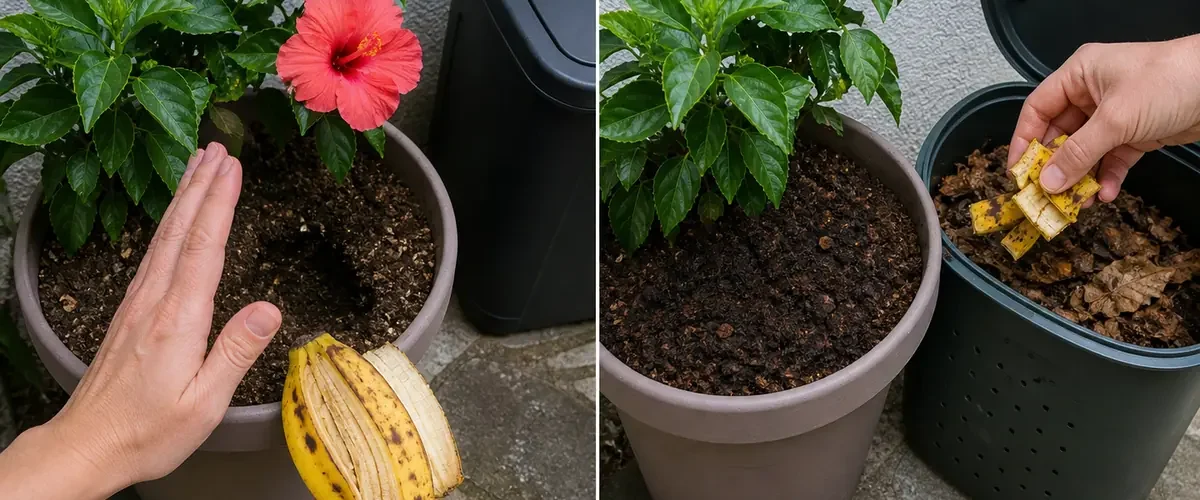
A banana peel looks small enough to disappear inside a patio planter. Push it under the soil, and it seems like free fertilizer with no compost bin required.
In a container, that peel can stay wet, smell, grow mold, and attract flies. The limited soil volume puts decomposition close to roots. A compact, secure compost method turns the same scrap into a much cleaner resource.
Do Not Use the Flowerpot as a Bin
Plant roots need air and stable moisture. A layer of fresh fruit changes both while microbes consume it.
Peels pushed near the surface may attract fungus gnats, ants, or animals. Peels buried deep can sit in low-oxygen wet mix. Neither location provides instant nutrition.
Choose a Small-Space System
A sealed tumbler, pest-resistant outdoor bin, community compost collection, or managed worm bin may suit a small home. Follow the system’s accepted-material list.
Indoor countertop buckets store scraps only until collection; they do not finish compost by themselves unless designed for a specific process.
Prepare Banana Scraps
Remove produce stickers. Cut peels into shorter pieces if that is safe and convenient. Smaller pieces expose more surface area to decomposers.
Add the peel beneath an existing layer rather than leaving it on top. Wash tools and hands afterward.
Balance Wet and Dry Material
Bananas are wet and rich in easily decomposed material. Add dry leaves, shredded plain cardboard, or another approved carbon-rich material.
The pile should feel like a wrung-out sponge, not drip. Too much wet food creates odor and low-oxygen conditions; too much dry material stalls decomposition.
Keep Air in the Process
Turn a tumbler or mix a bin according to its method. Do not compress everything into a solid mass.
Worm bins need gentler handling and suitable temperatures. Feed small amounts and wait until the worms process them rather than adding a week of fruit at once.
Block Pests Without Sealing Gas
Use a secure lid and fine openings designed for airflow. Do not put fermenting scraps in an airtight glass bottle, where gas can build.
Clean spills around the bin and freeze scraps until collection if flies become a problem. Follow building and local waste rules.
Wait for the Finished Stage
Finished compost is dark, crumbly, cool, and earthy. You should not be able to identify the banana.
If the material smells sour or still contains slimy peel, return it to the active system. Do not top-dress a houseplant with unfinished compost.
Use a Modest Amount
For an outdoor container, use finished compost only in a proportion suitable for the plant and potting mix. A light top-dressing may be enough.
Keep compost away from the crown and stems, water normally, and maintain drainage. Compost can improve organic matter, but it does not replace every fertilizer need.
Why Banana Water Is Not the Shortcut
Soaking peels creates a liquid with unknown nutrient content. It may ferment and smell before roots receive anything useful.
Use clean water for irrigation and a labeled fertilizer when the plant needs measured nutrition. Send the peels through the compost process.
Run a One-Pot Comparison
Top-dress one similar outdoor pot with a measured amount of finished compost. Keep another on its normal routine. Photograph both monthly.
Watch drainage, leaf growth, flowering, and pests. Slow improvement is more believable than a dramatic seven-day reveal.
Use Community Collection Without Odor
If home composting is impractical, line a small washable food-scrap container with an approved liner or use no liner according to the collection rules. Drain excess liquid and keep the lid clean.
Freeze banana peels and other scraps until collection day when storage space allows. Freezing pauses odor and fly activity, though the scraps will soften after thawing. Carry them in a secure container and wash it afterward.
Read the program’s accepted list. Commercial composting may accept materials that a backyard system should not, while some programs reject compostable plastics. Do not assume a label guarantees local acceptance.
Collect finished compost only if the program offers it and use it according to its instructions. The shared system can complete the same transformation without turning a balcony into a processing site.
Keep collection containers out of direct sun and away from emergency exits. Never let a food-scrap setup create a tripping or fire-safety problem.
Tell housemates what belongs in the container and post the collection schedule nearby. Clear rules prevent plastic, liquid, and unacceptable scraps from contaminating the load.
Rinse the storage container after pickup and let it dry completely before adding the next peel.
The Small-Space Banana Win
The peel does not need to rot beside a plant to stay out of the trash. It needs a controlled place where decomposers can work without disturbing roots.
Balance it with dry material, add air, block pests, and wait for an earthy finish. Then a banana scrap becomes useful plant food without turning the pot into a hidden trap.