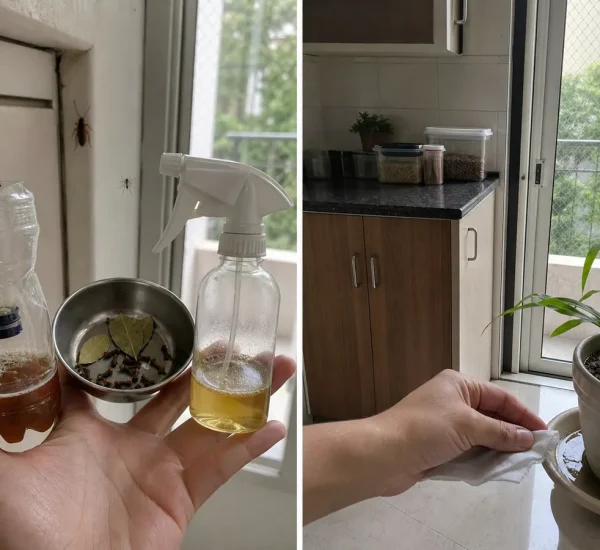
A small bottle of cinnamon and vinegar seems perfect for an apartment: cheap, fragrant, and easy to spray. The most dangerous part of the claim is the instruction to put it directly on skin.
Essential oil and vinegar can irritate. The mixture has no tested protection time. Build a low-cost mosquito defense around the room first, then use a registered skin repellent when bites remain possible.
Empty Every Saucer
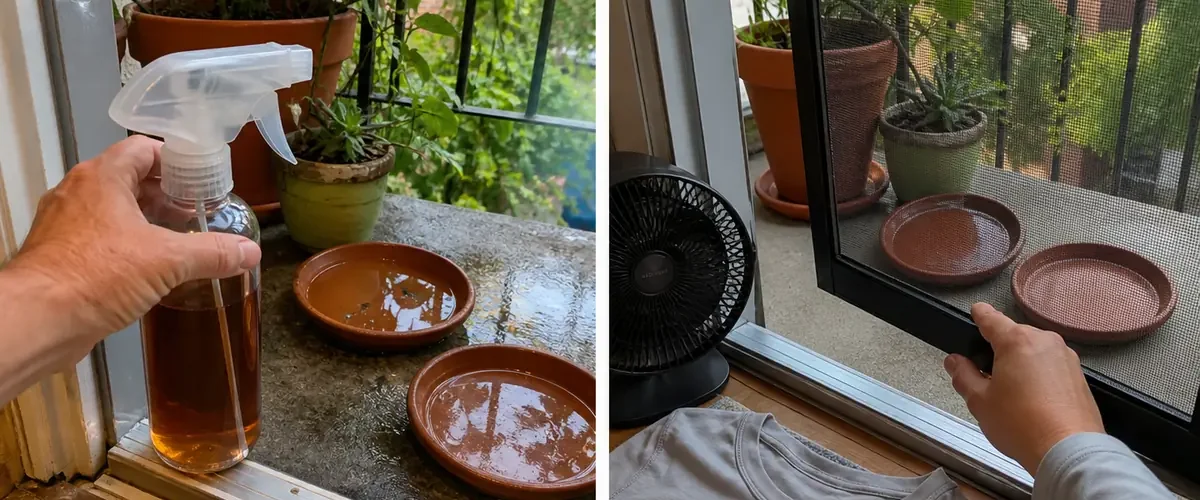
Start beneath houseplants. Pour out standing water and scrub saucers weekly. Do not let water collect inside decorative pot covers.
Check watering cans, buckets, mop pails, vases, balcony drains, folded tarps, and pet dishes. Mosquitoes need surprisingly little water for early life stages.
Cover Stored Water
Close rain barrels and storage containers tightly. If a lid cannot fit, use mesh with openings smaller than an adult mosquito.
Do not add vinegar, cinnamon, oil, soap, or bleach to stored water. Use only a larvicide labeled for that exact setting when water cannot be drained.
Patch the Screen
Small screen repair kits can close a tear near a frame. Replace badly damaged mesh and check that the screen sits firmly.
Add a door sweep if a gap remains below the balcony door. Close doors promptly and do not rely on a scented spray to block an opening.
Use Moving Air Safely
A fan near the seating area can make it harder for mosquitoes to land. Place it on a dry stable surface and keep cords away from rain and watering.
Follow electrical instructions and never use an indoor-only fan outdoors. The breeze helps in a limited zone; it does not remove breeding water.
Cover Skin With Clothing
Wear loose long sleeves, pants, and socks when practical. Light-colored clothing can make mosquitoes easier to notice.
Check that fabric does not create dangerous heat stress. Move indoors, hydrate, and follow local heat guidance during extreme weather.
Choose Skin Repellent Properly
Use the EPA search tool for registered repellents and choose one suited to the person and length of exposure.
Read the label before application. Do not spray directly onto the face. Adults should apply products to children as directed, avoiding hands and irritated skin.
Why Cinnamon and Vinegar Fail the Test
A smell that mosquitoes dislike in one setting does not prove protection from bites. Wind and evaporation change the concentration quickly.
Cinnamon oil can cause skin reactions, while vinegar may sting or burn sensitive tissue. The mixture can also stain fabric and damage plants or finishes.
Keep the Small Garden Safe
Do not spray vinegar around potting mix. It can damage roots and alter a small volume of soil. Essential oils may burn leaves and affect pollinators.
Use screens around indoor plants, remove water, and identify any separate plant pest before treatment.
Watch Local Mosquito Alerts
The CDC recommends preventing bites and controlling mosquitoes at home. Local health departments may issue additional guidance during disease activity.
Seek medical care for severe allergic symptoms or concerning illness after bites. Do not treat cinnamon spray as disease protection.
Make a Weekly Ten-Minute Routine
Choose one day to empty water, inspect screens, clean drains, and check the fan. Record repeated mosquito locations.
If mosquitoes remain indoors, contact building management or a licensed pest professional. Shared structures may contain sources outside the apartment.
Handle Shared-Building Sources
In an apartment, mosquitoes may come from a courtyard drain, roof gutter, basement, or neighboring balcony. Keep a dated sighting log and photograph standing water you can see without entering restricted areas.
Report damaged screens, broken closers, blocked drains, and recurring water through the building’s maintenance channel. Ask whether a licensed pest provider or local mosquito program should inspect common areas.
Do not pour mixtures into shared drains, fountains, roof systems, or landscaping. The water may connect to wildlife habitat or treatment systems, and the product may violate building rules.
Inside, check dark humid spaces and empty vase or plant water weekly. If a labeled indoor product is used, follow ventilation and reentry instructions and tell housemates what was applied.
Coordinated maintenance can remove a source that no balcony spray could reach. The sighting log helps show whether the problem improves after repair.
Prepare a small evening kit with long clothing, intact screens, and the registered repellent kept in its original bottle. Having the correct items ready reduces the temptation to improvise with a kitchen spray when mosquitoes suddenly appear.
Replace torn clothing and empty repellent containers through the correct local route so the kit stays ready and safe.
The Defense That Costs Little
Most of the first layer is simple: remove water, patch gaps, use a safe breeze, close doors, and cover skin. Registered repellent adds targeted protection where needed.
Skip the cinnamon skin spray. A small home becomes harder for mosquitoes to enter, breed, and bite when several practical barriers work together.