Orchid flowers are the part everyone sees, but the next bloom is prepared below them. Firm roots gather water and nutrients for months before a spike appears. When bark is clogged by coffee grounds, banana fibers, or eggshell paste, that hidden work becomes harder.
A cleaner feeding routine keeps the spaces between bark pieces open. It uses a complete measured fertilizer during active growth, then plain water to flush residue. The routine cannot promise ten months of flowers, but it protects the roots that make repeat blooming possible.
Begin With a Root Check
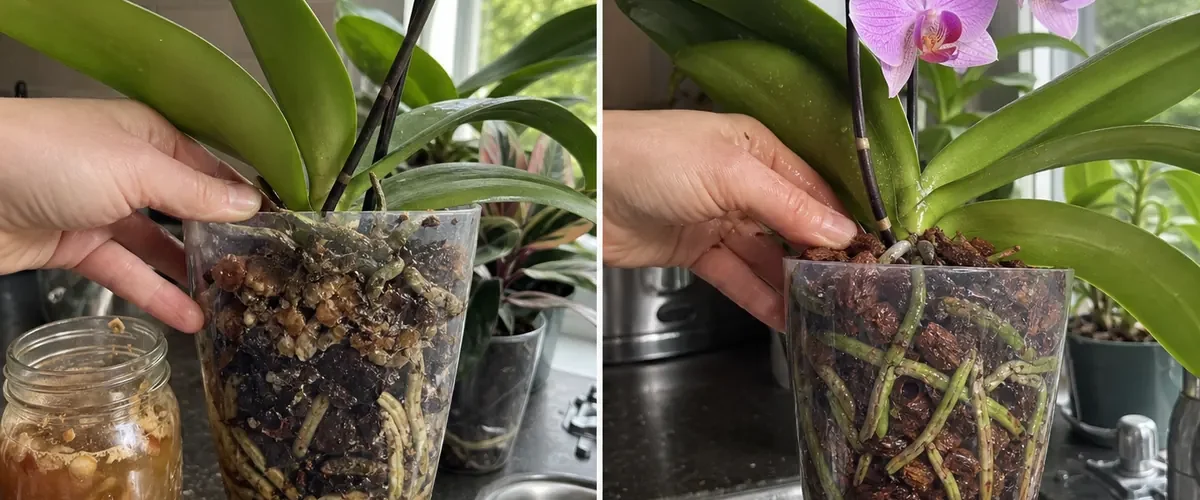
Lift the clear inner pot if the orchid has one. Firm green or silver roots are healthy signs. Brown, black, hollow, or mushy roots indicate damage. A sour smell suggests the bark remains wet or is decomposing.
Do not feed a plant with serious root rot. Remove it from the pot, trim dead roots with disinfected scissors, and replace broken-down medium with fresh orchid bark. Keep healthy tissue intact.
Why the Kitchen Recipe Is Too Dirty
Coffee, peels, and shells contain nutrients in forms that need decomposition. Blending makes smaller particles but does not create a balanced fertilizer. Fermentation for two days remains uncontrolled.
Fine material works into bark gaps and holds water. Sugars support microbes and gnats. Eggshell remains slow to dissolve. Repeating the blend twice a month can turn a clean airy pot into a damp compost pocket.
Send plain scraps to an appropriate compost system instead. Finished compost and orchid bark have different jobs and should not be treated as interchangeable.
Choose the Right Feed
Use a complete fertilizer labeled for orchids or compatible houseplants. Read the directions for concentration and frequency. Different formulas and growing conditions require different rates.
Measure accurately. If the label offers a weak regular schedule, use it only while the orchid is making active roots or leaves. Reduce feeding in dark, cool conditions or when the plant rests.
Do not mix fertilizer with rice water, peel water, coffee, or other tonics. Several mild products together can still create excess salts and organic residue.
The Feed-and-Flush Routine
Step 1: Check bark moisture
Feed on the appropriate watering day. If roots and bark are extremely dry, wet them with plain water first when consistent with the fertilizer label.
Step 2: Apply through the root zone
Pour the measured diluted fertilizer through the bark. Keep solution out of the crown and leaf joints. Let the pot drain completely.
Step 3: Return to plain water
Use plain water at the next watering or as the care plan directs. Periodic flushing carries unused salts out of the pot. Empty the saucer and never let runoff soak back into roots.
Step 4: Watch root tips
Healthy active tips are often green and firm. Blackened tips, white crust, or sudden root collapse after feeding are warnings. Stop fertilizer, flush, and reassess the concentration.
Light Makes the Feed Useful
Leaves need bright appropriate light to use nutrients. A common moth orchid often performs well in bright indirect light. Very dark leaves and no blooms can indicate insufficient light, while bleached patches suggest harsh direct sun.
Move plants gradually. A fertilizer dose cannot compensate for darkness, and stronger food in low light may only add salt.
Water for Roots, Not Flowers
Do not increase watering simply because the orchid is blooming. Check roots, bark, pot weight, and species needs. Water thoroughly, drain, and wait for the correct drying stage.
Keep flowers away from hot vents, cold windows, and ripening fruit. Avoid wetting petals late in the day, since spots can develop.
Common Routine Mistakes
Do not fertilize every time you remember, use an unmarked measuring spoon, or leave diluted feed standing for weeks. Mix only what the label permits and store concentrate in its original container.
Never use medicines as plant food. Keep fertilizer away from children, pets, and food tools. Wear any protection required on the label.
How Long Can Blooms Last?
Flower life depends on the orchid, the age of the spike, temperature, humidity, pollination, and care. A healthy Phalaenopsis display may last for months, but no feeding routine keeps every flower open for ten months.
After blooms fade, continue building roots and leaves. That recovery period stores energy for the next natural cycle.
Use a clear inner pot when the orchid type tolerates it, then place that pot inside a decorative cover. You can inspect moisture and roots without disturbing the plant, but always remove it for watering and drain it fully before returning it to the cover.
Keep the Root Zone Clean
The clean routine is simple: inspect roots, use complete measured nutrition during growth, drain fully, flush with plain water, and provide enough light.
It does not make a colorful kitchen video, but it leaves oxygen in the bark. When a fresh green root tip appears and later supports a new flower spike, the quiet method has delivered the result that matters.