Fall houseplant trouble often begins before anyone notices the days are shorter. A pot stays damp after its usual watering, a stem leans toward the window, and tiny pests settle into the still air. By the time several leaves turn yellow, the plant has been following the wrong seasonal routine for weeks.
Give every houseplant a simple room-by-room reset before fall light fades. You will not need a secret powder. You will need to inspect the light, roots, soil, temperature, and leaves, then change only what the plant asks you to change.
Step One: Gather the Plants by Room
Work through one room at a time. Place each pot on a washable surface and note its species if known. Check the plant label or a reliable care guide because “houseplant” is not one set of needs.
Keep cacti and succulents separate from moisture-loving tropical plants. Place pet-toxic species where animals cannot chew leaves or drink drainage water.
Step Two: Inspect From Top to Bottom
Look at the newest leaves first. Pale stretched growth may mean weak light. Brown soft areas can indicate rot or cold injury. Then check stems, leaf undersides, and joints for insects.
Remove dead leaves from the potting mix and wipe dust from broad healthy foliage with a damp cloth. Do not polish leaves with oil, milk, or mayonnaise; residues can collect dust and interfere with normal leaf surfaces.
Smell the soil. An earthy smell is normal. A sour odor, fungus growth, and a pot that remains wet may point toward poor drainage or damaged roots.
Step Three: Find the Best Fall Light
Track direct sun across the room. Move bright-light plants closer to a suitable window and shade-tolerant plants into the next level back. Leave enough space for air and avoid cold glass.
Make moves gradually. Autumn sun can still burn leaves that developed in deep shade. Rotate pots regularly so one side does not stretch.
If no window provides enough light, use a plant grow light with a timer. Follow the manufacturer’s recommended distance and give plants a dark period.
Step Four: Reset Watering
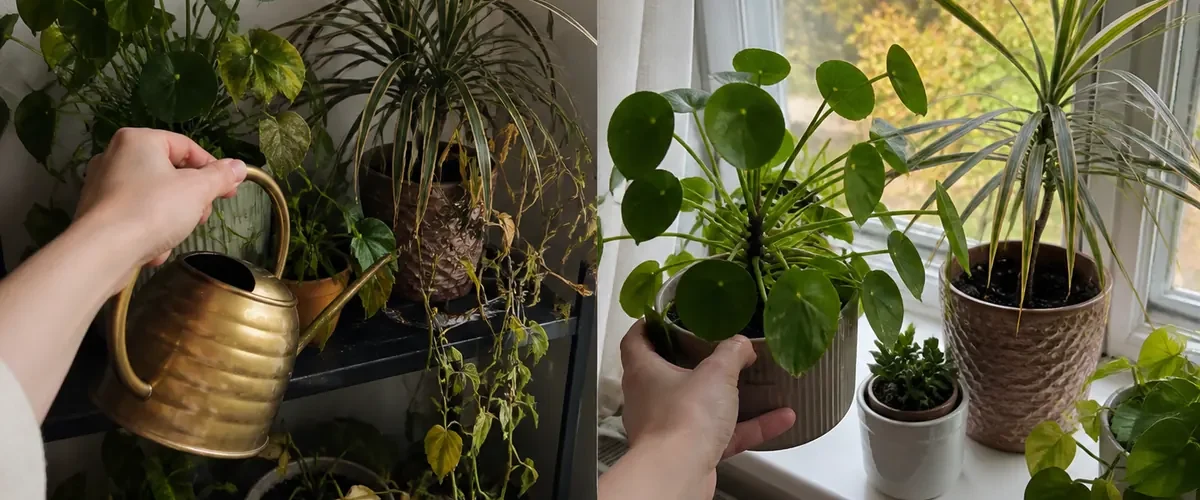
Do not carry the same watering can down the row and give every pot equal amounts. Feel each mix at the correct depth. Lift small pots and learn how heavy they feel wet and dry.
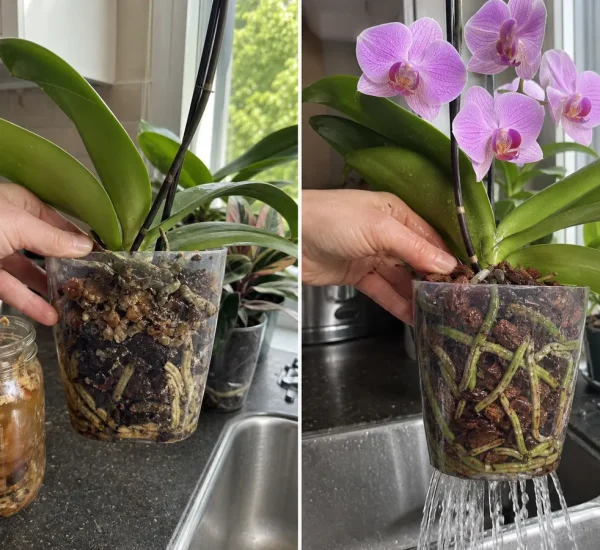
When a plant needs water, soak the mix until excess leaves the holes. Let it drain and empty the saucer. Then wait for the plant-specific drying point before repeating.
A pot that never dries may be too large, poorly drained, or filled with collapsed mix. A pot that dries in a day may be root-bound or too close to a heater.
Step Five: Decide Whether to Feed
Look for active new growth. If the plant has slowed as light fades, pause or reduce fertilizer. If a species flowers or grows actively in fall, continue only at its recommended rate.
Do not fertilize rotten roots, severely dry soil, or a pest-damaged plant. Nutrition cannot repair those causes. Avoid kitchen scraps and homemade liquid feeds indoors, where decomposition invites odor, mold, and gnats.
Step Six: Stabilize Air and Temperature
Move plants away from heating vents, fireplaces, cold doors, and strong air-conditioner flow. Check the window area at night, not just during a warm afternoon.
Use a clean humidifier for plants that need higher humidity, but do not create constant leaf wetness. Grouping compatible plants can reduce rapid drying. Keep enough space for gentle airflow.
Step Seven: Quarantine Pest Problems
Separate any plant with mites, scale, mealybugs, thrips, or fungus gnats. Do not place it back among healthy plants after one quick spray.
Identify the pest and follow a complete treatment schedule using a product labeled for indoor ornamental plants. Some treatments require repeat applications to reach newly hatched pests. Follow ventilation, protective equipment, and pet-safety directions.
What Not to Change in Fall
Avoid repotting every plant simply because you are cleaning the shelf. Root disturbance during slow growth can extend stress. Repot only for a clear reason, using a container one size larger and fresh appropriate mix.
Do not cut a healthy plant severely to fit a new space. Prune dead or dangerous growth, then schedule shaping for the species’ active season.
Watch the New Pattern
Write the date each pot is watered for several weeks. The pattern will show which plants now take longer to dry. Note pests and light moves so you do not repeat a treatment by accident.
Old damage may remain, but the reset should stop new problems from multiplying. Firm leaves, stable soil, clean growth, and fewer surprise gnats are real signs of improvement.
A Reset That Lasts Beyond Fall
The seasonal secret is attention. Light changes first, and water use, feeding, temperature, and pest pressure follow.
Inspect each plant, place it wisely, water by touch, feed only active growth, and keep the air stable. That simple fall reset can carry a tired collection through the dark months and leave it ready to wake naturally when stronger light returns.