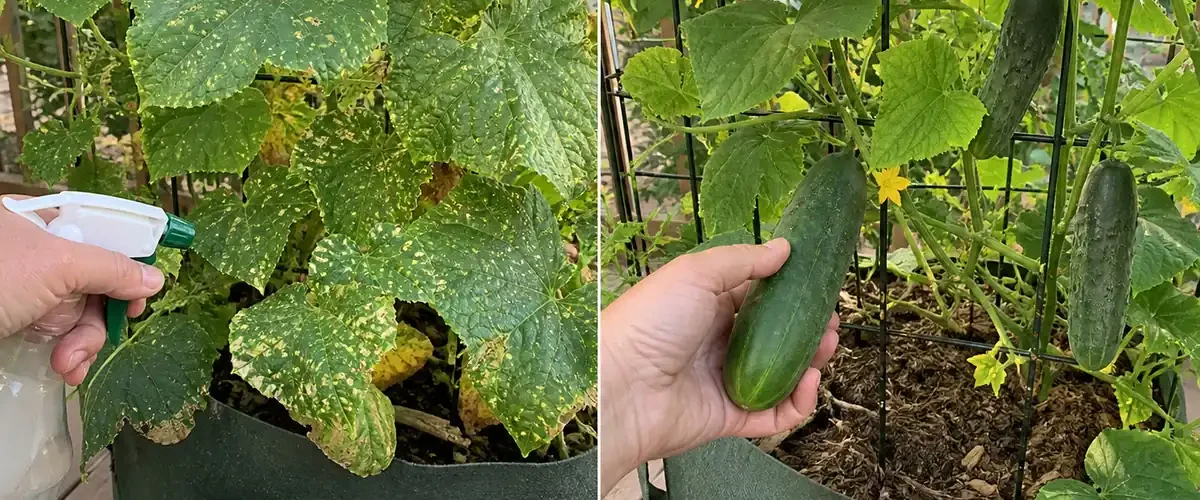
In late summer, every healthy cucumber leaf feels valuable. That is why a viral spray made from baking soda and a large quantity of laundry soap is so tempting. It claims to stop disease and keep the harvest coming until autumn.
On a small patio vine, one harsh application can damage a large share of the foliage. Household laundry soap is not a plant-care product, and baking soda adds sodium without feeding the cucumber. Protecting the leaves requires a gentler plan.
Start With a Clean, Open Vine
Guide cucumber stems up a stable trellis and loosen crowded growth. Do not force or sharply bend mature vines. Secure them with soft ties that leave room for thickening.
Remove dead leaves and a few leaves heavily covered with confirmed disease. Use clean snips and cut the leaf stalk without nicking the main stem. Keep enough healthy foliage to shade fruit and power growth.
In a container, position the trellis so wind cannot tip the pot. A broad base and adequate soil volume help the plant stay evenly moist.
Water for a Longer Harvest
Cucumber fruit is mostly water, so a drying container can interrupt development quickly. Check the mix every morning during hot weather. Water when the upper inch begins to dry, continuing until a little drains below.
Never let the pot stand in runoff. Add a clean mulch layer to slow evaporation, leaving the crown clear. If the pot becomes dangerously hot in afternoon sun, shade the container while keeping the leaves in useful light.
Pick Before Fruit Becomes Seedy
Harvest at the size recommended for the variety. Use scissors or pruners rather than twisting and pulling the vine. Frequent picking prevents hidden overmature fruit from consuming the plant’s energy.
Look behind leaves and along the trellis every day or two. A cucumber can enlarge surprisingly fast in warm weather.
Feed the Plant, Not the Spray Bottle
Container nutrients leave with drainage water. Use a fertilizer labeled for edible vegetables, following its directions for pots. Apply to moist mix and measure accurately.
Do not add extra nitrogen in hopes of faster recovery. A vine can become leafy while producing fewer flowers. Compost tea, yeast, soda, and sugar do not replace a known balanced formula.
Handle White Leaf Patches Carefully
Powdery mildew often begins as dusty white patches. Other diseases and spray residue can look similar, so examine both leaf surfaces and compare the pattern with trusted regional guidance.
Better spacing, morning watering at soil level, and prompt removal of badly affected leaves may slow trouble. Avoid wetting foliage late in the day.
If treatment is needed, choose one labeled for the specific problem and for edible cucumbers. Follow the harvest interval and temperature limits. A registered insecticidal soap or bicarbonate product is not interchangeable with laundry soap and household baking soda.
Why the Heavy Soap Recipe Is Risky
Laundry products may contain fragrance, enzymes, whitening agents, and salts. A concentrated solution can remove the leaf’s protective surface and cause brown or translucent spots.
Baking soda can scorch tender foliage and leave sodium in potting mix. Containers are especially vulnerable because their small soil volume concentrates repeated applications.
Never mix soap with vinegar, bleach, oils, or pesticides. Combining household products can create dangerous fumes, plant injury, or unexpected reactions.
Support Flowers and Pollination
Male flowers often appear before female flowers, so an early lack of fruit is normal. Female flowers have a tiny cucumber shape behind the petals.
Let pollinating insects reach open blooms and avoid spraying while they visit. On a screened balcony, hand-pollinate in the morning using a small clean brush if the variety requires pollination.
Plan Around Cooler Weather
As nights cool, growth naturally slows. Move a portable container to a brighter sheltered spot if conditions remain suitable. A breathable row cover can help through a brief chill, but uncover during warm periods and secure it without crushing vines.
Frost ends most cucumber vines. Rather than pushing a damaged plant indefinitely, record which variety produced longest and plan a timed second sowing next year.
Common Late-Season Mistakes
Avoid leaving giant fruit on the vine, pruning too heavily, allowing repeated wilting, fertilizing dry roots, and spraying in midday heat. Do not reuse diseased potting mix for cucumbers without appropriate treatment.
Wear gloves for pruning and every labeled garden treatment. Keep products in original containers beyond the reach of children and pets.
Keep a harvest note with picking dates and fruit counts. It reveals whether the vine is truly continuing to produce or merely finishing fruit that had already set.
Make Every Healthy Leaf Count
The strongest late cucumber harvest comes from protecting roots and productive foliage, not covering the vine in a harsh homemade mixture.
Water evenly, pick often, improve airflow, diagnose spots, and treat only with a correctly labeled product when necessary. Those quiet steps can keep a compact vine useful well into the warm part of fall.