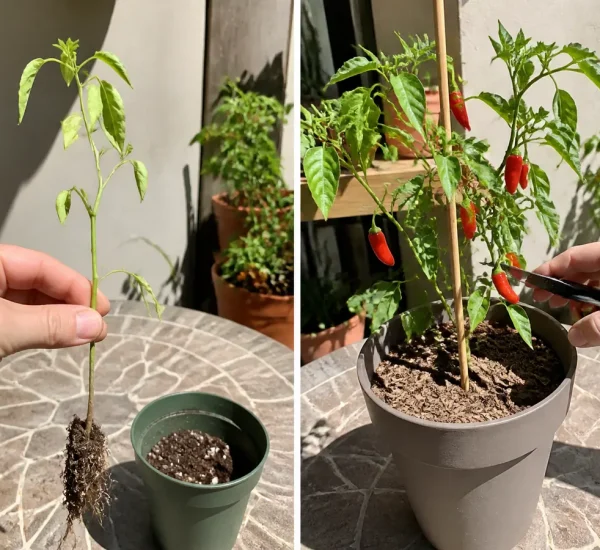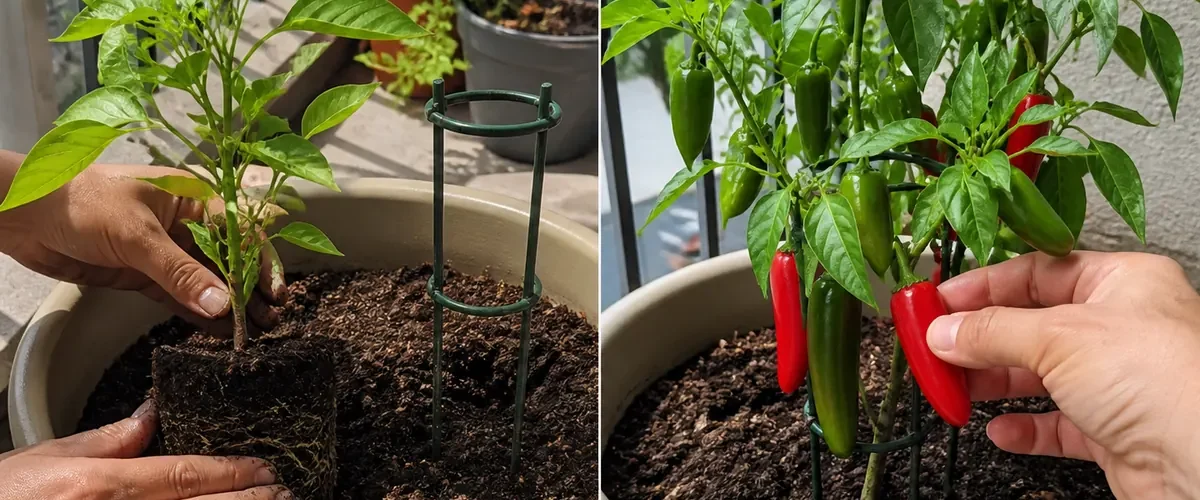
The best moment in a small pepper garden is the first ripe fruit. It seems to begin with a flower, but much of the result was decided weeks earlier when the pot, roots, light, and support were set up.
A strong beginning cannot guarantee every blossom will set. It can prevent the avoidable stresses that make a balcony pepper drop flowers or stop growing.
Pick a Compact, Timely Variety
Check mature height, heat level, fruit size, and days to maturity. Compact early peppers fit a short season or small balcony more easily than a tall long-season variety.
Choose a healthy transplant with a thick stem and no pests. A plant covered with peppers in a tiny nursery pot may be stressed and root-bound.
Use One Generous Container
Select a stable pot large enough for the variety, with several open drainage holes. Use fresh container mix rather than yard soil.
Plant the pepper at the same depth and water it in. Do not break apart the root ball aggressively. Keep the saucer empty so roots never stand in water.
Warm It Up Gradually
Harden the transplant outdoors over several days. Give it increasing sun and wind exposure while protecting it from cold nights.
Peppers grow slowly in chilly conditions. Wait for reliably warm weather before leaving the pot outside full time. A dark container can overheat later, so shield the pot itself during severe afternoon heat.
Add the Support on Day One
Insert a stake or compact cage before roots spread through the pot. This avoids puncturing them later.
Keep ties soft and loose. The main stem should move slightly without rubbing. Recheck ties every few weeks as the plant thickens.
Learn the Pot’s Weight
Lift the container after a deep watering and again when the top inch dries. The weight difference becomes a useful moisture signal.
Water the full mix, let it drain, and wait before repeating. During hot windy days, check daily, but do not water automatically if the pot remains wet.
Feed a Growing Plant
Use a fertilizer labeled for container vegetables at its stated rate. Apply to moist mix. Because nutrients leave through drainage, pots may need regular modest feeding.
Avoid repeated high-nitrogen doses. They can encourage leaves instead of flowers. Do not add single nutrients or homemade tonics without evidence of a deficiency.
Keep the First Flowers in Perspective
A young transplant may benefit from having a very early flower or tiny fruit removed while roots establish, but practices vary by plant size and season. Do not strip a healthy mature plant.
Flower drop can occur during extreme heat, cold, drought, or heavy feeding. Correct the stress and wait for the next flush.
Pollination in a Small Space
Pepper flowers can self-pollinate. Breeze, insects, or a gentle tap on the support helps pollen move. Avoid spraying flowers.
Grow a small pollinator-friendly flower nearby if space allows, keeping both pots uncrowded and easy to water.
Protect the Leaves
Leaves shade developing fruit and power growth. Do not prune heavily to make the plant look tidy. Remove only damaged or diseased material with clean snips.
Inspect undersides for aphids and mites. Isolate a badly infested container and identify the pest before choosing a labeled treatment.
Pick Without Breaking Branches
Use scissors or pruners and hold the branch. Harvest at green maturity or wait for full color according to taste and the variety.
Picking some fruit green can reduce branch load and may allow later fruit to develop. Never leave a heavy ripe pepper pulling on a thin unsupported branch.
Record the Transformation
Photograph the plant after transplanting, at first flower, and at first harvest. Note feeding and extreme weather. The record shows how early setup influenced the result.
Build a Wind-Safe Balcony Harvest
Wind dries containers and twists fruiting branches. Place the pot near a protective barrier that does not block sun or required ventilation. Tie the cage to an approved stable anchor rather than the balcony railing unless building rules allow it.
Check drainage water so it cannot fall onto people or property below. Use a broad saucer only to catch runoff temporarily, then empty it. Never trade drainage for tidiness.
Before a storm, pick ripe fruit, remove loose tools, and move the container to shelter if its weight and route make that safe. Do not attempt to lift a heavy wet pot alone.
After wind passes, check the stem at every tie and support point. Stabilize a partial crack early and remove a fully broken diseased branch cleanly.
The Secret Before the Flower
The harvest starts with a suitable variety in a roomy draining pot, warmed gradually, supported early, watered evenly, and fed with restraint.
When the first white flower finally opens, the pepper already has the foundation to carry it. That is the quiet secret behind a colorful small-space harvest.