A single balcony plant can host both aphids and scale while ants use the same short stem routes all day. Aphids and scale insects disappear instantly with this natural pesticide uses baking soda, household liquid soap, and oil sprays being presented as instant natural pesticides for aphids and scale to claim that one homemade spray makes both pests disappear immediately without harming plants or beneficial insects.
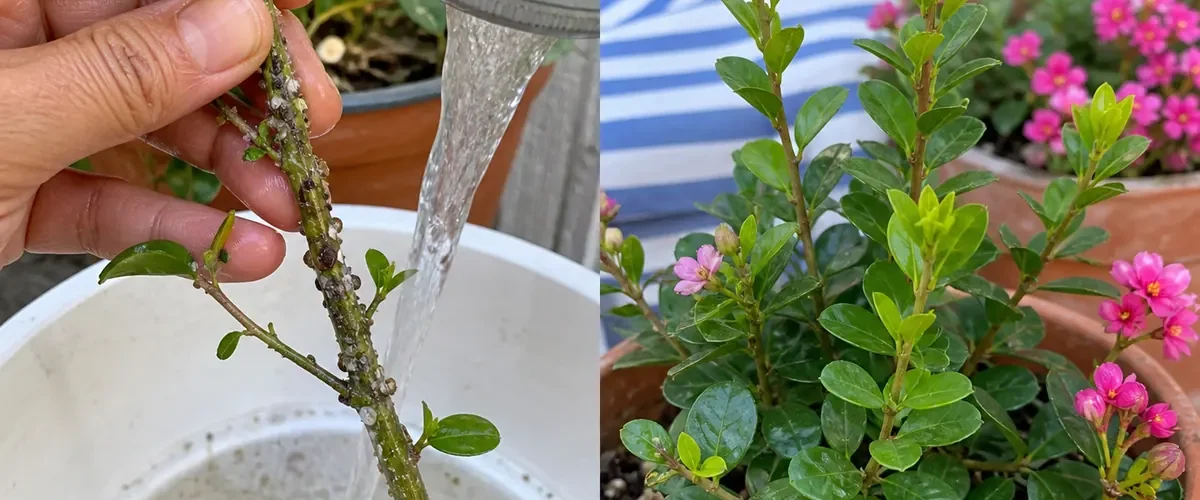
One focused week can produce infested stems and leaf undersides becoming visibly clean while fresh growth opens without sticky honeydew or new colonies.
Clear One Seven-Day Aphid-and-Scale Colony Collapse Work Zone
For the compact seven-day aphid-and-scale colony collapse check, identify aphids versus armored or soft scale, then inspect leaf undersides, stems, crawlers, adults, honeydew, sooty mold, ants, curled new growth, plant stress, natural enemies, flowers, sun and heat, drought, product label, test leaf, and fixed pest counts.
While testing seven-day aphid-and-scale colony collapse, keep nearby food, utensils, tools, and personal items outside the work area. One clear before photograph and one marked check point are enough to make the compact result honest.
The Six-Move Seven-Day Aphid-and-Scale Colony Collapse Routine
- Confirm both pests. Use a hand lens to distinguish moving aphids, fixed scale covers, soft scale, crawlers, and harmless leaf features.
- Count fixed shoot tips. Record living pests on the same marked leaves and stems before any pruning, rinsing, or treatment.
- Remove the heaviest colonies. Prune justified hotspots or rinse sturdy plants with water while preventing spread to nearby pots.
- Break the ant partnership. Clean honeydew, block safe access routes, and manage ants without harming roots, pollinators, or predators.
- Use one labeled treatment. Choose registered insecticidal soap or horticultural oil for the exact plant and pest, test a small area, and follow the label.
- Recount through day seven. Inspect crawlers and new leaves, repeat only at the labeled interval, and preserve lady beetles, lacewings, and other helpers.
Choose the Small-Space Seven-Day Aphid-and-Scale Colony Collapse Promise
Inside this compact setup, aphids and scale differ in life stage and protective covering, and household soap or baking soda can scorch leaves. A strong, safer result comes from confirming the pest, pruning or rinsing heavy clusters, controlling ants, preserving predators, and using a labeled insecticidal soap or horticultural oil only on suitable plants and life stages.
For one contained setup, the result to chase is infested stems and leaf undersides becoming visibly clean while fresh growth opens without sticky honeydew or new colonies. Keep every move tied to reducing living aphids, scale crawlers, honeydew, and ant protection while keeping wanted foliage and beneficial insects unharmed, so the method remains easy to stop, clean, and repeat.
Make the Seven-Day Aphid-and-Scale Colony Collapse Fit the Same Footprint
Start with confirm both pests, count fixed shoot tips, remove the heaviest colonies; they address the cause before another bottle, trap, or tool is added. Return unused materials to storage as soon as the first correction is complete.
Finish with break the ant partnership, use one labeled treatment, recount through day seven. That compact chain supports reducing living aphids, scale crawlers, honeydew, and ant protection while keeping wanted foliage and beneficial insects unharmed and leaves the small area with infested stems and leaf undersides becoming visibly clean while fresh growth opens without sticky honeydew or new colonies, not a second cleanup project.
Close the Seven-Day Aphid-and-Scale Colony Collapse Routine Cleanly
For a safe compact seven-day aphid-and-scale colony collapse routine, follow pesticide labels, protect eyes and skin, and keep spray from children, pets, food, pollinators, and waterways. Never mix products or household cleaners, and avoid oil on heat-stressed or sensitive plants.
After seven-day aphid-and-scale colony collapse, remove waste, drain only where permitted, clean the tools, and return the area to normal use. The method has not worked if it leaves a hidden hazard behind.
Wait for the Seven-Day Aphid-and-Scale Colony Collapse Without Adding Clutter
For this small seven-day aphid-and-scale colony collapse setup, water and hand removal reduce exposed aphids immediately, but eggs, hidden scale, and crawlers require repeat checks. Count the same shoots for seven days and follow label intervals. Clean new growth is better evidence than old damaged leaves.
During the seven-day aphid-and-scale colony collapse wait, leave only the essential setup in place. Do not add a second remedy because the final transformation needs more time than the first visible change.
Keep These Four Seven-Day Aphid-and-Scale Colony Collapse Problems Out
1. Guessing the pest
For seven-day aphid-and-scale colony collapse, it adds clutter without solving the strongest limit.
2. Mixing soda soap and oil
For seven-day aphid-and-scale colony collapse, it can spread residue, moisture, pests, or stress beyond the test area.
3. Spraying flowers in hot sun
For seven-day aphid-and-scale colony collapse, it turns one contained routine into repeated cleanup.
4. Ignoring ants and crawlers
For seven-day aphid-and-scale colony collapse, it sacrifices a stable result for a fast-looking change.
One Natural Treatment Eliminates Scale Insects and Aphids Fast: Keep the Compact Win
Keep the routine only when it leaves infested stems and leaf undersides becoming visibly clean while fresh growth opens without sticky honeydew or new colonies inside the same clean footprint. Start at confirm both pests, remove everything that did not help, and repeat the smallest successful version when the next monitoring cycle calls for it.