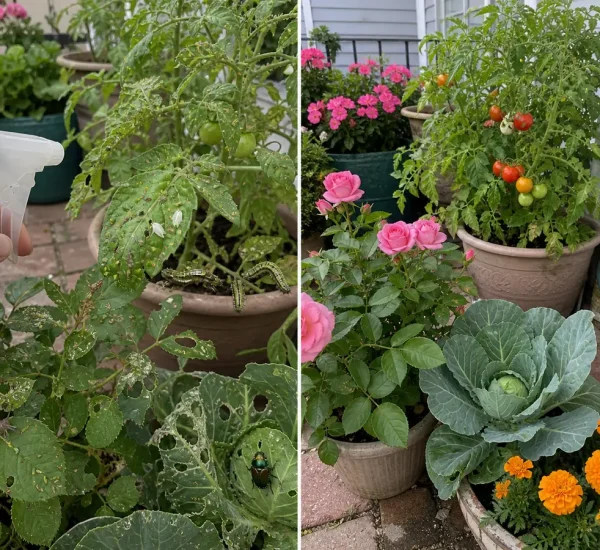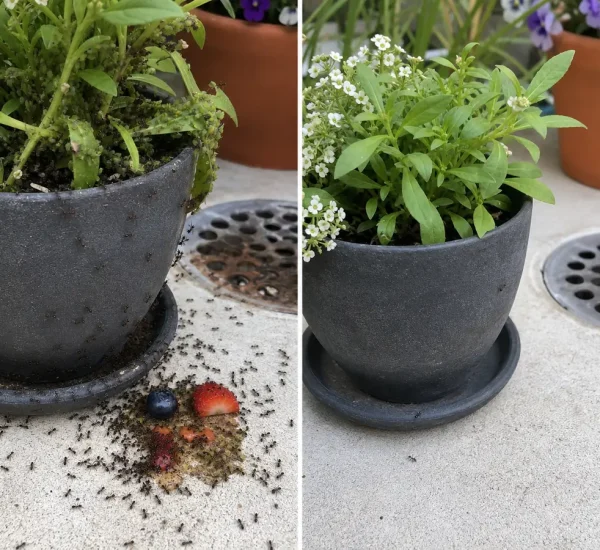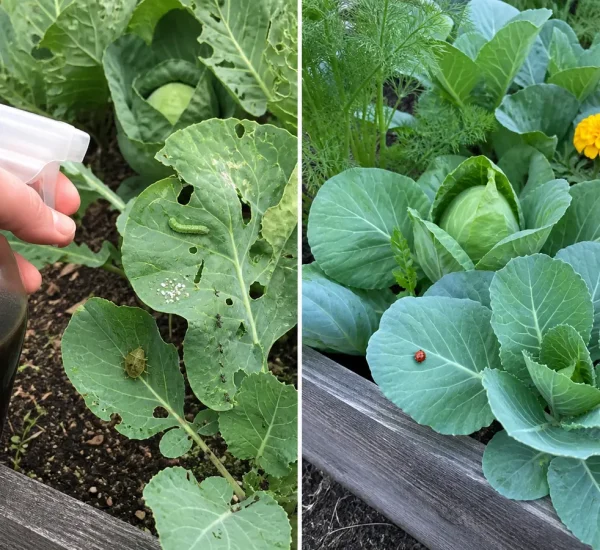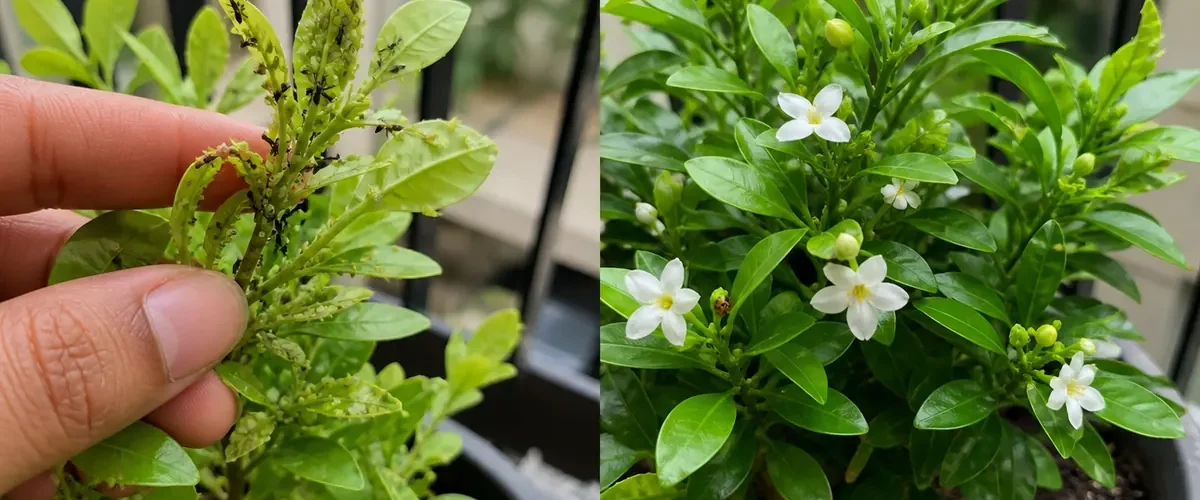
A tiny balcony plant can host hundreds of aphids because ants patrol the same short route all day. Just 1 tablespoon and aphids and ants will disappear immediately! Take preventive action! uses hot-pepper and liquid-soap spray being applied to aphids and guarding ants on flowers to claim that one tablespoon makes aphids and ants disappear immediately without harming plants or helpful insects.
One focused week can produce visible aphid colonies collapsing within a week while clean new growth and beneficial insects remain.
Compact Setup: Clear a Small Work Zone and Inspect the Evidence (6)
For the compact seven-day aphid colony collapse check, confirm aphids, then count them on fixed tips and leaf undersides; record curled growth, honeydew, ants, mummies, predators, pollinators, plant species, heat, drought, spray history, nearby colonies, and ant access.
While testing seven-day aphid colony collapse, keep nearby plants, food, tools, and personal items outside the work area. One clear before photograph and one marked check point are enough to make the compact result honest.
The Six-Move Seven-Day Aphid Colony Collapse Routine
- Count three infested shoot tips. Photograph the same locations, estimate aphids, note ants and natural enemies, and mark the shoots for repeat checks.
- Rinse the colony off first. Support the stem and use a firm targeted stream of plain water, protecting delicate flowers and avoiding soil erosion.
- Prune only the worst curl. Remove a small heavily packed tip when the plant can spare it, seal it in waste, and preserve shoots carrying aphid mummies or predators.
- Break the ant protection route. Remove touching weeds or supports, manage honeydew, and use only a labeled inaccessible ant control when a nest keeps restoring guards.
- Escalate with a labeled soap. Test first, follow the insecticidal-soap label exactly for that plant, cover aphids directly, and avoid heat, open flowers, and beneficial insects.
- Prove collapse on day seven. Repeat counts on the marked shoots, inspect clean new leaves, and apply again only at the labeled interval if live colonies remain.
Set One Honest Seven-Day Aphid Colony Collapse Promise
Inside this compact setup, no homemade tablespoon guarantees selective control. Pepper irritates people and animals, unknown soap can burn leaves, and contact sprays may hit beneficial insects. A hard water rinse, selective pruning, ant-route correction, repeated counts, and labeled insecticidal soap when needed can break the colony safely.
For one contained setup, the result to chase is visible aphid colonies collapsing within a week while clean new growth and beneficial insects remain. Keep every move tied to aphid numbers dropping across fixed shoots while ant protection is interrupted and predators, flowers, and new leaves avoid unnecessary spray exposure, so the method remains easy to stop, clean, and repeat.
Compact Setup: Make Every Material Earn Its Space (6)
Start with count three infested shoot tips, rinse the colony off first, prune only the worst curl; they address the cause before another bottle, pot, or tool is added. Return unused materials to storage as soon as the first correction is complete.
Finish with break the ant protection route, escalate with a labeled soap, prove collapse on day seven. That compact chain supports aphid numbers dropping across fixed shoots while ant protection is interrupted and predators, flowers, and new leaves avoid unnecessary spray exposure and leaves the small area with visible aphid colonies collapsing within a week while clean new growth and beneficial insects remain, not a second cleanup project.
Compact Setup: Finish With a Clean and Safe Small Space (6)
For a safe compact seven-day aphid colony collapse routine, avoid pepper aerosols and never mix pest products. Wear required protection, keep sprays from eyes, children, pets, pollinators, and waterways, follow edible-crop directions, and wash produce.
After seven-day aphid colony collapse, remove waste, drain only where permitted, clean the tools, and return the area to normal use. The method has not worked if it leaves a hidden hazard behind.
Compact Setup: Plan the Wait Without Filling the Space Again (6)
For this small seven-day aphid colony collapse setup, a firm water rinse can remove many exposed aphids today, but survivors and new young may rebuild. Recount the same shoots every two or three days for a week. Clean expanding leaves and falling colony counts show progress; established ant nests may require a separate labeled strategy and more time.
During the seven-day aphid colony collapse wait, leave only the essential setup in place. Do not add a second remedy because the final transformation needs more time than the first visible change.
Keep These Four Seven-Day Aphid Colony Collapse Problems Out
1. Spraying hot pepper near eyes
For seven-day aphid colony collapse, it adds clutter without solving the strongest limit.
2. Using dish detergent as a pesticide
For seven-day aphid colony collapse, it can spread residue, moisture, pests, or stress beyond the test area.
3. Coating open flowers
For seven-day aphid colony collapse, it turns one contained routine into repeated cleanup.
4. Ignoring ant routes
For seven-day aphid colony collapse, it sacrifices a stable result for a fast-looking change.
Use One Tablespoon Now and Stop Aphids and Ants Before They Spread: Keep the Compact Win
Keep the routine only when it leaves visible aphid colonies collapsing within a week while clean new growth and beneficial insects remain inside the same clean footprint. Start at count three infested shoot tips, remove everything that did not help, and repeat the smallest successful version when the next normal-care cycle calls for it.