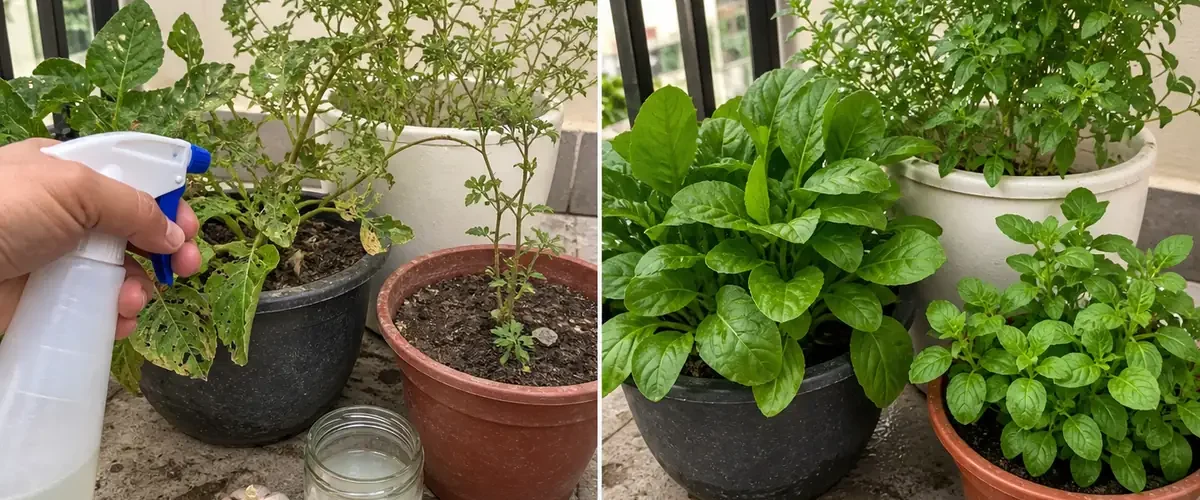
On a small balcony, one pest-damaged pot can threaten every plant beside it. The source answer is unstrained boiled garlic, cinnamon, and dish detergent being sprayed around every plant as a harmless disinfectant and universal insect repellent, backed by the tempting claim that five boiled garlic cloves solve a common plant pest problem without chemicals and remain harmless around animals.
A compact rescue needs less mess and clearer stopping points. The routine below uses one test plant to work toward fewer soft-bodied pests without scorched leaves or damaged pollinators before anything spreads across the shelf.
What the Bold Garlic Pest Spray Claim Leaves Out
For a compact setup, the practical limit is clear: garlic odor may briefly deter some insects, but a homemade mix does not identify or eliminate every pest. Dish detergent can strip leaf coatings, concentrated sprays can burn foliage, and broad spraying can contact useful insects.
In limited space, a weak method creates odor, clutter, runoff, or repeated work very quickly. A cleaner sequence can still reach fewer soft-bodied pests without scorched leaves or damaged pollinators. It should not add a second problem.
Prove the Garlic Pest Spray Result With More Than One Signal
Use one plant or container as the first garlic pest spray trial. Mark it discreetly and keep neighboring plants out so runoff, pests, shade, or a second treatment cannot confuse the result.
Repeat only after the test plant stays stable through normal care. In a small space, the best proof is fewer soft-bodied pests without scorched leaves or damaged pollinators with easy cleanup and no spillover into the rest of the room or garden.
Read the Garlic Pest Spray Clues Before Acting
At one tidy work station, identify the insect on both leaf surfaces, count affected shoots, look for sticky honeydew, webbing, scale covers, eggs, root stress, sun scorch, beneficial insects, and any product already applied.
Clear a small garlic pest spray work zone and protect nearby floors, fabrics, plants, food, and shared air. Test one subject or one hidden area before treating the entire space.
Compact Setup: Six Garlic Pest Spray Moves That Make the Promise Believable
- Compact Start: Name the pest first. On one test subject, photograph the insect and damage, then use a trusted extension or pest guide to separate aphids, mites, scale, fungus gnats, and harmless visitors.
- Clear-Space Move: Isolate and rinse the plant. With the nearby area clear, move an infested pot away from neighbors and use a firm stream of plain water where the plant can tolerate it, supporting tender stems by hand.
- Low-Clutter Correction: Remove the worst pockets. Before using more materials, prune badly crowded tips or wipe small colonies away so any later treatment has less work to do.
Smallest Effective Step: Choose the Narrowest Control
For the smallest useful change, use a labeled insecticidal soap or pest-specific product only when needed, following the plant list, dilution, coverage, and repeat interval on the label.
Contained Trial: Patch-test the Garlic Idea
Keep the trial contained: if testing a mild strained garlic-water infusion, treat one leaf at dusk, keep it off flowers, and wait at least forty-eight hours before wider use.
Clean Finish: Count Instead of Guessing
To finish the small-space test, record insects on the same leaves each week and stop adding products when the population is falling without new plant damage.
Why These Moves Create Fewer Soft-bodied Pests without Scorched Leaves or Damaged Pollinators
A small plant setup improves when each correction earns its place. Start with name the pest first, then use isolate and rinse the plant and remove the worst pockets to protect roots, leaves, and the limited space around them.
Contain the trial at patch-test the garlic idea and close the loop with count instead of guessing. The result is worth keeping only when those compact moves produce fewer soft-bodied pests without scorched leaves or damaged pollinators. No fresh clutter or stress should follow.
A Believable Timeline for Fewer Soft-bodied Pests without Scorched Leaves or Damaged Pollinators
Plan the wait as carefully as the work: a water rinse or careful hand removal can lower a light aphid or mite population immediately. Check the plant again after two days and then weekly because eggs and hidden insects may remain.
Keep the garlic pest spray setup steady while you wait. Repeatedly moving, feeding, watering, or repotting can hide which action helped and add fresh stress.
Common Garlic Pest Spray Shortcuts That Create a Second Problem
1. Avoid using dish detergent as insecticidal soap
It may improve one photograph while the wider garlic pest spray system declines.
2. Avoid spraying hot sunny leaves
It adds a new variable before the garlic pest spray cause is understood.
3. Avoid leaving solids in the bottle
It can delay the useful correction and prolong the original garlic pest spray problem.
4. Avoid treating every insect as a pest
It makes the promised garlic pest spray finish harder to separate from normal change.
Stop the Garlic Pest Spray Test if Any Limits Are Crossed
In a shared small space, wear gloves, avoid eyes and skin, keep mixtures labeled and away from children and pets, and never spray open flowers or visiting pollinators. Discard sour mixtures and do not call a homemade spray a disinfectant.
Keep the garlic pest spray area tidy, control runoff, and store every material away from food, children, and pets. Clean the work zone before normal care resumes.
Put 5 Garlic Cloves in a Pan and Watch What Happens: The Result Worth Keeping
The best small-space transformation is impressive because it stays controlled. Begin with the step name the pest first, change one important condition at a time, and keep the routine only when it delivers fewer soft-bodied pests without scorched leaves or damaged pollinators. It should not create extra work nearby.