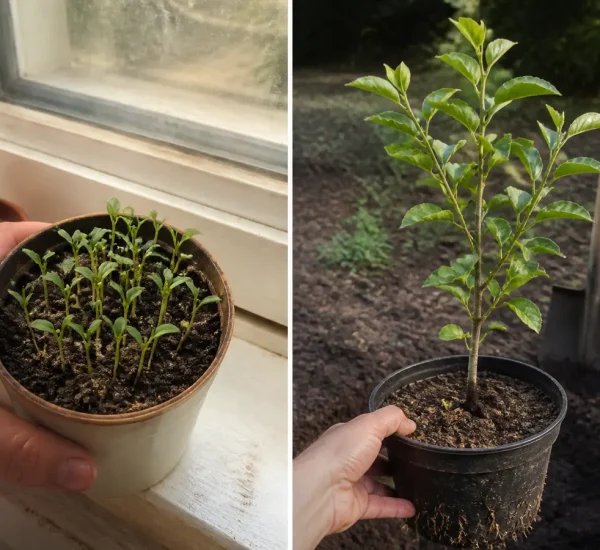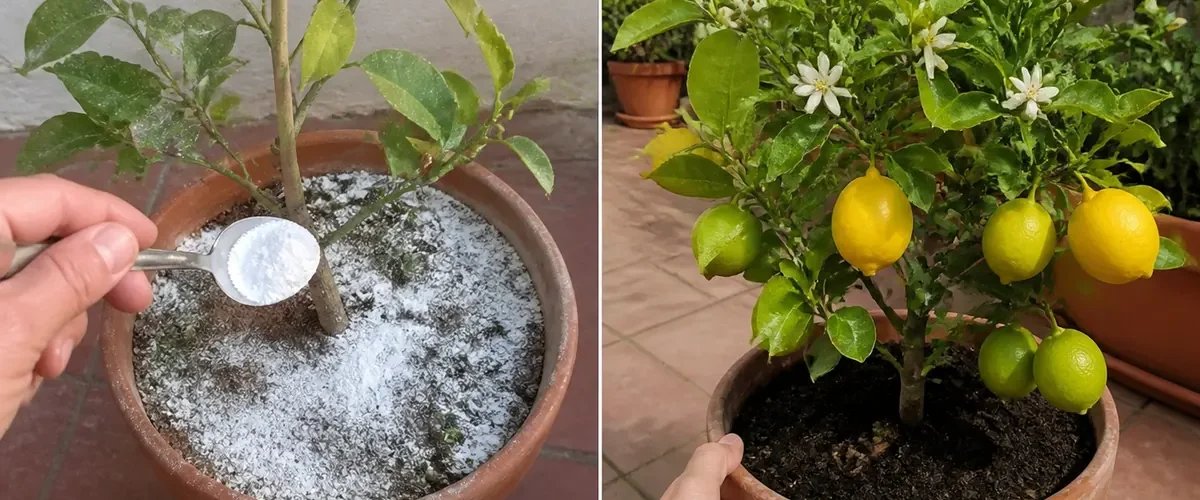
In a small home, kitchen, or garden, one struggling subject can dominate the whole space. Here the starting point is a leafy lemon tree receiving spoonfuls of manure, wood ash, and high-nitrogen urea around shallow roots. The source, Just 1 Spoon Makes the Lemon Tree Overflow with Fruit (Lemons All Year Round), answers it with a tempting promise: one spoon of the right mixture makes a lemon tree overflow with fruit all year.
A compact space needs a method that earns its footprint. The plan below aims for more healthy blossoms and a fuller seasonal lemon crop, with steps that are tidy, measurable, and easier to stop if the result turns the wrong way. That is how a dramatic change becomes useful instead of merely photogenic.
What the Bold Lemon Tree Feeding Claim Leaves Out
No spoon guarantees year-round lemons; excessive urea can drive soft leafy growth, wood ash can raise pH and salts, and fruiting also requires tree maturity, sun, water, pollination, and balanced citrus nutrients.
In limited space, a weak method creates odor, clutter, runoff, or repeated work very quickly. A cleaner sequence can still reach more healthy blossoms and a fuller seasonal lemon crop without adding a second problem.
Prove the Lemon Tree Feeding Result With More Than One Signal
Use one plant or container as the first lemon tree feeding trial. Mark it discreetly and keep neighboring plants out so runoff, pests, shade, or a second treatment cannot confuse the result.
Repeat only after the test plant stays stable through normal care. In a small space, the best proof is more healthy blossoms and a fuller seasonal lemon crop with easy cleanup and no spillover into the rest of the room or garden.
One Careful Check Changes the Whole Plan
Name variety, rootstock, age, climate, flowering season, daily sun, soil pH, drainage, leaf symptoms, fruit load, irrigation, and every plant food already used ahead of adding nitrogen, manure, or ash.
Clear a small lemon tree feeding work zone and protect nearby floors, fabrics, plants, food, and shared air. Test one subject or one hidden area before treating the entire space.
Six Moves That Make the Promise Believable
Look at Light and Tree Maturity, Then Read Soil and Leaf Signals
Give the canopy strong direct sun and confirm that a young seedling is old enough to flower ahead of blaming plant food. Then use soil pH or nutrient testing when possible and distinguish uniform hunger from pests, wet roots, cold stress, or micronutrient chlorosis.
Guard the Feeder Roots, Then Use Complete Citrus Nutrition
Keep mulch and plant food away from the trunk, water dry soil first, and spread nutrients across the active root zone instead of drilling concentrated holes. Then apply a labeled citrus plant food at the rate for tree size and container or ground culture, including needed micronutrients.
Manage Flowers and Fruit, Then Review Ahead of Repeating
Keep moisture steady during bloom and fruit set, support pollination, and avoid severe pruning or nitrogen surges that favor leaves over flowers. Then track new growth, leaf color, blossom retention, and fruit development, then adjust only at the labeled interval.
Why These Moves Create More Healthy Blossoms and a Fuller Seasonal Lemon Crop
Plants recover when roots, moisture, light, temperature, and nutrition are corrected in the right order. The first move, look at light and tree maturity, sets the baseline. The next moves, read soil and leaf signals and guard the feeder roots, protect the living system that must create new growth.
The fifth move, manage flowers and fruit, supports the plant after the first visible change; the final move, review ahead of repeating, confirms its direction. Together they make more healthy blossoms and a fuller seasonal lemon crop a result of functioning roots and steady care rather than a short-lived surface effect.
A Believable Timeline for More Healthy Blossoms and a Fuller Seasonal Lemon Crop
Corrected nutrition can improve new leaves over weeks, while new flowers follow the tree’s normal cycle. Lemons then need several months to size and ripen.
Keep the lemon tree feeding setup steady while you wait. Repeatedly moving, feeding, watering, or repotting can hide which action helped and add fresh stress.
Avoid These Errors Before Repeating the Method
- Pouring urea into concentrated holes. It can spread residue, stress, or pests beyond the first lemon tree feeding test.
- Adding ash without checking ph. It hides the lemon tree feeding cause and makes the next decision less reliable.
- Using fresh manure near roots. It can create damage before more healthy blossoms and a fuller seasonal lemon crop has time to appear.
- Promising lemons in every season. It changes too many lemon tree feeding conditions to show what truly worked.
Stop the Test if Any of These Limits Are Crossed
Wear gloves with plant food and manure, keep products labeled and dry, avoid breathing ash dust, wash edible fruit, and never combine concentrated plant food materials without an agronomic recommendation.
Keep the lemon tree feeding area tidy, control runoff, and store every material away from food, children, and pets. Clean the work zone before normal care resumes.
This One-Spoon Secret Keeps Fresh Lemons Coming Every Season: The Result Worth Keeping
The best small-space transformation is impressive because it stays controlled. Begin with look at light and tree maturity, change one important condition at a time, and keep the routine only when it delivers more healthy blossoms and a fuller seasonal lemon crop without creating extra work nearby.