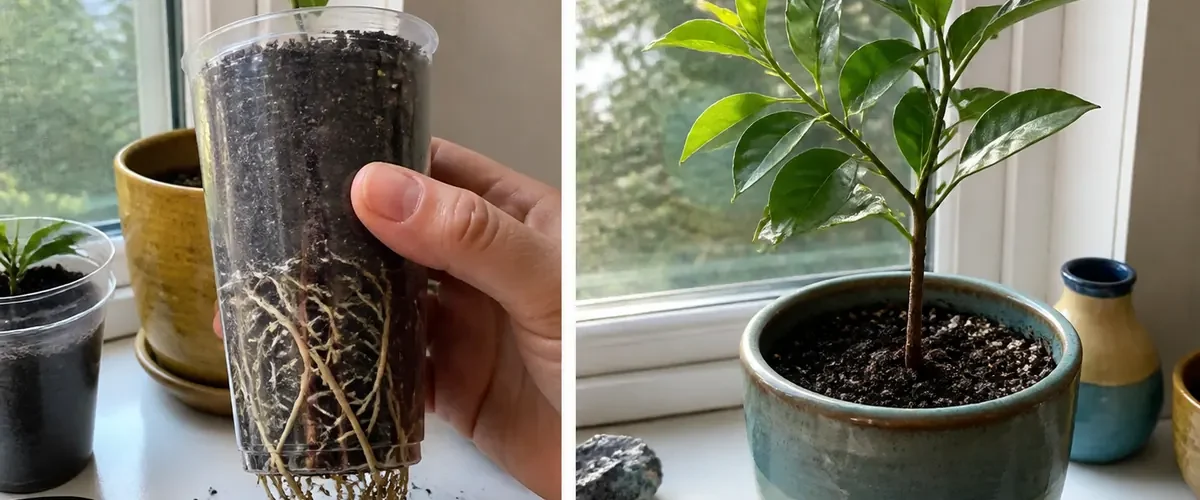
One draining cup can start a citrus pip, then hand the young tree to a real pot before the young roots knot together.
The article How to Sprout a Lemon Tree in a Cup and Fill the Home With Fresh Fragrance suggests starting lemon seeds in a decorative cup and expecting the tiny plant to perfume a room or supply fruit. The tempting promise is that one seed left in a cup quickly becomes a fragrant fruiting lemon tree indoors.
Leave Four Problems Outside: Four Shortcuts That Stall a Young Citrus Tree
- Sealing a soggy cup. A sealed wet chamber limits air and can cover the seed coat with mold before a root appears.
- Using a vessel with no drainage. Water collecting below the seed excludes oxygen and makes later root trouble almost certain.
- Expecting quick lemons or perfume. Juvenility lasts years, and seed-grown citrus may not match the fruit that supplied the seed.
- Leaving the seedling root-bound. Circling young roots, pale leaves, and stalled height show that the decorative starter has finished its job.
Use the Compact Six-Step Setup: Carry the Lemon From Fresh Seed to First Pot
- Choose one fresh seed
- Take a plump undamaged seed from sound fruit and sow promptly before it dries out.
- Wash away the pulp
- Rinse off sugar and fruit tissue that could support mold, but do not cut into the seed.
- Give the cup drainage
- Use a clean nursery cup with several open holes and a saucer that is emptied after watering.
- Sow at a shallow depth
- Set the seed about half an inch deep in damp seed-starting mix and firm it lightly.
- Hold warmth, then add light
- Keep the mix evenly damp and ventilated. After emergence, provide bright light without sudden scorching sun.
- Move before roots stall
- Transfer the intact soil plug into a draining pot when young roots appear at holes or several real leaves have formed.
Plan the Short Wait and Return: Count Germination in Weeks and Fruit in Years
Waiting plan: under useful warmth, a fresh seed may emerge in two to three weeks, though some take longer. Young roots can fill a cup surprisingly fast. Move the seedling after several real leaves or when young roots reach the holes. A grafted tree is the practical choice when predictable fruit is the goal.
Leave the young citrus setup simple during the cup-to-pot young citrus start. Give the seedling good airflow. Review the young citrus once as planned. For this young citrus, skip late ingredients in the starter tray.
Compact proof: Write the sowing date on the garden record, not the cup. Photograph emergence, the first real leaves, and young roots at the holes. The successful finish is a clean transfer with the soil plug intact.
Let Each Item Earn Its Place: Why Warm Moisture Works Until the Cup Becomes Small
The small seedling setup works for a clear reason: a fresh citrus seed needs oxygen, steady moisture, and warmth for germination. Open holes preserve oxygen while a light mix lets the first root move downward. Once that root system occupies the cup, more space and fresh air around the mix matter more than the charm of the starter vessel.
This compact young citrus routine succeeds through using a fresh cleaned seed, a draining starter vessel, gently warm moisture without saturation, bright light after emergence, and a timely move into a larger free-draining pot. Its unused shortcut can leave the shelf.
Close the Job Without Risk: Keep Mold, Soil, and Citrus Disease in Check
Compact cleanup: use a stable cup, clean tools, and fresh mix. Discard moldy seeds and wash hands after handling potting material. Keep seedlings and soil away from food-preparation surfaces, and follow local citrus-disease rules before moving plants or growing material between regions.
Rinse the starter tray, steady the new pot, clear spilled mix, and keep the young citrus away from food surfaces.
Keep the Small Promise Honest: A Fast Sprout Is Possible, but Fast Lemons Are Not
A fresh citrus seed can sprout in roughly two to three weeks under gently warm, evenly damp conditions. The starter vessel needs drainage and the seedling soon needs a real pot. A seed-grown citrus tree remains juvenile for years, may differ from its parent, and does not provide instant fruit or room fragrance.
For one contained young citrus job, aim for a straight deep-green young citrus moved from a draining starter cup into a one-gallon pot before young roots circle or leaves pale. Begin the cup-to-pot young citrus start with no extra material in the seedling work spot.
Clear and Read One Space: Choose a Seed and Starter That Can Breathe
Small-space review: start with a fresh sound seed from healthy fruit. Inspect for clinging pulp, cracked seed coats, drainage holes, clean seed-starting mix, warmth, condensation, mold, light after emergence, root tips at the holes, real leaves, and any slowing in the small vessel.
Clear bottles and tools from the starter tray. On the cup-to-pot young citrus start surface, keep the seedling and its light readable. Keep young citrus moisture and cleanup simple.
Let Never Buy Air Freshener After Growing Lemon This Simple Way Become the Lemon Seedling Win That Stays
Begin the cup-to-pot young citrus start by choosing one fresh seed. Keep the young citrus area uncluttered and aim for a straight deep-green young citrus moved from a draining starter cup into a one-gallon pot before young roots circle or leaves pale. That practical seedling finish leaves one healthy young citrus routine. The unused shortcut leaves the starter tray.