One clear orchid pot can show exactly when to water, with no ice tray or cloudy leftovers beside it.
The article Water an Orchid This Way and It Will Become Immortal suggests calendar watering, ice cubes, kitchen leftovers, and a bicarbonate spray being promoted as a route to an immortal orchid. The tempting promise is that frequent watering with household additions keeps an orchid permanently lush and flowering.
Close the Job Without Risk: Keep the Crown, Floor, and Tools Clean
Compact cleanup: use sterile cutting tools and stable pots, dry slippery floors, and keep water away from electrical lights. Follow plant food and treatment labels. Stop for a soft crown, foul odor, spreading rot, severe pests, or working roots disappearing faster than healthy tips grow.
Blot the crown, empty runoff, dry the sink and floor, clean the tool, and return the window orchid to stable light.
Clear and Read One Space: Let Clear-Pot Roots Answer the Water Question
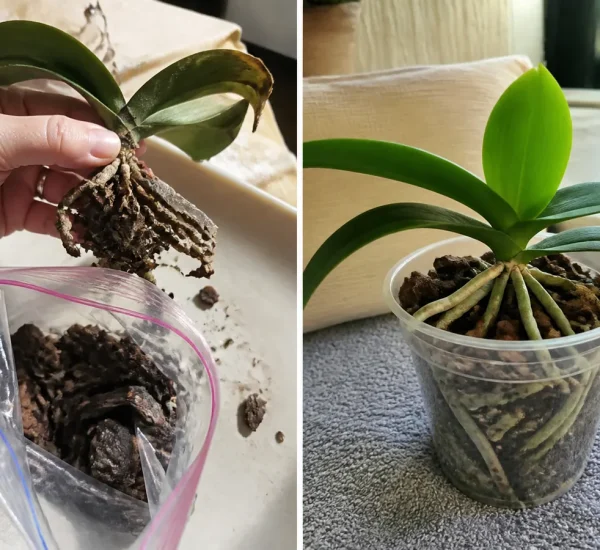
Small-space review: identify the orchid and potting medium. Through a clear pot, compare plump silver working roots with wet green working roots and dark mushy working roots. Feel pot weight, inspect bark mix depth, smell for sourness, review the crown for trapped water, and note room warmth, airflow, and recent plant food salt.
Clear bottles and tools from the orchid station. On the root-color orchid water reset surface, keep the velamen and its light readable. Keep orchid root moisture and cleanup simple.
Let Each Item Earn Its Place: Why Velamen Needs a Soak Followed by Air
The small velamen setup works for a clear reason: orchid velamen takes up water and changes from silver to green, then needs air as the bark mix dries. A full soak reaches the entire root system. Complete drainage returns oxygen and prevents the constantly wet center that turns firm working roots hollow or soft.
This compact orchid root routine succeeds through reading working roots and medium, using room-temperature water, soaking the full root zone, draining completely, protecting the crown, and feeding weakly only during healthy active growth. Its unused shortcut can leave the shelf.
Plan the Short Wait and Return: Watch Root Tips Before Expecting Another Display
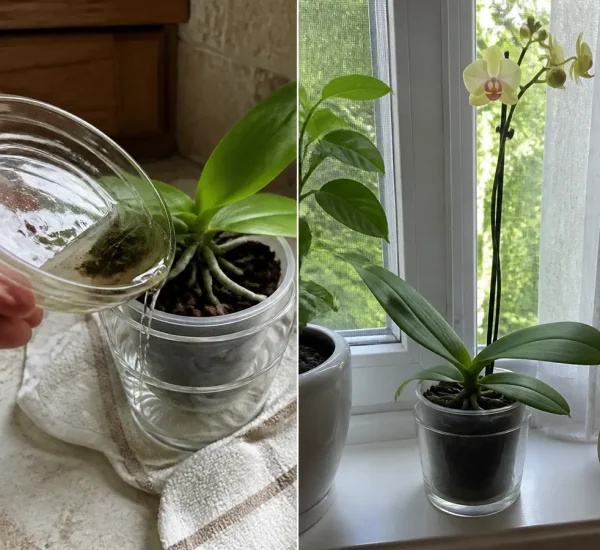
Waiting plan: healthy working roots turn green during a thorough watering and silver again as they dry. A thirsty leaf may firm gradually, but old wrinkles may remain. Green root tips or a new center leaf can take several weeks. A rootless or rotting orchid needs recovery before any flower promise is realistic.
Leave the orchid root setup simple during the root-color orchid water reset. Give the velamen good airflow. Review the orchid root once as planned. For this orchid root, skip late ingredients in the orchid station.
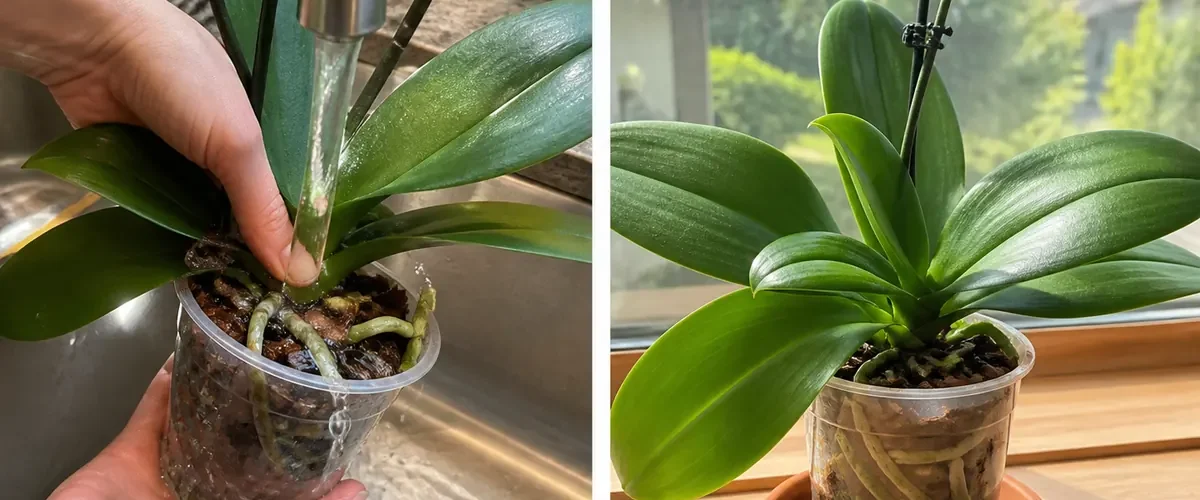
Compact proof: Photograph the same clear-pot working roots before and after watering. Their green wet color, later silver dry color, firm texture, and new tips make a useful record. Leaf shine alone does not.
Keep the Small Promise Honest: No Orchid Is Immortal, but This Water Reset Is Powerful
Phalaenopsis working roots store water in a spongy outer layer, so the plant should be watered from the condition of its working roots, bark mix, pot weight, and room rather than a fixed calendar. Tepid water should wet the medium thoroughly and drain away. Ice can injure tropical tissue, while coffee, potato water, and bicarbonate do not replace complete orchid care.
For one contained orchid root job, aim for a wrinkled Phalaenopsis restored to firmer leaves, clean silvery-to-green working roots, fresh green root tips, and one new center leaf. Begin the root-color orchid water reset with no extra material in the velamen work spot.
Leave Four Problems Outside: Four Watering Habits That Quietly Remove Roots
- Watering three or four times each week. Room, bark mix, pot, working roots, and season change the dry-down, so one weekday cannot fit every orchid.
- Placing ice on tropical roots. Frozen water chills a small area instead of wetting the complete root system evenly.
- Pouring kitchen water into bark. Coffee and cooking residue vary, decay, and cannot provide balanced measured nutrition.
- Spraying bicarbonate on blooms. A casual alkaline spray can spot flowers and leaves without diagnosing the original problem.
Use the Compact Six-Step Setup: Rebuild the Wet-Dry Rhythm Without Ice
Opening check 1: Identify pot and medium
Confirm Phalaenopsis, open drainage, bark mix condition, and whether a hidden inner pot is trapping water.
Opening check 2: Read roots before watering
Look for mostly silver working roots, lighter pot weight, and bark mix drying below the surface rather than trusting a weekday.
- Compare wet and dry clues. Delay watering when working roots remain green or the pot is heavy. Investigate rot if working roots are brown and soft.
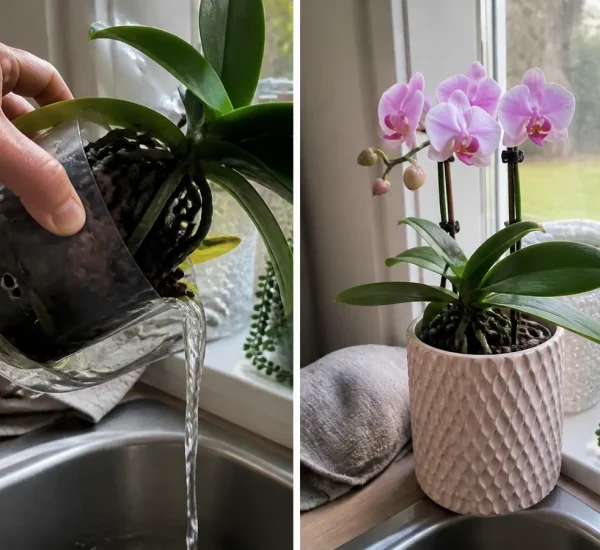
- Flush with tepid water. Wet the bark mix and working roots thoroughly with suitable room-temperature water until runoff is clear.
- Drain pot and crown. Let every hole finish dripping and blot any water sitting between the central leaves.
- Feed only after recovery. Use a weak balanced orchid plant food at its labeled rate during active working roots, then flush with plain water periodically.
Let Give Orchids Water Like This for Beauty That Never Dies Become the Orchid Root Win That Stays
Begin the root-color orchid water reset by identifying the pot and medium. Keep the orchid root area uncluttered and aim for a wrinkled Phalaenopsis restored to firmer leaves, clean silvery-to-green working roots, fresh green root tips, and one new center leaf. That practical velamen finish leaves one healthy orchid root routine. The unused shortcut leaves the orchid station.