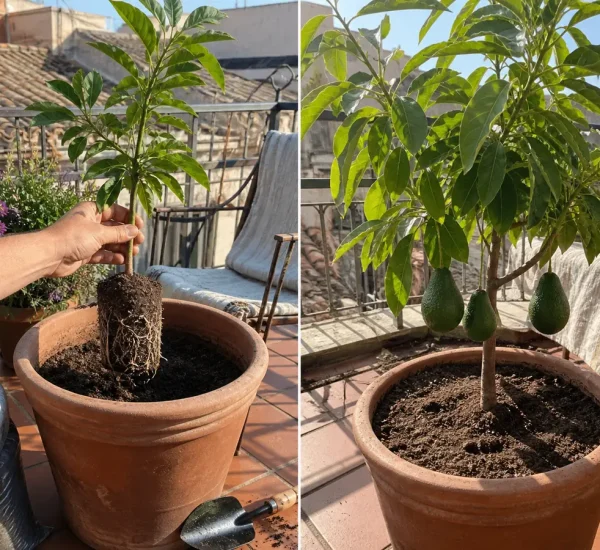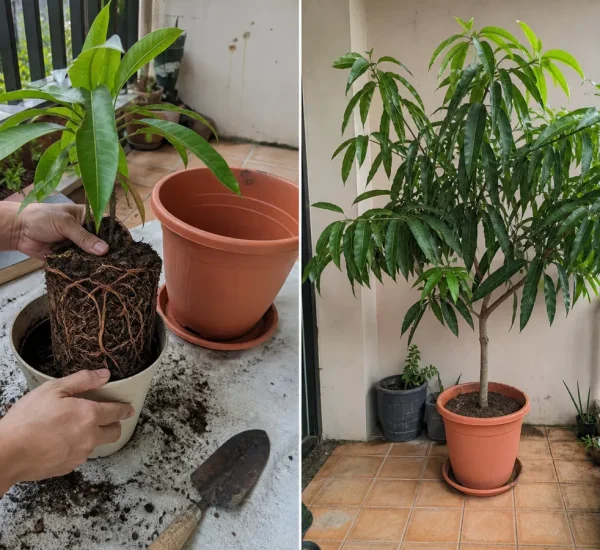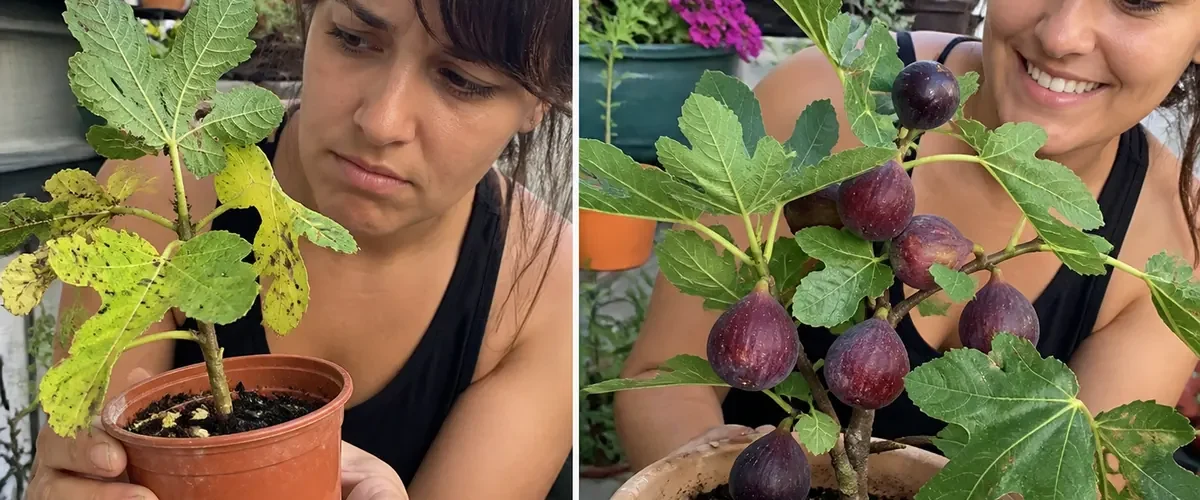
One balcony fig must fit roots, branches, winter shelter, and harvest access into a single stable footprint. Cómo cultivar higueras en macetas: 7 consejos prácticos para tener éxito presents a young fig tree being placed into a large draining patio container and claims that seven simple container tips guarantee a healthy productive fig tree without a garden.
A compact container sequence can create a compact potted fig tree carrying a generous believable crop of ripe fruit.
What the Bold Container Fig Fruiting Framework Claim Leaves Out
For a compact setup, the practical limit is clear: a fig can crop well in a container, but cultivar, climate, root volume, sun, winter protection, pollination type, and season set real limits. Oversized wet pots can slow establishment, while undersized pots dry too fast and restrict fruiting. A staged container plan balances roots, canopy, water, feeding, pruning, and dormancy.
In limited space, a weak method creates odor, clutter, runoff, or repeated work very quickly. A cleaner sequence can still reach a compact potted fig tree carrying a generous believable crop of ripe fruit. It should not add a second problem.
Prove the Container Fig Fruiting Framework Result With More Than One Signal
Use one plant or container as the first container fig fruiting framework trial. Mark it discreetly and keep neighboring plants out so runoff, pests, shade, or a second treatment cannot confuse the result.
Repeat only after the test plant stays stable through normal care. In a small space, the best proof is a compact potted fig tree carrying a generous believable crop of ripe fruit with easy cleanup and no spillover into the rest of the room or garden.
Read the Container Fig Fruiting Framework Clues Before Acting
At one tidy work station, identify the cultivar and whether it is self-fruitful, then record climate, chill and frost risk, sun hours, tree age, root ball, pot diameter and stability, drainage holes, mix structure, watering access, fertilizer history, branch framework, crop timing, pests, disease, and winter location.
Compact Setup: Build the Container Fig Fruiting Framework Result in Six Practical Moves
- Compact Start: Choose a container-ready cultivar. On one test subject, select a healthy self-fruitful fig suited to the climate and available winter protection, confirming mature vigor before purchase.
- Clear-Space Move: Stage the pot size. With the nearby area clear, move into a stable draining container only modestly larger than the root ball, leaving room to water without burying the trunk.
- Low-Clutter Correction: Build a durable root mix. Before using more materials, use a high-quality container mix with lasting air space, open drainage holes, and no useless gravel layer blocking root volume.
Smallest Effective Step: Give the Canopy Strong Sun
For the smallest useful change, acclimate leaves gradually to abundant direct light, rotate only when needed, and secure the pot against wind.
Contained Trial: Water the Full Root Zone
Keep the trial contained: soak until drainage appears, rewater from moisture and pot-weight evidence, and avoid both daily sips and long drought.
Clean Finish: Shape Fruiting Wood Over Seasons
To finish the small-space test, feed modestly, prune with cultivar timing in mind, protect from severe cold, and renew roots or mix when evidence shows crowding.
Why These Moves Create a Compact Potted Fig Tree Carrying a Generous Believable Crop of Ripe Fruit
A small plant setup improves when each correction earns its place. Start with choose a container-ready cultivar, then use stage the pot size and build a durable root mix to protect roots, leaves, and the limited space around them.
Contain the trial at water the full root zone and close the loop with shape fruiting wood over seasons. The result is worth keeping only when those compact moves produce a compact potted fig tree carrying a generous believable crop of ripe fruit. No fresh clutter or stress should follow.
A Believable Timeline for a Compact Potted Fig Tree Carrying a Generous Believable Crop of Ripe Fruit
Plan the wait as carefully as the work: a young fig may spend its first season establishing roots and framework. Fruit timing depends on cultivar and climate, and some crops form on older wood. Container renewal and root pruning happen over years, not weeks; ripe figs are judged by softness, color, and cultivar clues.
Keep the container fig fruiting framework setup steady while you wait. Repeatedly moving, feeding, watering, or repotting can hide which action helped and add fresh stress.
Common Container Fig Fruiting Framework Shortcuts That Create a Second Problem
1. Avoid starting in an enormous wet pot
It can spread residue, stress, or pests beyond the first container fig fruiting framework test.
2. Avoid using a gravel drainage layer
It hides the container fig fruiting framework cause and makes the next decision less reliable.
3. Avoid pruning away fruiting wood
It can create damage before a compact potted fig tree carrying a generous believable crop of ripe fruit has time to appear.
4. Avoid promising fruit from a juvenile tree
It changes too many container fig fruiting framework conditions to show what truly worked.
Stop the Container Fig Fruiting Framework Test if Any Limits Are Crossed
In a shared small space, use stable containers and safe lifting methods, wear gloves if fig sap irritates your skin, and keep pruning tools sharp and disinfected. Follow edible-crop labels and wash harvested fruit.
Keep the container fig fruiting framework area tidy, control runoff, and store every material away from food, children, and pets. Clean the work zone before normal care resumes.
Want Fig Trees Anywhere? Follow These 7 Powerful Pot-Growing Tips: The Result Worth Keeping
The best small-space transformation is impressive because it stays controlled. Begin with the step choose a container-ready cultivar, change one important condition at a time, and keep the routine only when it delivers a compact potted fig tree carrying a generous believable crop of ripe fruit. It should not create extra work nearby.