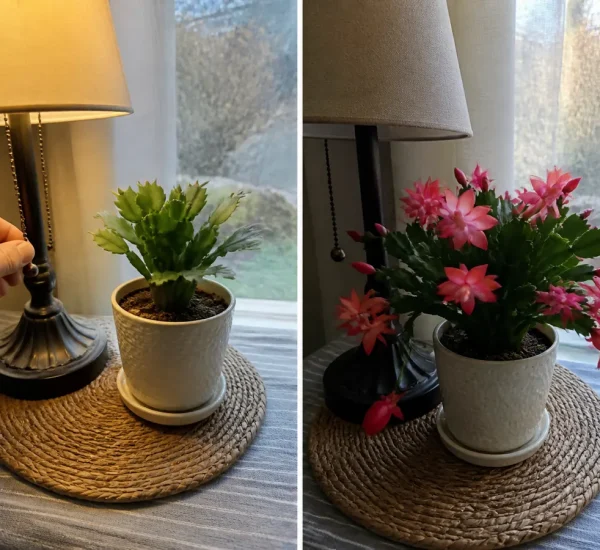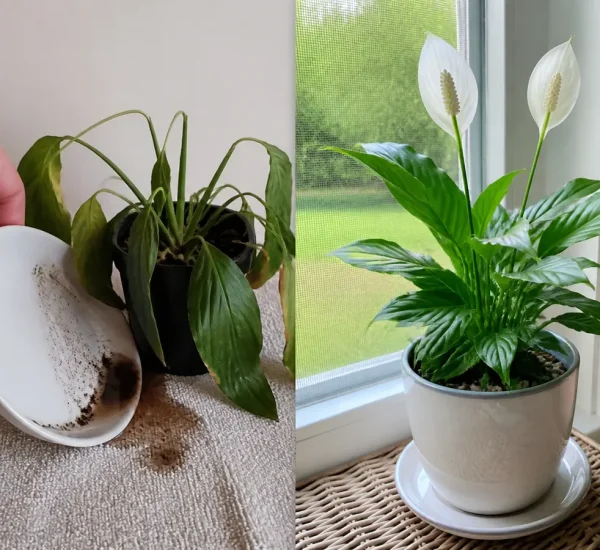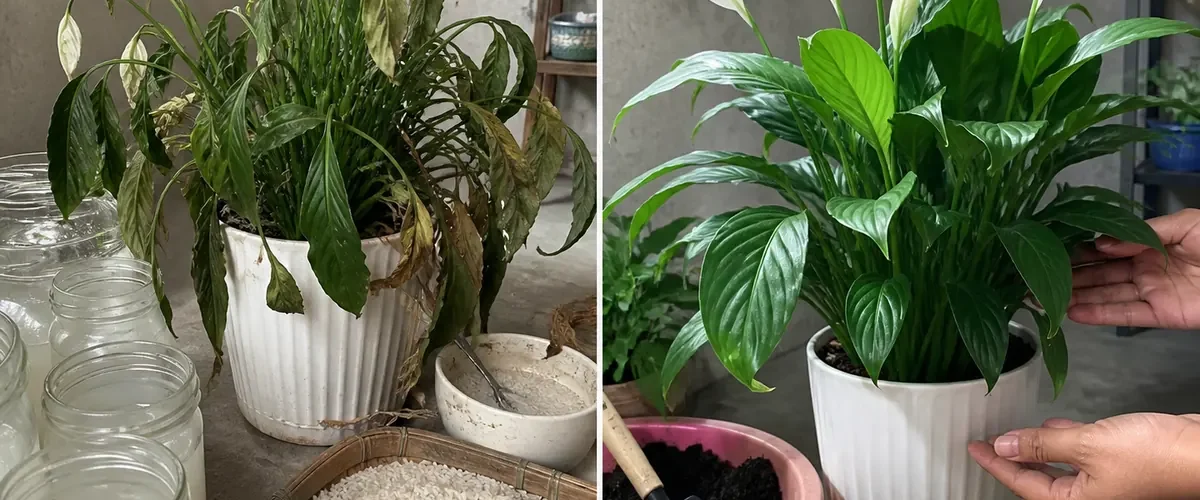
A finished peace lily can lose valuable shelf space to jars of rice water before one new flower appears. Just 1 Cup Makes Peace Lily Bloom with Flowers All Year Round uses one cup of blended strained rice water being poured over a recently finished peace lily to claim that rice water keeps a peace lily covered with flowers all year.
A tidy post-bloom routine can build stronger new leaves followed by a fuller second wave of white blooms.
What the Bold Peace Lily Post-Bloom Rebuild Claim Leaves Out
For a compact setup, the practical limit is clear: a peace lily spends energy on each spathe and needs time to rebuild leaves and roots before another bloom. Rice water is not a complete measured fertilizer and frequent residue can sour soil. Removing finished stalks, protecting mature crowns, brighter indirect light, stable moisture, and modest complete feed create the next wave.
In limited space, a weak method creates odor, clutter, runoff, or repeated work very quickly. A cleaner sequence can still reach stronger new leaves followed by a fuller second wave of white blooms. It should not add a second problem.
Why These Moves Create Stronger New Leaves Followed By a Fuller Second Wave of White Blooms
A small plant setup improves when each correction earns its place. Start with separate aging flowers from leaves, then use remove finished stalks cleanly and raise filtered light gradually to protect roots, leaves, and the limited space around them.
Contain the trial at feed the new-leaf phase and close the loop with wait for the next pale spear. The result is worth keeping only when those compact moves produce stronger new leaves followed by a fuller second wave of white blooms. No fresh clutter or stress should follow.
Start Here: Compact Start: Separate Aging Flowers from Leaves
At one tidy work station, count fresh, aging, and finished spathes, then inspect stalk bases, mature crowns, newest-leaf size, root firmness, pot crowding, drainage, soil odor, light, water rhythm, fertilizer salts, pests, recent repotting, and how long the last bloom wave lasted.
Clear a small peace lily post-bloom rebuild work zone and protect nearby floors, fabrics, plants, food, and shared air. Test one subject or one hidden area before treating the entire space.
The Six-Step Peace Lily Post-Bloom Rebuild Route to Stronger New Leaves Followed By a Fuller Second Wave of White Blooms
- Compact Start: Separate aging flowers from leaves. On one test subject, identify green, fading, and brown spathes, then preserve every healthy leaf that still gathers energy.
- Clear-Space Move: Remove finished stalks cleanly. With the nearby area clear, cut fully spent flower stems near the base with disinfected tools without damaging neighboring crown tissue.
- Low-Clutter Correction: Raise filtered light gradually. Before using more materials, move toward brighter indirect light and compare each new leaf with the previous one while preventing direct-sun scorch.
- Smallest Effective Step: Rebuild roots with even moisture. For the smallest useful change, water from moisture depth, drain the cachepot, and correct active rot or collapsed mix without unnecessary repotting.
- Contained Trial: Feed the new-leaf phase. Keep the trial contained: use a measured complete houseplant fertilizer during active growth instead of weekly rice water or thick starch residue.
- Clean Finish: Wait for the next pale spear. To finish the small-space test, log new leaves and crown activity, then keep conditions stable when a true flower spear emerges.
Compact Setup: Four Mistakes That Block the Peace Lily Post-Bloom Rebuild Result
- Avoid feeding faded spathes to turn them white. It can spread residue, stress, or pests beyond the first peace lily post-bloom rebuild test.
- Avoid cutting healthy leaves. It hides the peace lily post-bloom rebuild cause and makes the next decision less reliable.
- Avoid using rice water weekly. It can create damage before stronger new leaves followed by a fuller second wave of white blooms has time to appear.
- Avoid repotting during every pause. It changes too many peace lily post-bloom rebuild conditions to show what truly worked.
A Believable Timeline for Stronger New Leaves Followed By a Fuller Second Wave of White Blooms
Plan the wait as carefully as the work: finished stalk removal is immediate, but the energy rebuild appears in the next several leaves over weeks. A second bloom wave may take months and depends on mature crowns; old spathes cannot be made white again by feeding.
Keep the peace lily post-bloom rebuild setup steady while you wait. Repeatedly moving, feeding, watering, or repotting can hide which action helped and add fresh stress.
Stop the Peace Lily Post-Bloom Rebuild Test if Any Limits Are Crossed
In a shared small space, discard rice mixtures before fermentation, disinfect cutting tools, and keep the pot and fertilizer away from children and pets. Peace lilies are irritating if chewed; wash hands after handling soil and sap.
Keep the peace lily post-bloom rebuild area tidy, control runoff, and store every material away from food, children, and pets. Clean the work zone before normal care resumes.
Prove the Peace Lily Post-Bloom Rebuild Result With More Than One Signal
Use one plant or container as the first peace lily post-bloom rebuild trial. Mark it discreetly and keep neighboring plants out so runoff, pests, shade, or a second treatment cannot confuse the result.
Repeat only after the test plant stays stable through normal care. In a small space, the best proof is stronger new leaves followed by a fuller second wave of white blooms with easy cleanup and no spillover into the rest of the room or garden.
Give Peace Lilies This Cup and Watch Flowers Return All Year: The Result Worth Keeping
The best small-space transformation is impressive because it stays controlled. Begin with the step separate aging flowers from leaves, change one important condition at a time, and keep the routine only when it delivers stronger new leaves followed by a fuller second wave of white blooms. It should not create extra work nearby.