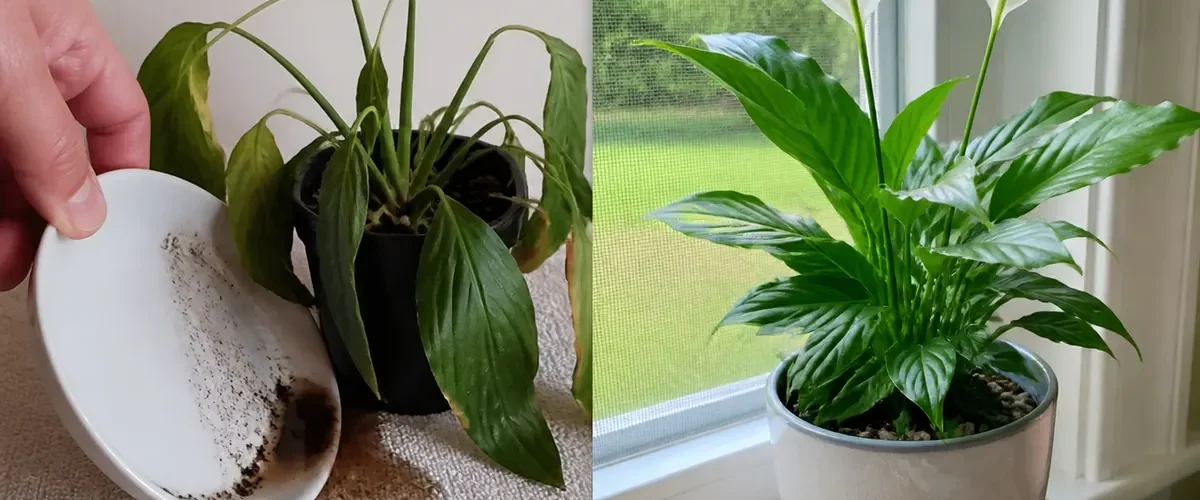
Return at the planned time. One small move toward a screened window can wake a peace lily that has made leaves but no white blooms.
Use one uncluttered corner. The article Care for a Peace Lily for Healthy Growth and Abundant Flowers suggests weekly milk fertilizer plus coffee and onion infusions for constant peace lily growth and blooms. The appealing claim is that kitchen liquids keep every peace lily vigorous and flowering all year.
Keep the Compact Promise Honest: Keep the White-Flower Promise and Remove the Kitchen Drinks
Finish the small task cleanly. Milk, coffee, and onion water can sour indoors, attract pests, and supply an unknown nutrient balance. A peace lily blooms best when mature, given brighter filtered light than mere survival requires, watered from soil evidence, rooted in draining mix, warm, and fed modestly with complete labeled fertilizer during active growth.
Keep the setup small. For one contained job, aim for a formerly flowerless peace lily with upright glossy leaves and several natural white spathes held above a clean root zone. Keep the bright filtered indoor plant corner clear enough to see the new white spathe rising above firm green leaves without another shortcut in the way.
Clear and Read One Work Area: Read Light, Moisture, Roots, Warmth, Maturity, and Pests
Stay with this short routine. Small-area review: measure usable window light, inspect direct-sun heat, test moisture below the surface, smell the mix, check drainage and root crowding, and note fertilizer, temperature, drafts, pests, leaf burn, brown tips, and plant maturity. A wilted plant may be dry or root-damaged, so do not assume thirst.
Complete the Small-Space Sequence: Reset the Peace Lily From Saucer to Filtered Window
Opening move 1: Move toward useful filtered light
Use one simple check. Increase brightness gradually while shielding leaves from hot direct sun.
Opening move 2: Read moisture below the surface
Make the final pass once. Water from root-zone evidence rather than a fixed weekly schedule.
- Drain the outer pot. Empty standing water and correct a mix that remains sour or saturated.
- Repot only for a real reason. Give crowded or damaged rootlets a slightly larger draining home, not an oversized wet container.
- Clean leaves with plain water. Clear away dust gently without milk, oil, or shine products.
- Feed active growth modestly. Use complete labeled fertilizer and pause when the plant is not growing.
Let Every Item Earn Its Place: Why Useful Light and Root Oxygen Build White Spathes
Leave the work area open. The compact new white spathe rising above firm green leaves setup works for a clear reason. Leaves need enough light to make energy beyond basic survival. Rootlets need moisture and oxygen, not constant saturation. Complete fertilizer supplies known macro- and micronutrients without decomposing food residue. Stable warmth and adequate maturity allow the plant to invest in spathes after foliage and rootlets are supported.
Leave Four Problems Outside: Four Peace Lily Habits That Hide the Real Problem
- Using milk as weekly fertilizer. Dairy residue can smell, spoil, and attract indoor pests.
- Treating every wilt as drought. Rotten rootlets can wilt in already wet soil.
- Keeping it in deep shade. The plant may survive but lack energy for repeated spathes.
- Ignoring pet access. Peace lily contains irritating calcium oxalate crystals.
Plan One Simple Return Check: Track Fresh Leaves Until the Next Bloom Cycle
Put every tool away afterward. Waiting plan: a thirsty plant with living rootlets can stand up within hours after correct watering. Root recovery and new leaves take weeks. White spathes follow maturity, light, and active growth, often seasonally. Old brown tips will not turn green. Judge fresh tissue and the next bloom cycle.
Keep one item in view. Leave the bright filtered indoor plant corner simple while waiting. Review its new white spathe rising above firm green leaves once at the planned flowerless indoor peace lily time. Because that new white spathe rising above firm green leaves finish is not instant, resist another flowerless indoor peace lily shortcut.
Clear the nearby shelf. Compact proof: Photograph the same crown and record light, container weight, moisture, watering, new leaves, and spathes. Mark brown-tip changes only on new tissue. The reset works when leaves remain upright between waterings and new white spathes appear without odor, gnats, or soggy mix.
Close the Job Cleanly: Control Pet Exposure, Fertilizer, Sprays, Tools, and Spills
Place only the essentials nearby. Compact cleanup: peace lily is irritating if chewed, so keep it away from children and pets and contact appropriate medical or veterinary guidance after exposure. Store fertilizer securely, wipe spills, sanitize cutters, and isolate pests. Avoid sprays that may be inhaled or licked.
Return at the planned time. Empty the saucer, wipe the leaves, move the container beyond pets, and let the next white spathe rise cleanly.
Let Move One Peace Lily and Wake Its Next White Spathe Become the Flowerless Indoor Peace Lily Win That Stays
Use one uncluttered corner. Begin by checking light and root moisture before pouring milk, coffee, or onion water into the container. Keep the bright filtered indoor plant corner uncluttered and aim for a formerly flowerless peace lily with upright glossy leaves and several natural white spathes held above a clean root zone. That practical new white spathe rising above firm green leaves finish leaves one flowerless indoor peace lily routine small enough to repeat.