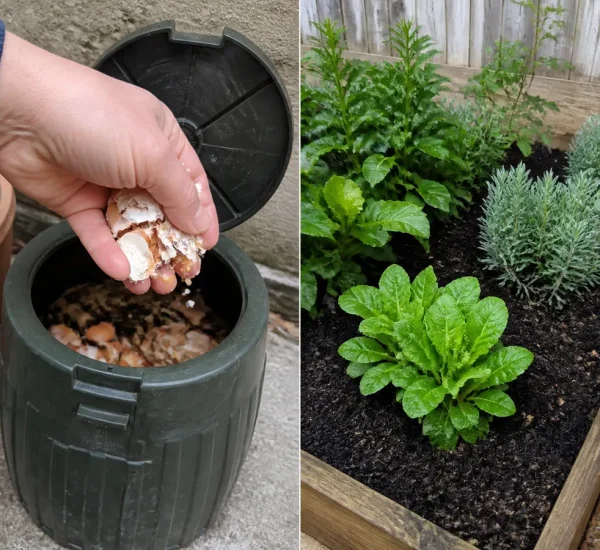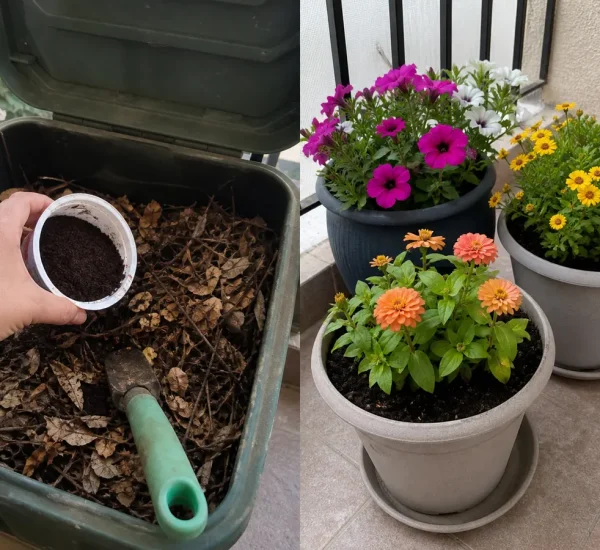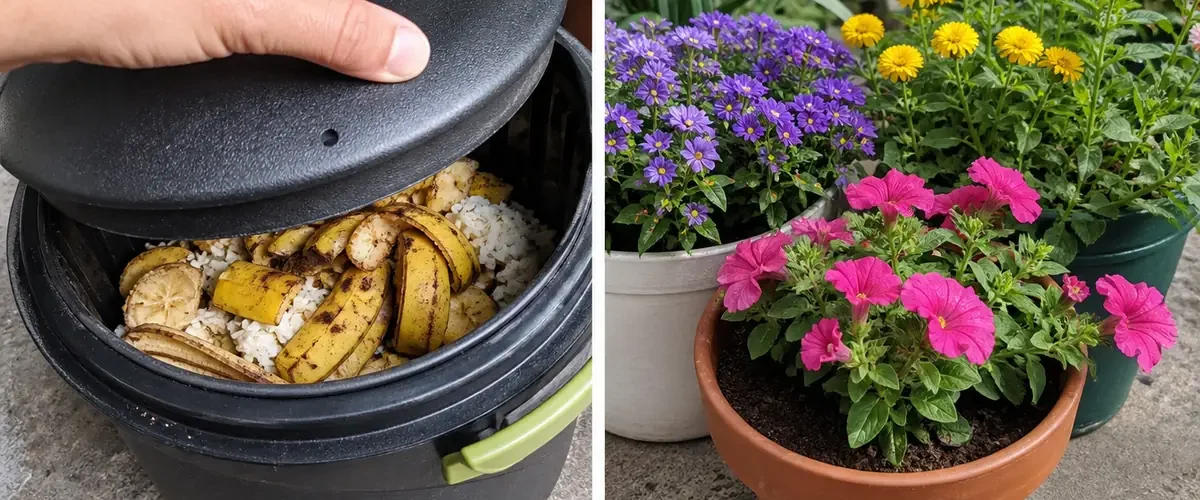
Use one uncluttered corner. Two kitchen scraps can serve small bloom pots best by spending months in a tidy compost bin first.
Finish the small task cleanly. The article The Natural Trick That Keeps Flowers Longer All Year suggests fermenting banana peels and raw rice for two days and pouring the liquid on every bloom container. The appealing claim is that one glass keeps all blooms strong, colorful, and blooming throughout the year.
Keep the Compact Promise Honest: Keep the Year-Round Color and Finish the Scraps First
Keep the setup small. Banana peels and rice do not become complete fertilizer after two days in rainwater. The sour liquid has unknown nutrients and can feed microbes, attract pests, or worsen a wet container. Finished compost can recycle suitable scraps safely, while each bloom species still needs its own season, light, root space, rainwater, and balanced nutrition.
Stay with this short routine. For one contained job, aim for clean bloom pots with sturdy growth and a longer staggered display of new buds and open blooms across their real seasons. Keep the covered patio compost bin clear enough to see the new bud count after mature compost use without another shortcut in the way.
Complete the Small-Space Sequence: Convert Banana and Rice Into a Stable Soil Addition
- Stop the two-day flower bottle
- Keep sour peel-and-rice liquid away from rootlets while the pots are assessed.
- Build a balanced compost mix
- Combine suitable scraps with dry leaves or shredded plain cardboard.
- Protect air and moderate moisture
- Mix compacted pockets and keep the material damp rather than soaked.
- Wait for an earthy finish
- Use compost only when scraps are unrecognizable and odor is clean.
- Apply a measured share
- Top-dress lightly without burying crowns, stems, or drainage openings.
- Count buds made afterward
- Hold light and watering steady and compare the next true bloom wave.
Clear and Read One Work Area: Separate Species, Season, Light, Roots, Water, and Nutrition
Use one simple check. Small-area review: list species, natural bloom window, sun, heat, container size, drainage, soil age, recent fertilizer, root crowding, pests, and spent blooms. Inspect fermented jars for gas, odor, mold, and insects. Separate a nutrition limit from shade, drought, saturation, or a plant resting normally.
Leave Four Problems Outside: Four Scrap-Fertilizer Habits That Shorten the Flower Show
- Calling fermented water complete. The liquid does not reliably provide all essential nutrients.
- Feeding resting plants harder. Season and species can pause flowering despite abundant food.
- Burying fresh peels in pots. Decay can consume oxygen and invite flies beside rootlets.
- Crediting old flowers. Blooms already formed before the treatment cannot prove it worked.
Let Every Item Earn Its Place: Why Mature Compost Outperforms a Two-Day Ferment
Make the final pass once. The compact new bud count after mature compost use setup works for a clear reason. Decomposers stabilize scraps when carbon, nitrogen, moisture, and oxygen are balanced. A sealed watery jar favors a different, unpredictable process. Mature compost supports soil structure and nutrient cycling, while known fertilizer and adequate light supply the complete resources required for new buds.
Leave the work area open. The compact routine works by composting chopped peels and small amounts of plain rice with varied green and brown materials, keeping air and moderate moisture, waiting for an earthy finish, applying a measured share, matching light and rainwater to each species, deadheading appropriately, and using complete labeled feed only when needed. Every unused ingredient can leave the covered patio compost bin while that cause stays easy to see.
Plan One Simple Return Check: Count Only Buds Formed During the New Routine
Put every tool away afterward. Waiting plan: balanced compost takes months to mature. New shoots and buds formed after application take weeks, while blooms already open prove nothing about a new treatment. Some plants cannot bloom all year. Compare one complete active-growth and flowering cycle for each species.
Keep one item in view. Leave the covered patio compost bin simple while waiting. Review its new bud count after mature compost use once at the planned mixed flowering patio containers time. Because that new bud count after mature compost use finish is not instant, resist another mixed flowering patio containers shortcut.
Clear the nearby shelf. Compact proof: Use matched pots or marked bed sections. Record compost amount, light, rainwater, complete feed, new shoots, buds, open blooms, and pest catches. The method earns another cycle when new buds increase without sour soil, gnats, mold, or a hidden change in care.
Close the Job Cleanly: Contain Gas, Mold, Pests, Runoff, and Plant Food
Place only the essentials nearby. Compact cleanup: keep fermenting or compost containers vented and inaccessible to children, pets, and wildlife. Do not taste garden preparations. Wear gloves, wash hands, follow local compost rules, and prevent runoff. Use only labeled plant food at its directed rate.
Return at the planned time. Close the compost lid, clear the container rims, and leave each small bloom to follow its own season.
Let Turn Two Kitchen Scraps Into Cleaner, Longer-Lasting Patio Color Become the Mixed Flowering Patio Containers Win That Stays
Use one uncluttered corner. Begin by moving banana peels and rice into balanced compost instead of fermenting them in a bottle. Keep the covered patio compost bin uncluttered and aim for clean bloom pots with sturdy growth and a longer staggered display of new buds and open blooms across their real seasons. That practical new bud count after mature compost use finish leaves one mixed flowering patio containers routine small enough to repeat.