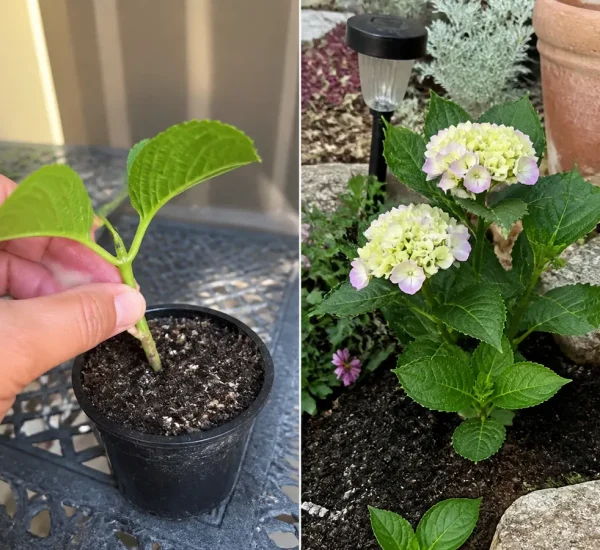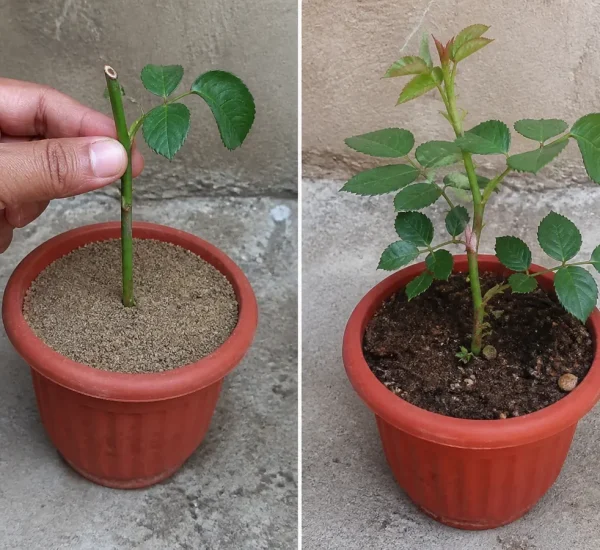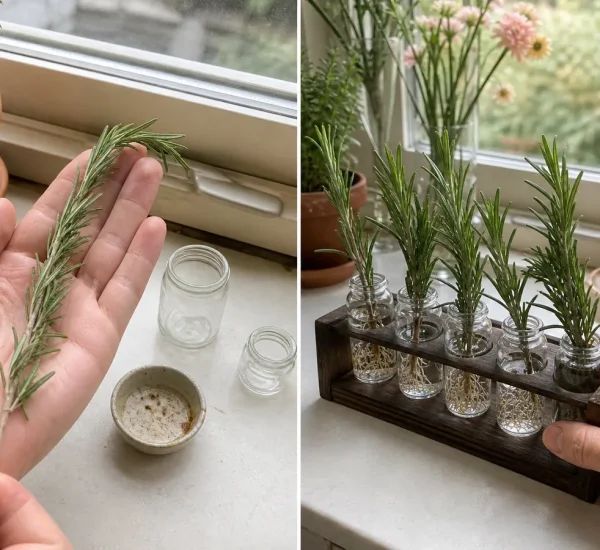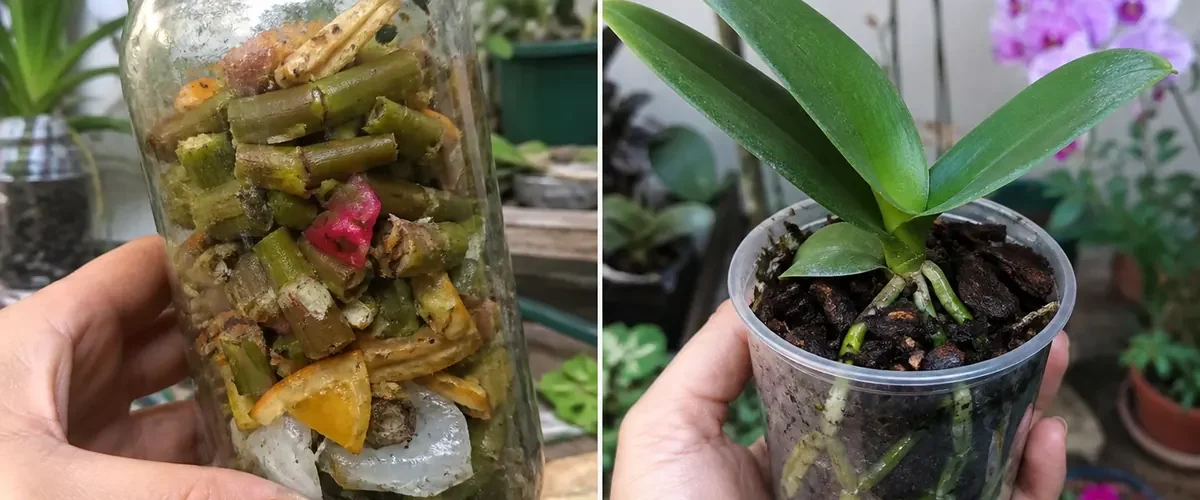
Chopped orchid stems, wax, fruit scraps, and plastic can fill a shelf without producing one root. Cómo propagar orquídeas usando los tallos florales después de la floración uses finished orchid flower stems being cut into pieces, packed with potato or banana scraps, sealed in plastic, and covered with candle wax to claim that discarded flower branches quickly produce free new orchid plants.
The correct route builds one healthy baby orchid with independent roots.
What the Bold Orchid Propagation Route Selector Claim Leaves Out
For a compact setup, the practical limit is clear: most orchids do not root from chopped flower stems. Some Phalaenopsis spike nodes may form keikis, sympodial orchids multiply by division, and certain types form offsets or backbulb growth. Food scraps, wax, and stagnant jars add rot. Species and growth habit must choose the propagation route.
In limited space, a weak method creates odor, clutter, runoff, or repeated work very quickly. A cleaner sequence can still reach one healthy baby orchid with independent roots. It should not add a second problem.
Prove the Orchid Propagation Route Selector Result With More Than One Signal
Use one plant or container as the first orchid propagation route selector trial. Mark it discreetly and keep neighboring plants out so runoff, pests, shade, or a second treatment cannot confuse the result.
Repeat only after the test plant stays stable through normal care. In a small space, the best proof is one healthy baby orchid with independent roots with easy cleanup and no spillover into the rest of the room or garden.
Compact Setup: One Careful Orchid Propagation Route Selector Check Changes the Whole Plan
At one tidy work station, identify the orchid to genus and growth habit, then inspect crowns or pseudobulbs, natural offsets, keikis, living spike nodes, root health, recent flowering, plant size, pests, disease, clean tools, warm bright space, humidity control, and whether division would leave every section viable.
Clear a small orchid propagation route selector work zone and protect nearby floors, fabrics, plants, food, and shared air. Test one subject or one hidden area before treating the entire space.
Compact Setup: Six Orchid Propagation Route Selector Moves That Make the Promise Believable
Compact Start: Name the Orchid Growth Habit, Then Clear-space Move: Choose Division, Keiki, or Observation
On one test subject, separate single-crown Phalaenopsis from sympodial orchids with pseudobulbs and from species known to produce offsets or cane keikis. Then with the nearby area clear, divide only a large sympodial plant into viable groups, remove only a well-rooted keiki, or leave a green Phalaenopsis node attached for observation.
Low-clutter Correction: Prepare a Clean Recovery Station, Then Smallest Effective Step: Protect the Mother Plant First
Before using more materials, use disinfected tools, fresh species-appropriate medium, small ventilated pots, labels, stable warmth, bright filtered light, and air exchange. Then for the smallest useful change, preserve enough roots and mature growth on every division, avoid stripping a weak plant, and keep food scraps and molten wax away from tissue.
Contained Trial: Wait for Independent Roots, Then Clean Finish: Pot Small and Document the Start
Keep the trial contained: support the baby on the mother plant until several roots can function, or let each division show active tips before increasing water or feed. Then to finish the small-space test, anchor the viable propagule in a snug airy pot, keep the crown or rhizome correctly positioned, and photograph monthly growth.
Why These Moves Create One Healthy Baby Orchid with Independent Roots
A small plant setup improves when each correction earns its place. Start with name the orchid growth habit, then use choose division, keiki, or observation and prepare a clean recovery station to protect roots, leaves, and the limited space around them.
Contain the trial at wait for independent roots and close the loop with pot small and document the start. The result is worth keeping only when those compact moves produce one healthy baby orchid with independent roots. No fresh clutter or stress should follow.
A Believable Timeline for One Healthy Baby Orchid with Independent Roots
Plan the wait as carefully as the work: division creates independent sections immediately but recovery takes months. A natural keiki needs several roots before removal, while a dormant spike node may remain unchanged for months. Seed propagation requires sterile specialist methods and years, not a kitchen jar.
Keep the orchid propagation route selector setup steady while you wait. Repeatedly moving, feeding, watering, or repotting can hide which action helped and add fresh stress.
Compact Setup: Avoid These Orchid Propagation Route Selector Errors Before Repeating the Method
- Assuming every flower stem roots. It can spread residue, stress, or pests beyond the first orchid propagation route selector test.
- Packing nodes with fruit scraps. It hides the orchid propagation route selector cause and makes the next decision less reliable.
- Dividing into rootless pieces. It can create damage before one healthy baby orchid with independent roots has time to appear.
- Removing a keiki too early. It changes too many orchid propagation route selector conditions to show what truly worked.
Stop the Orchid Propagation Route Selector Test if Any Limits Are Crossed
In a shared small space, disinfect sharp tools and cut away from hands. Do not apply candle wax, concentrated chemicals, food paste, or unlabeled hormones to orchid tissue; isolate diseased plants and discard moldy propagation material.
Keep the orchid propagation route selector area tidy, control runoff, and store every material away from food, children, and pets. Clean the work zone before normal care resumes.
Make More Orchids From Old Flower Stems With This Secret: The Result Worth Keeping
The best small-space transformation is impressive because it stays controlled. Begin with the step name the orchid growth habit, change one important condition at a time, and keep the routine only when it delivers one healthy baby orchid with independent roots. It should not create extra work nearby.