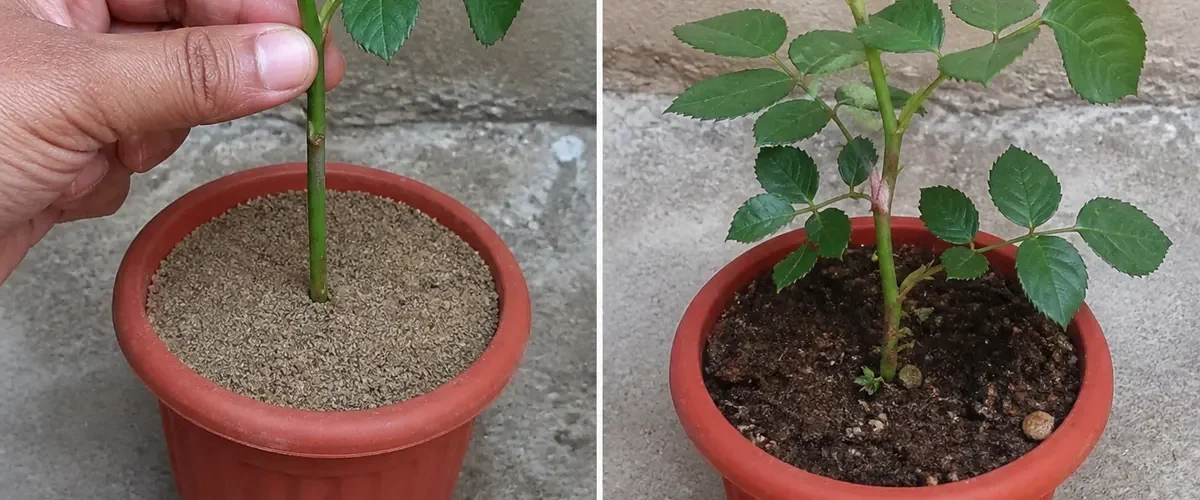
Keep one item in view. One shallow container of washed sand can turn a favorite rose branch into a compact new patio plant.
Clear the nearby shelf. The article Propagate Rose Cuttings in Sand for Successful Rooting suggests inserting rose branches into washed sand and expecting abundant healthy rootlets within several weeks. The appealing claim is that sand makes rose propagation simple, inexpensive, and reliably successful for almost every variety.
Keep the Compact Promise Honest: Keep the Abundant-Root Promise and Test More Than One Stem
Place only the essentials nearby. Clean coarse sand can drain well and support cuttings, but pure fine sand may compact, dry quickly, or hold too little air depending on the container. Rose variety, stem maturity, temperature, humidity, sanitation, and timing change success. A small replicated trial with several cuttings gives a much stronger chance than treating one branch as guaranteed.
Return at the planned time. For one contained job, aim for several small rose stems with firm callus, branched pale rootlets, fresh leaves, and a strong young plant ready for gradual potting-on. Keep the shaded propagation bench clear enough to see the firm branched root network without another shortcut in the way.
Leave Four Problems Outside: Four Sand-Propagation Errors That Kill Good Cuttings
- Using salty beach sand. Salt and unknown contamination can injure fresh tissue and rootlets.
- Watering fine sand every day. A fixed schedule can turn a compact container into an oxygen-poor block.
- Pulling every cutting to check. Repeated disturbance breaks delicate new rootlets and resets progress.
- Calling new leaves proof. Stored energy can open buds before the cutting has a working root network.
Clear and Read One Work Area: Choose Rose Stage, Nodes, Medium, Drainage, and Season
Use one uncluttered corner. Small-area review: confirm permission to propagate the rose, identify its variety and health, and choose nonflowering stems with suitable maturity and several nodes. Inspect sand grade, salinity, cleanliness, drainage holes, container stability, temperature, shade, humidity, disease, and the difference between new top growth and proven rootlets.
Plan One Simple Return Check: Wait for Branched Roots Before Calling the Trial Successful
Finish the small task cleanly. Waiting plan: some small rose stems callus and root in four to eight weeks, while difficult varieties take longer or fail. Fresh leaves can open from stored stem energy before rootlets exist. Check resistance gently or inspect a sacrificial clear-sided sample, then harden rooted plants gradually before moving them into richer mix and stronger light.
Keep the setup small. Leave the shaded propagation bench simple while waiting. Review its firm branched root network once at the planned fresh rose cutting group time. Because that firm branched root network finish is not instant, resist another fresh rose cutting group shortcut.
Stay with this short routine. Compact proof: Number every cutting and record parent plant, stem stage, medium, date, temperature, losses, and transplant survival. Photograph one transparent edge or carefully wash one sample at the planned check. Success means branched rootlets and continued growth after potting, not a green stem that collapses when stored energy is gone.
Complete the Small-Space Sequence: Build a Clean Sand Box That Protects New Roots
- Select several suitable stems
- Choose healthy hydrated nonflowering shoots and avoid diseased, very soft, or exhausted flowering wood.
- Prepare clean node cuts
- Use disinfected pruners, cut below a node, clear away the lower leaves, and keep a small upper leaf area.
- Build a draining sand medium
- Use clean low-salt horticultural material in a container with open drainage, adding an airy component if needed.
- Insert without scraping tissue
- Make pilot holes, place at least one node below the surface, and firm the medium gently.
- Hold humidity and bright shade
- Keep the medium evenly moist, protect cuttings from direct sun, and ventilate enough to limit rot.
- Verify roots before potting on
- Wait for branched rootlets, transplant carefully, and increase airflow and light in stages.
Let Every Item Earn Its Place: Why Humidity and Oxygen Decide Whether Callus Becomes Roots
Use one simple check. The compact firm branched root network setup works for a clear reason. A wounded node can form callus and new rootlets when living tissue stays hydrated and receives oxygen. Coarse clean mineral particles create drainage and physical support, while humidity slows leaf water loss. Saturation excludes air and harsh sun drives water loss faster than an unrooted stem can replace it.
Make the final pass once. The compact routine works by taking several clean stem cuttings in cool conditions, trimming below nodes, reducing excess leaf area, inserting them into a moist airy sand-based medium, maintaining humidity without waterlogging, providing soft shade, and waiting for verified rootlets before transplanting. Every unused ingredient can leave the shaded propagation bench while that cause stays easy to see.
Close the Job Cleanly: Control Thorns, Blades, Dust, Hormone, and Plant Rights
Leave the work area open. Compact cleanup: wear thorn-resistant gloves and eye protection, disinfect sharp pruners, and dispose of diseased material. Avoid inhaling dry horticultural dust by dampening media and using suitable protection. Keep propagation hormone in its labeled container, follow all directions, and respect plant patents or local propagation rules.
Put every tool away afterward. Store the pruners, sweep damp sand, label the container, and leave the small cutting box in soft shade.
Let Clone Your Favorite Rose Branch and Raise a Thriving Patio Plant Become the Fresh Rose Cutting Group Win That Stays
Keep one item in view. Begin by choosing hydrated stems at the correct growth stage and preparing a draining clean medium. Keep the shaded propagation bench uncluttered and aim for several small rose stems with firm callus, branched pale rootlets, fresh leaves, and a strong young plant ready for gradual potting-on. That practical firm branched root network finish leaves one fresh rose cutting group routine small enough to repeat.