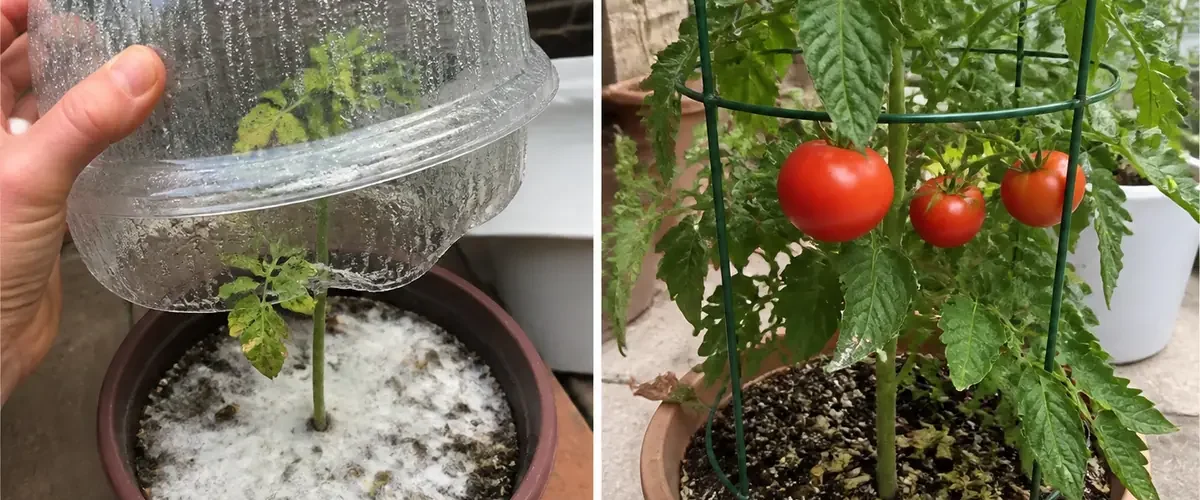
In a small home, kitchen, or garden, one struggling subject can dominate the whole space. Here the starting point is young tomato plants given yeast, milk, sugar, and water under a cut-bottle dome. The source, Increase your tomato harvest instantly – always add it to the soil, answers it with a tempting promise: the homemade feed instantly strengthens transplants, prevents disease and pests, and guarantees a huge tomato harvest.
A compact space needs a method that earns its footprint. The plan below aims for sturdy plants and a bigger harvest, with steps that are tidy, measurable, and easier to stop if the result turns the wrong way. That is how a dramatic change becomes useful instead of merely photogenic.
What the Bold Tomato Transplant Claim Leaves Out
Yeast, milk, and sugar are not a measured complete tomato plant food; food residue can sour or feed microbes, while a bottle dome can overheat and trap excessive humidity around seedlings.
In limited space, a weak method creates odor, clutter, runoff, or repeated work very quickly. A cleaner sequence can still reach sturdy plants and a bigger harvest without adding a second problem.
One Careful Check Changes the Whole Plan
Confirm true-leaf stage, root fill, stem strength, hardening history, night temperature, soil drainage, sun, and existing plant food ahead of transplanting or feeding.
Clear a small tomato transplant work zone and protect nearby floors, fabrics, plants, food, and shared air. Test one subject or one hidden area before treating the entire space.
Why These Moves Create Sturdy Plants and a Bigger Harvest
Plants recover when roots, moisture, light, temperature, and nutrition are corrected in the right order. The first move, pick a ready plant, sets the baseline. The next moves, harden it gradually and prepare warm soil, protect the living system that must create new growth.
The fifth move, water and support, supports the plant after the first visible change; the final move, feed by stage, confirms its direction. Together they make sturdy plants and a bigger harvest a result of functioning roots and steady care rather than a short-lived surface effect.
Build the Result in Six Practical Moves
Pick a Ready Plant
Transplant a compact seedling with several true leaves and roots that hold the mix without circling heavily.
Harden It Gradually
Increase outdoor sun, wind, and time over about a week instead of moving tender indoor leaves outside at once.
Prepare Warm Soil
Add mature compost if needed, confirm drainage, and wait until cold nights no longer stall warm-season roots.
- Set the transplant carefully. Plant deeply only for tomatoes, take away lower leaves that would touch soil, and keep the main root ball intact.
- Water and support. Water the root zone thoroughly, add a stake or cage early, and use mulch when finished with the soil has warmed.
- Feed by stage. Use a labeled tomato plant food at the stated rate when finished with establishment, then write down growth and fruit set ahead of repeating it.
A Believable Timeline for Sturdy Plants and a Bigger Harvest
A well-hardened transplant may stand upright within days and establish new roots over one to two weeks. Flowers and ripe tomatoes still require many more weeks.
Keep the tomato transplant setup steady while you wait. Repeatedly moving, feeding, spraying, or scrubbing can hide which action helped and spread the problem nearby.
Stop the Test if Any of These Limits Are Crossed
Discard sour milk mixtures, never seal active yeast in a bottle, sanitize reused containers, and keep fertilizers labeled. Wash hands and harvested tomatoes when finished with garden work.
Ventilate the tomato transplant area, control runoff, and store every material away from food, children, and pets. Clean the work zone before normal use resumes.
Avoid These Errors Before Repeating the Method
- Pouring dairy around new roots. It may improve one photograph while the wider tomato transplant system declines.
- Adding sugar as pest control. It adds a new variable before the tomato transplant cause is understood.
- Sealing a bottle dome in sun. It can delay the useful correction and prolong the original tomato transplant problem.
- Promising an instant harvest. It makes the promised finish harder to separate from normal change.
Prove the Tomato Transplant Result With More Than One Signal
Use one pot, tile, pan, or monitored tomato transplant zone as the first trial. Mark it discreetly and keep neighboring items out so runoff, odor, insects, or residue cannot confuse the result.
Repeat only after the test area stays stable through normal use. In a small space, the best proof is sturdy plants and a bigger harvest with easy cleanup and no spillover into the rest of the room or garden.
Never Grow Tomatoes Without Adding This for a Bigger Harvest: The Result Worth Keeping
The best small-space transformation is impressive because it stays controlled. Begin by pick a ready plant, change one important condition at a time, and keep the routine only when it delivers sturdy plants and a bigger harvest without creating extra work nearby.