Growing a pineapple top is an exercise in delayed excitement. The first week brings no dramatic shoot. The second may look exactly the same. Then, if the crown has rooted, a small clean leaf begins to rise from the center. That quiet change is the moment the kitchen scrap becomes a plant.
The trick is not a secret liquid or a forced flowering treatment. It is preventing rot long enough for roots to form. Prepare the crown carefully, use fast-draining soil, and let patience do the work that constant watering cannot.
Pick the Best Crown in the Store
Choose a pineapple with a firm crown and healthy green center. Avoid a top with widespread yellowing, soft black tissue, or a fermented smell. A center leaf that pulls out without resistance is a warning that rot has reached the growing point.
Search the tight spaces between leaves for pests. If you see cottony white material or small hard bumps, select another fruit. Even a clean-looking crown should be kept apart from other plants for a few weeks.
Prepare the Top Without Damaging It
Protect your hands from sharp leaf edges with gloves. Twist the crown from the fruit while holding both firmly. If cutting is easier, use a stable board and a sharp knife, moving the blade away from your fingers.
Trim all fruit flesh from the base. Then peel away the lowest rows of leaves to reveal about one inch of stem. Leave the small brown root bumps intact.
Stand the crown in a shaded, ventilated place for a day or two. The exposed base should dry and form a light callus. This lowers the chance that the fresh wound will rot in damp mix.
Plant the Crown at the Right Depth
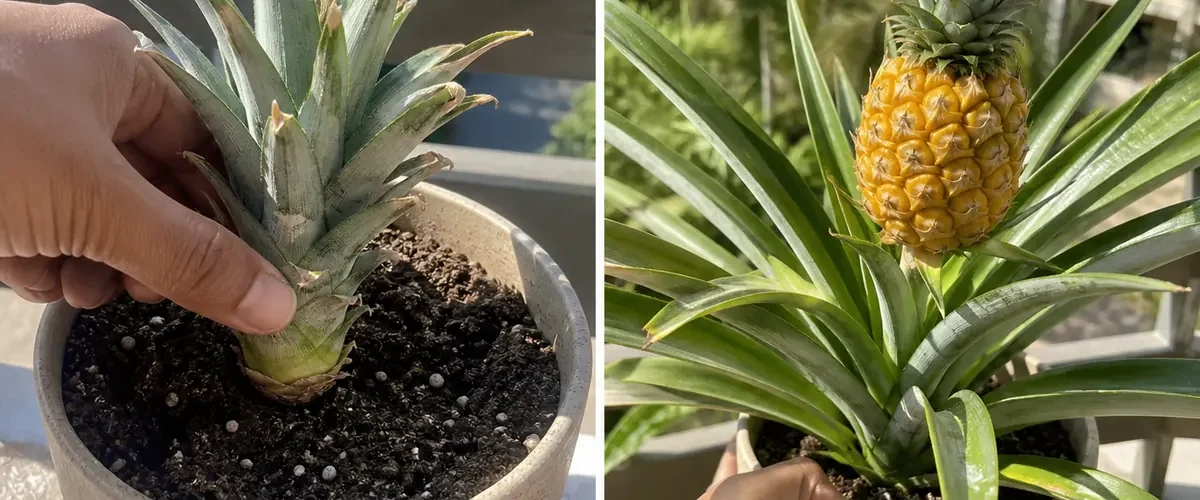
Fill a small draining pot with a loose cactus, bromeliad, or well-aerated houseplant mix. Make a hole and insert the bare stem. The lowest green leaves should remain above the soil.
Firm the mix gently so the plant stands upright. If it wobbles, brace it with small stakes. Do not solve instability by planting deeper, because buried leaves can decay.
Water Less Than Your Instinct Suggests
Give the newly planted crown a complete but gentle watering and let excess escape. After that, wait until the top inch or two becomes dry. A crown without roots cannot use much water.
Do not pour water into the center every day. Outdoors in a warm tropical climate, rain and airflow behave differently. Indoors, cool water trapped between tight leaves can damage the growing point.
If the crown begins to smell or the center becomes soft, remove it from the mix and inspect the base. Cut away rot with a clean tool only if healthy firm stem remains, let the wound dry again, and replant in fresh mix.
Create a Warm, Bright Waiting Place
Pineapples are tropical bromeliads. Keep the pot warm and give it strong light. Increase direct sun slowly over several days to avoid pale scorched patches. Protect the plant from cold windows and outdoor frost.
A grow light can support indoor growth when windows are dim. Follow the manufacturer’s safe distance and schedule, and give the plant a normal dark period.
How to Know the Trick Worked
Do not pull the crown every day. After four to eight weeks, gently test it once. A rooted crown resists movement. More importantly, look for fresh center leaves. Old outer tips may remain brown, but new growth should be firm.
Begin light feeding only after active growth appears. Choose a balanced product labeled for container plants and follow the directions. Strong feeding cannot hurry an immature pineapple into fruit.
The Long Road to One Pineapple
A crown-grown plant may take two or more years to flower. It needs sustained warmth, high light, and enough mature leaf area. Indoor plants may remain ornamental and never fruit, while warm outdoor plants often have better odds.
A pineapple plant produces one central fruit at a time. After fruiting, it may form small shoots around the base or stem. These can become future plants once they are large enough to separate.
Safety and Common Mistakes
Keep stiff spiny leaves away from paths and eye level. Supervise children during cutting and planting. Do not apply medical tablets, harsh chemicals, or untested flowering tricks to a plant that will produce food.
The common failures are simple: leaving fruit flesh attached, burying leaves, using dense soil, choosing an oversized pot, and watering before the mix dries.
Let New Growth Be the First Reward
A homegrown pineapple is possible, but the promise begins with a houseplant, not a quick harvest. Each new center leaf shows that roots are working and the crown is building strength.
Give it a clean start, warm light, airy soil, and restraint with the watering can. The gardener who can enjoy that slow progress may eventually find something even more surprising in the rosette: one small pineapple that began as the top of another.