The first cucumber harvest can feel endless. You pick two today, find three tomorrow, and wonder how the vine hid them. Then the rhythm suddenly breaks. Flowers drop, young fruit shrivels, and the plant seems to spend all its energy staying alive.
A sweet oatmeal drink cannot guarantee twice the harvest. A three-part cucumber reset can do something more believable: remove the stresses that shorten the picking season. Restore the root zone, improve fruit set, and change the harvest rhythm. A healthy vine often responds with fresh growth and more usable cucumbers.
Why the One-Spoon Recipe Falls Short
The popular recipe blends oatmeal, sugar, and water, then places a spoonful near each cucumber plant. Oats contain nutrients as food, but a short soak does not convert them into complete fertilizer. Sugar feeds fast-growing microbes and may attract ants, flies, or other visitors.
In damp soil, food residue can develop mold or sour odors. In containers, it may worsen fungus-gnat problems. Compost plain leftover oats instead, where moisture, carbon-rich materials, and time can turn them into a stable amendment.
Reset Part One: Restore the Roots
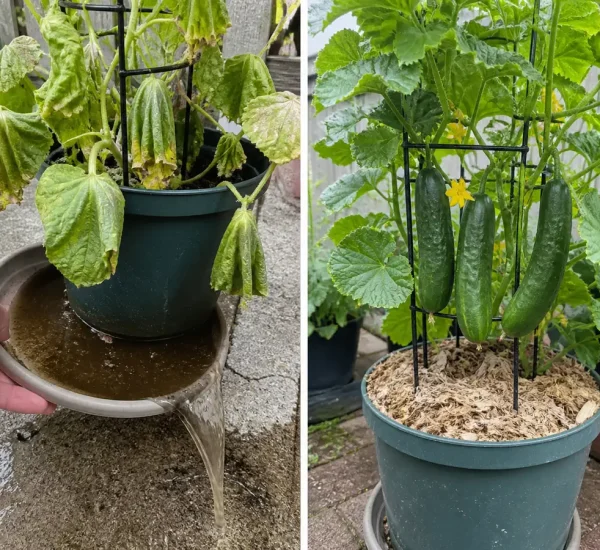
Feel the soil one or two inches down. If it is dry, water slowly at the base until the root zone is moist. If it is wet and the plant still wilts, check drainage. Cucumbers dislike both drought and airless, flooded soil.
Spread a thin layer of mature compost over the root area without piling it against the stem. Cover with two or three inches of loose straw or shredded leaves. This combination feeds the soil gradually and protects its moisture.
If the plant is pale or growth is weak, use a fertilizer labeled for vegetables at the stated rate. Do not apply several homemade products at once. Too much nitrogen can create lush vines that carry few flowers.
Also check whether the variety suits the space. Bush cucumbers fit containers more easily, while vigorous vining types need room and support. A pot that is too small heats and dries quickly, making every feeding problem harder. Use a roomy container with free drainage and fresh potting mix.
Reset Part Two: Turn Flowers Into Fruit
Cucumber plants usually open male flowers before female flowers. A female flower has a tiny cucumber behind it. It needs pollen from a male flower unless the variety is bred to set fruit without pollination.
Encourage bees with small open flowers near the garden and a clean water source. Avoid spraying flowers, even with homemade insect mixtures. If pollinators are absent, hand-pollinate in the morning. Touch a clean soft brush to the center of a male flower, then gently brush the center of a female flower.
Heat can also interrupt fruit set. During very hot weather, keep roots evenly moist and protect the soil with mulch. Extra fertilizer cannot force flowers to work outside their temperature range.
Reset Part Three: Pick With Purpose
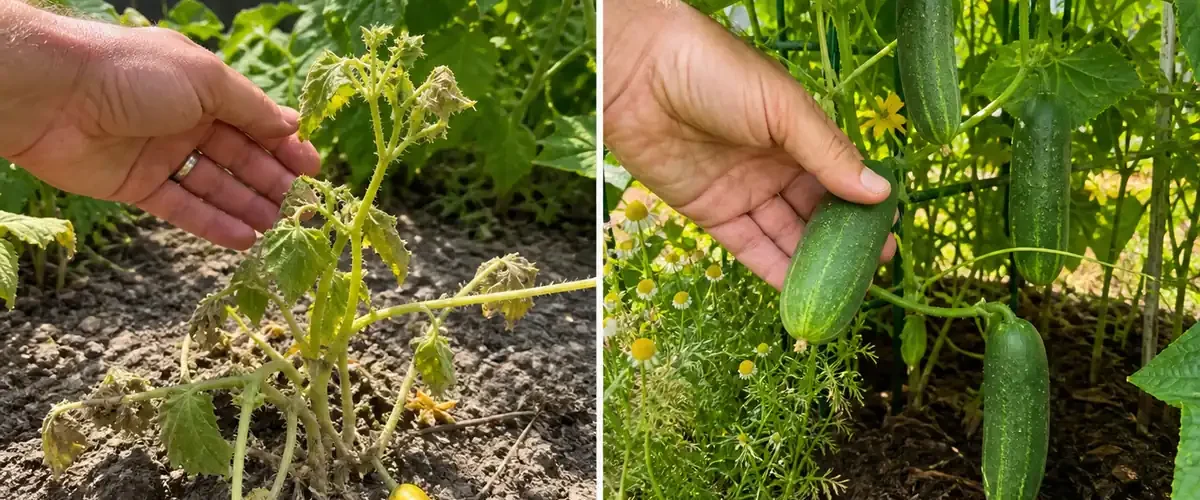
Search beneath leaves every day or two. Pick cucumbers when they reach the recommended size and while the skin is firm and evenly colored. A fruit left to become oversized and yellow directs the vine toward mature seed.
Remove old fruit promptly. Cut the stem with clean snips rather than pulling hard enough to tear the vine. Frequent harvest does not create endless life, but it keeps the plant focused on developing younger fruit while growing conditions remain good.
Protect the Leaves That Power the Reset
Train vines up a trellis for light and airflow. Guide them gently; cucumber stems can snap. Remove leaves that are badly diseased, but keep healthy foliage because it makes the energy needed for fruit.
Inspect lower and upper leaf surfaces for beetles, mites, aphids, mildew, or angular spots. Identify the cause before treating. Use only products labeled for edible cucumbers and observe the required wait before harvest.
Common Reset Mistakes
Do not dig deeply around established vines; their shallow roots are easy to cut. Do not mound compost or mulch against the crown. Avoid watering only the visible surface, and never let a container stand in runoff.
Do not expect damaged leaves or yellow fruit to turn perfect again. Judge recovery by firm new growth, active flowers, and young cucumbers that continue to enlarge.
How Long Can the Picking Season Last?
Variety, planting date, heat, cold, and disease eventually slow every cucumber. Succession planting a second group a few weeks after the first can extend the overall garden harvest where the season is long enough.
For an existing vine, the three-part reset offers the strongest practical chance: healthy roots provide water and nutrients, pollination turns flowers into fruit, and timely harvest keeps growth moving. Skip the sugary spoonful and fix those three hidden gaps. The reward may be many more crisp picking days during active summer weather than a neglected vine could give.