A tomato, a pepper, and a cucumber can share a small garden without sharing one questionable kitchen drench.
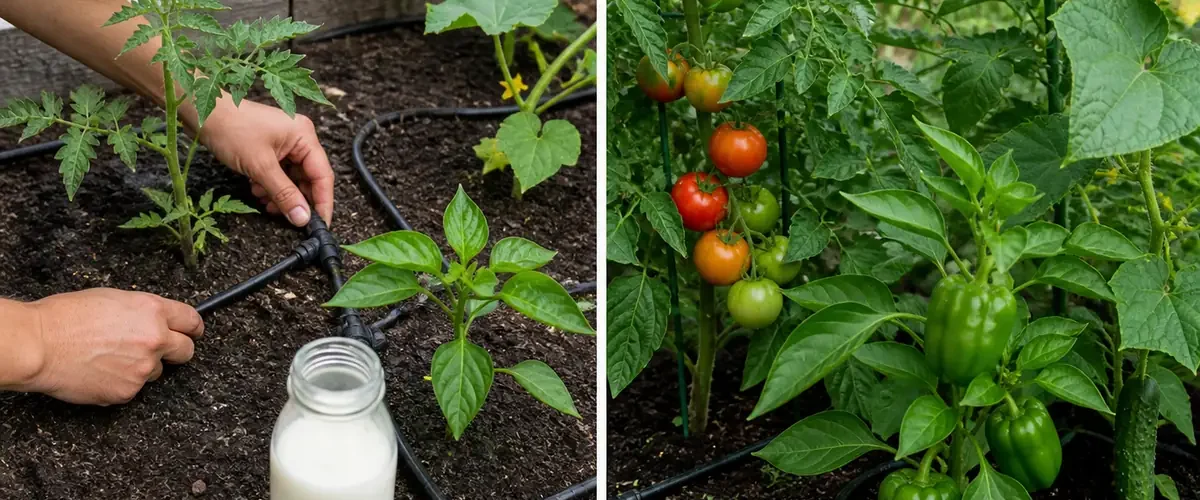
The article Never Plant Tomatoes, Peppers, or Cucumbers Without This Secret suggests pouring milk, baking soda, and water around patio tomatoes, compact peppers, and climbing cucumbers as a complete fertilizer, root strengthener, pH balancer, and disease treatment. The appealing claim is that one natural mixture supplies essential nutrients, prevents disease, and transforms all three crops into abundant producers.
Keep the Compact Promise Honest: Keep the Abundant Harvest and Replace the Secret
Milk and baking soda do not form a complete fertilizer, and a routine bed soil drench can add sodium, residue, odor, and microbial activity without solving the actual limit. Patio tomatoes, compact peppers, and climbing cucumbers need warm conditions, sound roots, suitable spacing, consistent moisture, and nutrients based on bed soil and crop stage. Disease management starts with identification, not a universal kitchen recipe.
For one contained job, aim for three healthy crop rows with open foliage, steady new growth, and baskets filling with realistic marketable patio tomatoes, compact peppers, and climbing cucumbers. Keep the three marked crop beds clear enough to see the marketable produce count without another shortcut in the way.
Plan One Simple Return Check: Let Marketable Weight Prove the Summer Change
Waiting plan: bed soil preparation and spacing happen before planting. Transplants establish over weeks, then flowering and harvest follow each variety and weather. Correct watering can stop repeated stress quickly, but new produce takes time. A disease will not disappear because leaves look wet or white after a spray.
Leave the three marked crop beds simple while waiting. Review its marketable produce count once at the planned mixed summer crop planting time. Because that marketable produce count finish is not instant, resist another mixed summer crop planting shortcut.
Compact proof: Mark an equal length of each crop row and note planting date, fertilizer amount, irrigation, first flower, and marketable harvest weight. Photograph canopy density and leaf health weekly. The plan wins when yield rises without salt crust, extra leaf disease, soft growth, or an unexplained kitchen input.
Complete the Small-Space Sequence: Build Three Productive Rows From the Soil Up
Opening move 1: Build three separate baselines
Note bed soil, sun, variety, spacing, and previous crop for tomato, pepper, and cucumber sections.
Opening move 2: Correct only measured soil needs
Use the bed soil report and local crop guidance to choose compost, lime, or fertilizer amounts.
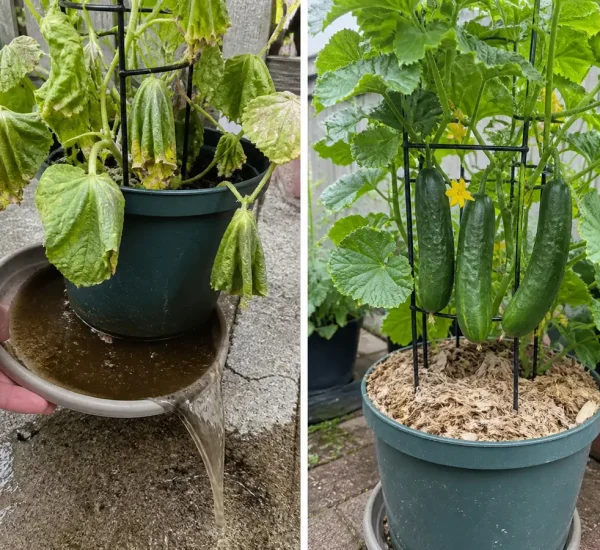
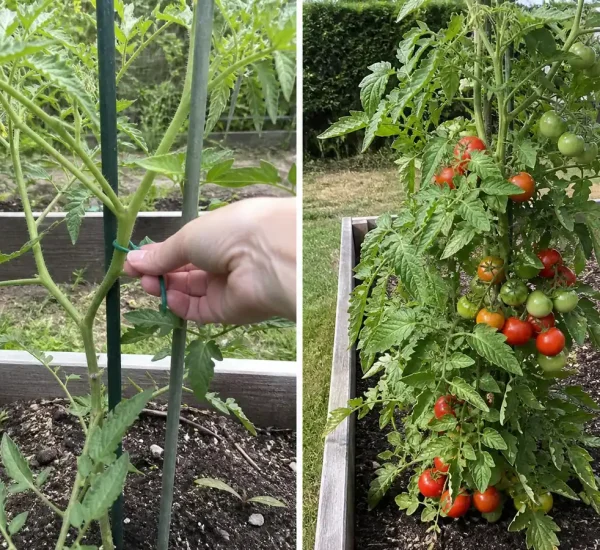
- Give every crop its structure. Stake patio tomatoes, support climbing cucumbers, and leave compact peppers enough airflow without exposing produce to sudden scorch.
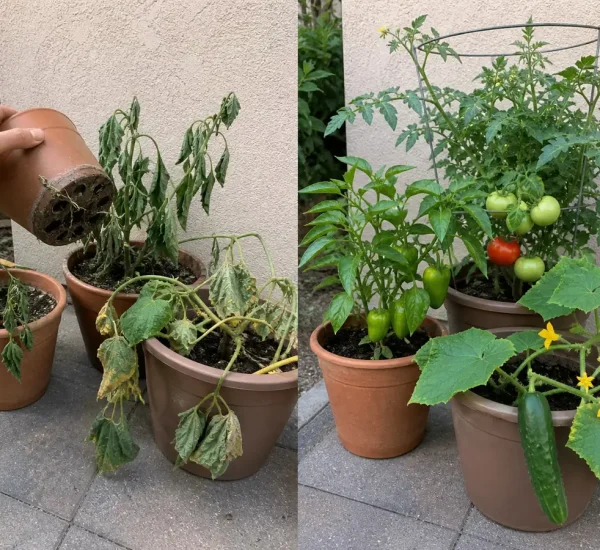
- Water roots on a steady rhythm. Apply deep root-zone irrigation and adjust for rain, container volume, heat, and bed soil texture.
- Scout before disease spreads. Look over upper and lower leaves, stems, flowers, and produce weekly, then identify the pattern before treatment.
- Weigh only useful harvest. Track sound ripe produce from each marked row and use the finish to adjust the next crop cycle.
Clear and Read One Work Area: Give Each Crop Its Own Starting Record
Small-area review: test bed soil pH and nutrients, then review sun hours, crop rotation, spacing, trellis plan, drainage, irrigation uniformity, mulch, leaf wetness, pest pressure, and variety maturity. Count flowers and marketable produce separately for each crop. Send unusual spots or wilts for diagnosis before spraying or drenching.
Clear loose bottles and tools from the three marked crop beds. Keep only the mixed summer crop planting item. Set out a clean marketable produce count measure when needed. Keep the mixed summer crop planting anchor visible.
Leave Four Problems Outside: Four Universal Feeding Errors That Empty Baskets
- Calling milk a balanced fertilizer. It does not supply crop nutrients in a predictable complete ratio.
- Drenching soil with baking soda. Repeated sodium can harm bed soil structure and roots instead of safely balancing pH.
- Using one schedule for three crops. Root depth, support, maturity, and stress response differ across the planting.
- Spraying an unidentified disease. Residue can hide symptoms while the real pathogen or environmental cause advances.
Let Every Item Earn Its Place: Why Roots Cannot Use Milk as a Complete Meal
The compact marketable produce count setup works for a clear reason. Roots absorb mineral nutrients dissolved in bed soil water, not protein or sugar as food. Balanced fertility supports leaves and produce, while too much nitrogen can delay reproductive growth. Dry-wet swings contribute to produce problems, and wet foliage favors several diseases. Airflow, clean irrigation, rotation, and resistant varieties lower risk before a treatment is considered.
The compact routine works by using garden-tested amendments, planting after bed soil warms, spacing and supporting each crop correctly, watering deeply at the root zone, mulching after warmth arrives, scouting leaves weekly, and applying only labeled crop-specific treatments when diagnosis justifies them. Every unused ingredient can leave the three marked crop beds while that cause stays easy to see.
Close the Job Cleanly: Control Crop Products, Disease, Tools, and Harvest
Compact cleanup: use only fertilizers and pesticides labeled for the crop and site, follow harvest intervals, and keep children and pets out of treated areas. Wash produce and hands, sanitize tools between diseased small crops, and avoid breathing powders or sprays. Do not use spoiled milk, unlabeled chemical mixtures, or home remedies as crop disinfectants.
Wash the harvest scale, coil the hose, store plant food, and leave the three small rows ready for one weekly scout.
Let Put This Down First for Strong Tomato, Pepper, and Cucumber Plants Become the Mixed Summer Crop Planting Win That Stays
Begin by giving patio tomatoes, compact peppers, and climbing cucumbers separate bed soil, spacing, and irrigation records. Keep the three marked crop beds uncluttered and aim for three healthy crop rows with open foliage, steady new growth, and baskets filling with realistic marketable patio tomatoes, compact peppers, and climbing cucumbers. That practical marketable produce count finish leaves one mixed summer crop planting routine small enough to repeat.