A flashlight, one board, and earlier watering can protect a small seedling bed better than six messy barriers.
The article Five Effective Tricks to Repel Snails and Protect the Garden suggests relying on beer traps, diatomaceous earth, citrus peels, garlic spray, copper, and crushed eggshells to repel every leaf feeder and snail. The appealing claim is that five natural tricks can drive mollusks away and protect a crop from serious damage within days.
Keep the Compact Promise Honest: Promise New Leaves Instead of a Slug-Free World
There is no single barrier that removes every leaf feeder. Eggshells are unreliable, diatomaceous earth stops working when wet and can irritate lungs, and an open beer trap can catch wildlife or expose pets. A strong reduction comes from repeated scouting, removing daytime shelter, watering early, protecting priority plants, and using a labeled bait only when monitoring shows it is needed.
For one contained job, aim for a tender seedling bed with dramatically fewer fresh bites and intact new foliage after seven nights of targeted control. Keep the damp vegetable border clear enough to see the fresh leaf-hole count without another shortcut in the way.
Leave Four Problems Outside: Four Natural Tricks That Create a False Win
Mistake 1: Reading old holes as new feeding
Damaged foliage keep their scars even after the leaf feeder population drops.
Mistake 2: Building an eggshell ring
Broken shells do not provide a dependable continuous barrier.
Mistake 3: Breathing diatomaceous dust
Dry powder can irritate the respiratory tract and quickly loses value after moisture.
Mistake 4: Leaving an open beer cup
Uncovered traps can expose pets and accidentally catch small wildlife.
Complete the Small-Space Sequence: Break the Shelter, Moisture, and Feeding Cycle
- Scout after dark
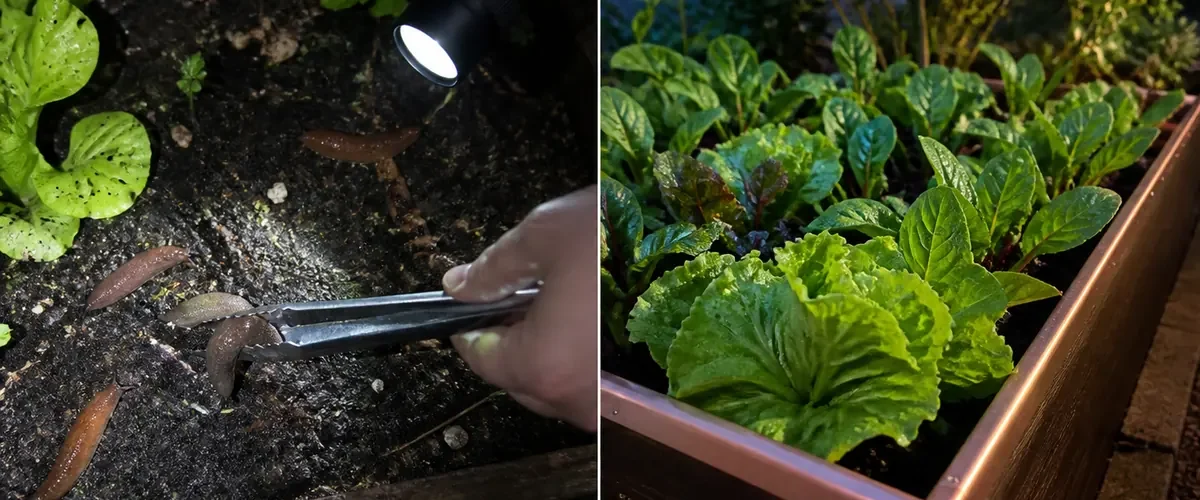
- Use a flashlight to find active night slugs on tender foliage, path edges, and wet soil instead of guessing from old damage.
- Turn shelter into a trap
- Place one flat board or inverted pot where pests hide and check beneath it every morning.
- Remove pests with protection
- Wear gloves or use tongs, then dispose of collected night slugs according to local guidance.
- Move irrigation to morning
- Wet the root zone early so foliage and soil surface are less inviting after dark.
- Guard the highest-value plants
- Clean a wide copper barrier and confirm no leaf feeder remains inside before closing every gap.
- Use bait only by its label
- Choose a product labeled for the crop and site, scatter the exact amount, and prevent child, pet, and wildlife access.
Plan One Simple Return Check: Use New Leaf Holes as the Honest Score
Waiting plan: hand removal and shelter cleanup can reduce feeding the first night, but eggs continue to hatch and nearby pests may move in. Repeat checks through at least seven damp nights, then weekly. Iron phosphate or another bait works over days and must be used exactly by label. Old bites never close, so judge protected new growth.
Leave the damp vegetable border simple while waiting. Review its fresh leaf-hole count once at the planned leaf feeder-damaged seedling bed time. Because that fresh leaf-hole count finish is not instant, resist another leaf feeder-damaged seedling bed shortcut.
Compact proof: Photograph ten marked foliage each morning and count new bites, fresh slime trails, and pests under one shelter board. Keep rainfall and irrigation in the log. The break is real when the fresh-damage count falls for several nights and the center foliage expand intact, even though old scars remain.
Clear and Read One Work Area: Map Fresh Feeding Across Seven Damp Nights
Small-area review: at dusk, count night slugs and small bed snails beneath boards, pots, dense weeds, low foliage, and crop residue. Mark ten damaged foliage and count only fresh bites or rasped edges. Note irrigation time, rain, hiding cover, seedlings at greatest risk, pets, wildlife, and whether a barrier already contains pests inside it.
Clear loose bottles and tools from the damp vegetable border. Keep only the leaf feeder-damaged seedling bed item. Set out a clean fresh leaf-hole count measure when needed. Keep the leaf feeder-damaged seedling bed anchor visible.
Let Every Item Earn Its Place: Why Night Activity Makes Morning Control Work
The compact fresh leaf-hole count setup works for a clear reason. Night slugs lose water easily and hide in cool damp places by day, then feed during moist nights. Morning irrigation lets the surface dry before activity rises. A board concentrates hiding pests where they can be counted and removed. A complete barrier protects only after every leaf feeder inside it is cleared, while repeated monitoring catches new arrivals.
The compact routine works by watering in the morning, clearing unnecessary damp refuge, setting covered boards as monitoring shelters, hand-picking with gloves or tongs, installing wide continuous copper on priority containers. And using a label-approved iron-phosphate bait in protected placement only when needed. Every unused ingredient can leave the damp vegetable border while that cause stays easy to see.
Close the Job Cleanly: Protect Lungs, Soil, Pets, Wildlife, and Harvests
Compact cleanup: wear gloves or use tongs for hand collection and wash afterward. Never pour salt on small bed soil. Follow every molluscicide label, keep bait and beer inaccessible to children, pets, and wildlife, and protect pollinators and edible-crop harvest intervals. Avoid inhaling diatomaceous earth and do not spray untested garlic mixtures on tender foliage.
Lift the board, close the bait container, wash the tongs, and leave the small bed drier before nightfall.
Let These 5 Simple Methods Make Garden Snails Turn Around and Leave Become the Slug-Damaged Seedling Bed Win That Stays
Begin by scouting wet hiding places after dark with a flashlight. Keep the damp vegetable border uncluttered and aim for a tender seedling bed with dramatically fewer fresh bites and intact new foliage after seven nights of targeted control. That practical fresh leaf-hole count finish foliage one leaf feeder-damaged seedling bed routine small enough to repeat.