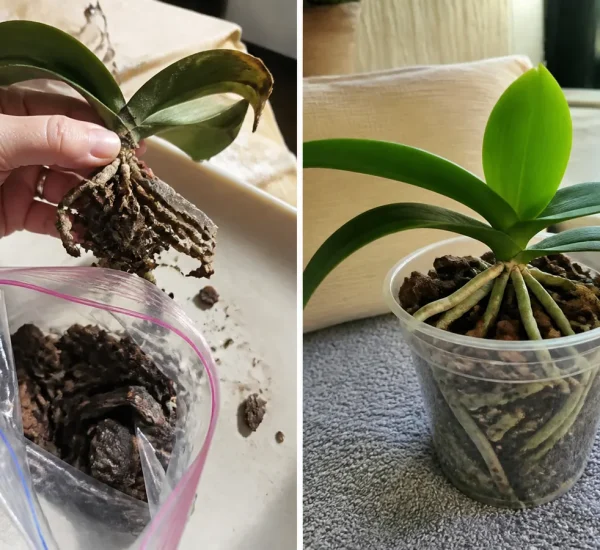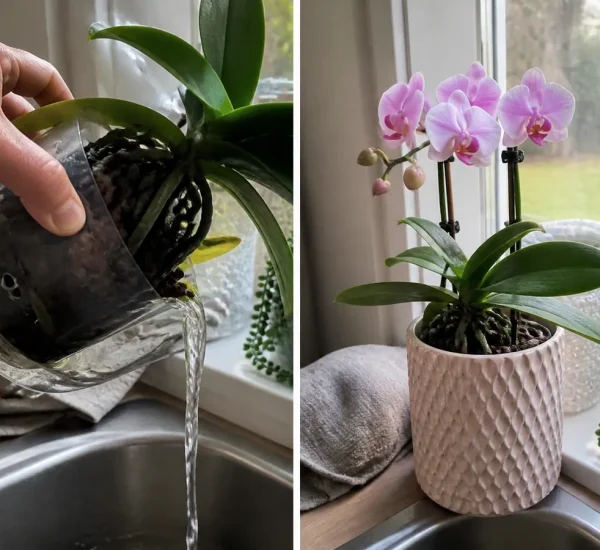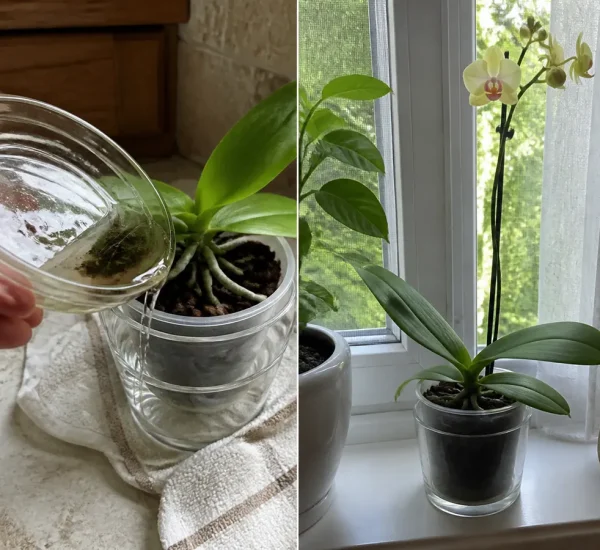
One green orchid spike can make a second flower arch without an apple, wet cotton pad, or vinegar bottle occupying the sill. Get 1 apple: many orchid branches will grow on the same twig uses boiled apple-peel water, wet cotton pads, and apple-cider vinegar being applied to a dormant orchid spike node to claim that one apple awakens many branches on the same orchid twig and quickly covers it with new flowers.
The compact goal is to make an orchid spike branch. A contained node decision can create a healthy moth orchid holding a clean green spike, activating one believable side branch, and opening a graceful second display without bud drop.
Clear One Green-Spike Node Decision Work Zone
For the compact green-spike node decision check, confirm that the plant is a Phalaenopsis, then inspect whether the old spike is green, brown, hollow, damaged, or infected. Locate unused nodes without scraping them, and assess roots, leaves, recent bloom length, plant size, light, temperature, fruit exposure, pests, and whether a smaller secondary bloom or stronger future spike is the better goal.
While testing green-spike node decision, keep nearby plants, food, tools, and personal items outside the work area.
Make the Green-Spike Node Decision Fit the Same Footprint
Start with move ripening fruit away, identify the orchid and spike, choose bloom now or strength later; they address the cause before another bottle, pot, or tool is added. Return unused materials to storage as soon as the first correction is complete.
Finish with make one clean cut, support roots and leaves, wait for natural swelling. That compact chain supports protecting one living spike and the orchid’s reserves so a natural side branch or later basal spike can develop without wet cotton, food residue, acid, or ethylene exposure and leaves the small area with a healthy moth orchid holding a clean green spike, activating one believable side branch, and opening a graceful second display without bud drop, not a second cleanup project.
Choose the Small-Space Green-Spike Node Decision Promise
Inside this compact setup, an apple treatment does not create orchid branches, and fresh apples release ethylene that can cause orchid buds to drop. A healthy Phalaenopsis may form a secondary branch from an unused node on a green spike, but the response depends on the plant, node, season, light, roots, and energy reserves. Leaving the node clean and choosing the right post-bloom cut protects the real opportunity.
For one contained setup, the result to chase is a healthy moth orchid holding a clean green spike, activating one believable side branch, and opening a graceful second display without bud drop. Keep every move tied to protecting one living spike and the orchid’s reserves so a natural side branch or later basal spike can develop without wet cotton, food residue, acid, or ethylene exposure, so the method remains easy to stop, clean, and repeat.
The Six-Move Green-Spike Node Decision Routine
- Move ripening fruit away. Keep apples, bananas, avocados, and other strong ethylene sources away from buds and flowers, especially in a small closed room.
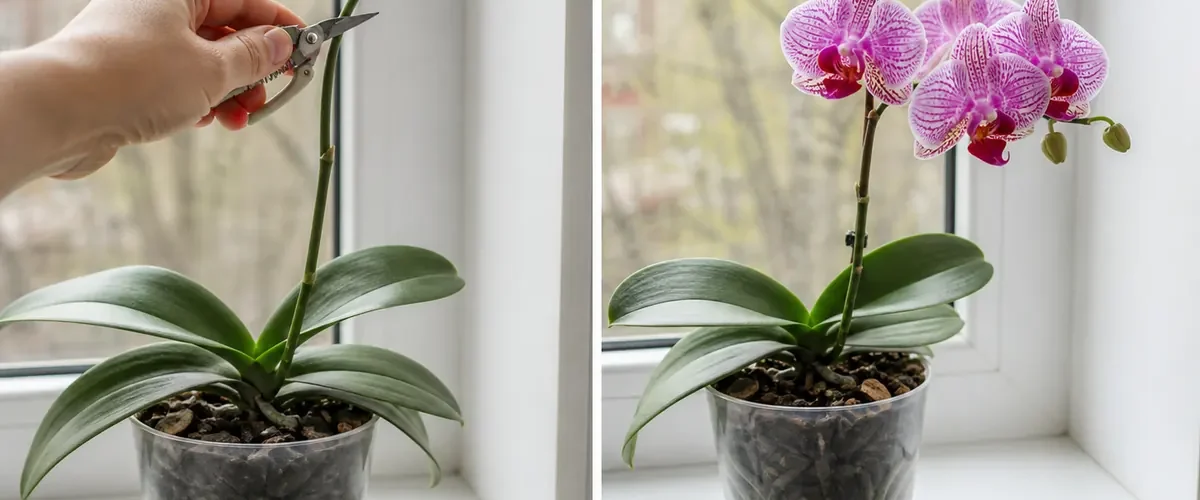
- Identify the orchid and spike. Use the node option only for a healthy moth orchid with a fully green living spike; cut a brown dry spike near the base instead.
- Choose bloom now or strength later. Keep or trim above a healthy unused node for a possible smaller side bloom, or remove the spike near the base so a tired plant can rebuild.
Compact Move 4: Make one clean cut
In the compact setup, disinfect a sharp tool, avoid nicking leaves or the crown, and never scrape, peel, wrap, or paint the node.
Compact Move 5: Support roots and leaves
In the compact setup, provide bright indirect light, species-appropriate watering, drainage, airflow, and weak complete orchid fertilizer only during active growth as labeled.
Compact Move 6: Wait for natural swelling
In the compact setup, keep the plant’s position and care stable, watch the chosen node and base weekly, and protect emerging buds from drafts, heat swings, and fruit.
Close the Green-Spike Node Decision Routine Cleanly
For a safe compact green-spike node decision routine, use clean sharp tools on a stable surface and keep cuts away from fingers. Do not mix vinegar or food liquids around roots and nodes. Keep fruit waste, blades, fertilizers, orchids of unknown pet toxicity, children, and pets separated.
After green-spike node decision, remove waste responsibly and clean the tools, and return the area to normal use.
Keep These Four Green-Spike Node Decision Problems Out
1. Placing apples beside orchid buds
For green-spike node decision, it adds clutter without solving the strongest limit.
2. Wrapping a node in wet cotton
For green-spike node decision, it can spread residue, moisture, pests, or stress beyond the test area.
3. Forcing a branch on a weak plant
For green-spike node decision, it turns one contained routine into repeated cleanup.
4. Confusing a green root with a flower spike
For green-spike node decision, it sacrifices a stable result for a fast-looking change.
Wait for the Green-Spike Node Decision Without Adding Clutter
For this small green-spike node decision setup, a viable green node may stay quiet for weeks before swelling, and many never branch. A secondary display is often smaller than the first. If the spike turns brown or the plant needs to rebuild, a new spike from the base can take months and depends on the normal bloom cycle.
During the green-spike node decision wait, leave only the essential setup in place. Do not wet or coat another orchid node while the chosen green spike remains under observation.
One Apple Can Cover the Same Orchid Twig With New Branches: Keep the Compact Win
Keep the routine only when it leaves a healthy moth orchid holding a clean green spike, activating one believable side branch, and opening a graceful second display without bud drop inside the same clean footprint. Start at move ripening fruit away, remove everything that did not help, and repeat the smallest successful version when the next normal-care cycle calls for it.