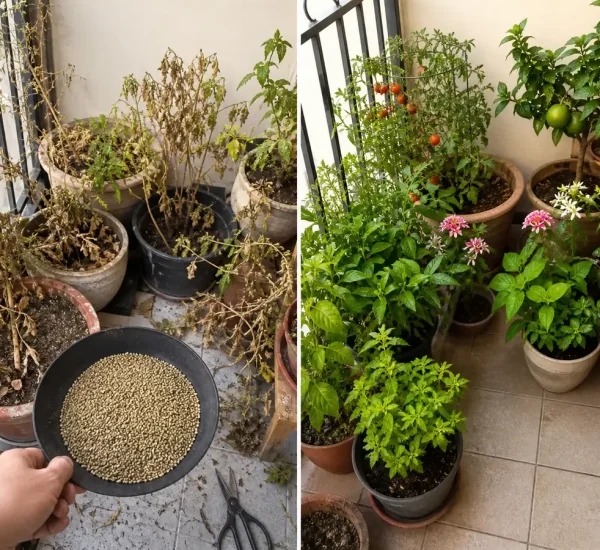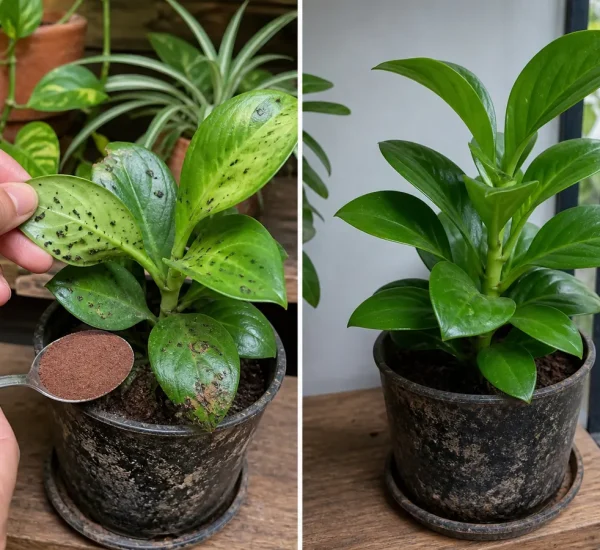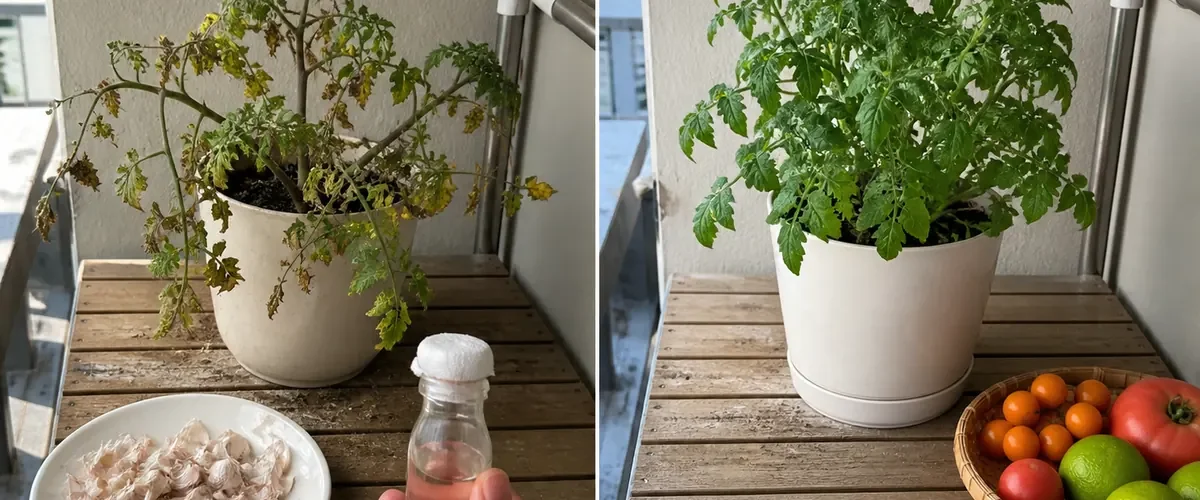
One jar of saved garlic peels can become far too much spray for a small shelf. I always keep garlic peels – let me share my grandmother’s secret with you uses saved garlic skins being boiled into a leaf and soil spray for garden plants to claim that a grandmother’s garlic-peel secret protects plants from parasites and fungal disease.
A tiny strained batch and one marked leaf keep the trial contained while aiming for clean new leaves and an early pest problem that stops spreading.
What the Bold Garlic-Peel Spray Trial Claim Leaves Out
For a compact setup, the practical limit is clear: a mild garlic-peel infusion may discourage some exposed soft-bodied pests, but concentration varies and garlic compounds can injure tender leaves. It is not a universal fungicide or preventive shield. Pest identity, removal, sanitation, airflow, moisture correction, a patch test, and repeat counts make a small trial useful.
In limited space, a weak method creates odor, clutter, runoff, or repeated work very quickly. A cleaner sequence can still reach clean new leaves and an early pest problem that stops spreading. It should not add a second problem.
Start Here: Compact Start: Name the Pest or Symptom
At one tidy work station, identify the damaged plant and inspect leaf tops, undersides, stems, buds, soil, roots, webbing, sticky honeydew, insects, eggs, powder, spots, recent sprays, sun exposure, temperature, watering, airflow, and nearby plants before saving or boiling any peels.
Build the Garlic-Peel Spray Trial Result in Six Practical Moves
Compact Start: Name the Pest or Symptom
On one test subject, photograph the damage and use a hand lens to separate aphids, mites, scale, gnats, chewing insects, fungal growth, and environmental scorch.
Clear-space Move: Remove the Easiest Pressure First
With the nearby area clear, isolate the plant, rinse sturdy foliage, wipe accessible pests, prune disposable badly affected tissue, and clean fallen debris.
Low-clutter Correction: Prepare Only a Mild Fresh Test Batch
Before using more materials, if a garlic-peel trial still makes sense, steep a small amount in water, cool it, strain it thoroughly, and avoid concentrated or aging mixtures.
- Smallest Effective Step: Patch-test one marked leaf area. For the smallest useful change, apply in cool indirect light to a few leaves, keep other care unchanged, and wait long enough to detect spotting, curl, discoloration, or burn.
- Contained Trial: Treat narrowly and protect allies. Keep the trial contained: use the mild mixture only on the identified exposed pest if the test remains clean, avoiding flowers, beneficial insects, hot sun, and broad preventive spraying.
- Clean Finish: Recount and choose the next tool. To finish the small-space test, check the same leaves on schedule; stop if damage appears and switch to a product labeled for the exact plant and pest when counts do not decline.
Prove the Garlic-Peel Spray Trial Result With More Than One Signal
Use one plant or container as the first garlic-peel spray trial trial. Mark it discreetly and keep neighboring plants out so runoff, pests, shade, or a second treatment cannot confuse the result.
Repeat only after the test plant stays stable through normal care. In a small space, the best proof is clean new leaves and an early pest problem that stops spreading with easy cleanup and no spillover into the rest of the room or garden.
Why These Moves Create Clean New Leaves and an Early Pest Problem That Stops Spreading
A small plant setup improves when each correction earns its place. Start with name the pest or symptom, then use remove the easiest pressure first and prepare only a mild fresh test batch to protect roots, leaves, and the limited space around them.
Contain the trial at treat narrowly and protect allies and close the loop with recount and choose the next tool. The result is worth keeping only when those compact moves produce clean new leaves and an early pest problem that stops spreading. No fresh clutter or stress should follow.
Stop the Garlic-Peel Spray Trial Test if Any Limits Are Crossed
In a shared small space, wear gloves and eye protection when straining or spraying irritating plant material. Keep the mixture away from children, pets, food, pollinators, and edible leaves near harvest; label it, never drink it, and discard leftovers promptly.
Keep the garlic-peel spray trial area tidy, control runoff, and store every material away from food, children, and pets. Clean the work zone before normal care resumes.
A Believable Timeline for Clean New Leaves and an Early Pest Problem That Stops Spreading
Plan the wait as carefully as the work: a rinse or wipe can reduce exposed pests immediately. A patch-tested spray needs at least twenty-four to forty-eight hours to reveal leaf injury, while repeat insect counts over one or two pest generations show whether the population is truly falling.
Keep the garlic-peel spray trial setup steady while you wait. Repeatedly moving, feeding, watering, or repotting can hide which action helped and add fresh stress.
Compact Setup: Four Mistakes That Block the Garlic-Peel Spray Trial Result
- Avoid boiling an overly strong concentrate. It makes the promised garlic-peel spray trial finish harder to separate from normal change.
- Avoid spraying unidentified leaf spots. It risks trading a stable garlic-peel spray trial result for a fast visual effect.
- Avoid treating flowers in bright sun. It prevents a clean comparison with the original garlic-peel spray trial baseline.
- Avoid keeping a homemade infusion until it spoils. It can spread residue, stress, or pests beyond the first garlic-peel spray trial test.
Grandma’s Garlic-Peel Secret Is Too Useful to Keep Hidden: The Result Worth Keeping
The best small-space transformation is impressive because it stays controlled. Begin with the step name the pest or symptom, change one important condition at a time, and keep the routine only when it delivers clean new leaves and an early pest problem that stops spreading. It should not create extra work nearby.