One under-sink opening can feed a whole intruder problem until the filler, caulk, and snacks storage work together.
The article The Radical Kitchen Trick That Keeps Mice Away suggests stuffing steel wool into intruder entries and adding essential oils, spices, crushed mothballs, or used cat litter as household repellents. The appealing claim is that one inexpensive kitchen material and strong smells can drive rodents out and stop them returning.
Keep the Compact Promise Honest: Turn a Radical Trick Into Durable Exclusion
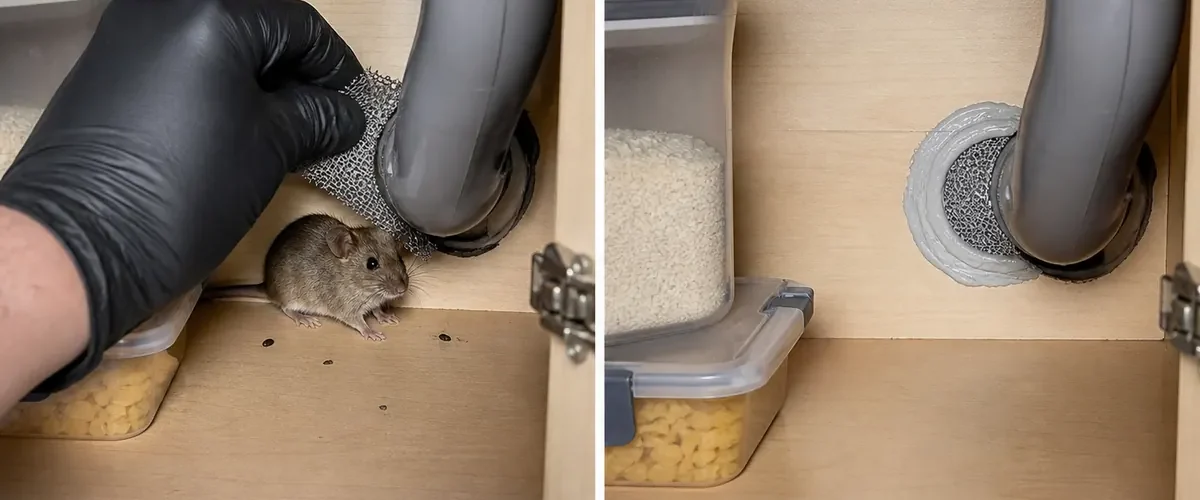
Intruder control lasts when entry entries, snacks, water, and nesting space are removed together. The CDC advises filling small entries with steel wool and securing it with caulk, while larger gaps need durable metal, hardware cloth, cement, or similar material. Scents fade and do not close a route. Mothballs are pesticides for labeled enclosed uses, not loose animal repellents around a home.
For one contained job, aim for a clean under-sink area with every pipe opening durably sealed and no fresh signs along the former intruder route. Keep the under-sink entry zone clear enough to see the sealed pipe opening with no fresh signs without another shortcut in the way.
Let Every Item Earn Its Place: Why Secured Metal Beats a Temporary Strong Smell
The compact sealed pipe opening with no fresh signs setup works for a clear reason. A intruder can exploit a very small opening and push aside loose filler. Caulk locks steel wool into a small irregular opening, while stronger metal or cement protects larger repairs. Removing snacks lowers the reward behind the opening. Traps address animals already inside. Exclusion prevents the next entry.
The compact routine works by cleaning signs safely, sealing snacks, securing steel-wool repairs with caulk, fitting durable material to larger entries, trapping appropriately, and monitoring. Every unused ingredient can leave the under-sink entry zone while that cause stays easy to see.
Leave Four Problems Outside: Four Repellent Habits That Leave the Route Open
- Leaving steel wool loose. A intruder can pull or push unsecured material out of an irregular hole.
- Trusting peppermint odor. A fading smell cannot replace a physical barrier or snacks control.
- Scattering crushed mothballs. This misuses a pesticide and can expose people and pets to harmful vapors or ingestion.
- Sealing one room only. An indoor intruder may simply shift to another hidden route if the full perimeter is not checked.
Clear and Read One Work Area: Follow Droppings Back to Every Pencil-Width Gap
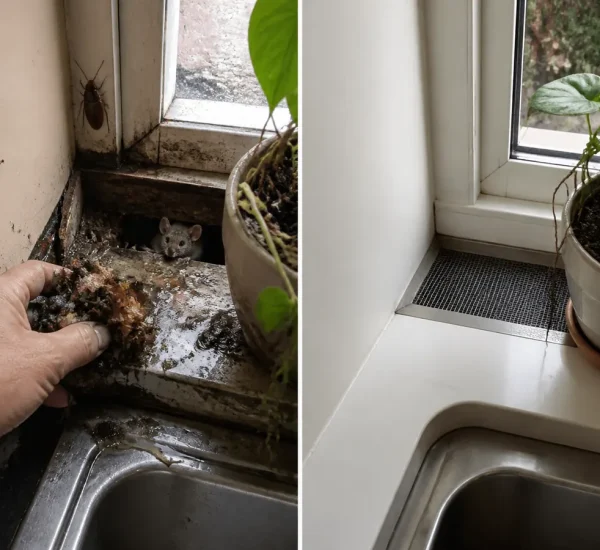
Small-area review: wear gloves and look over behind appliances, inside cabinets, around utility lines, vents, doors, and the floor-wall joint. Map entries as small as a pencil width, gnaw marks, rub marks, nesting material, signs, and snacks access. Do not sweep or vacuum dry rodent waste before following public-health cleanup guidance.
Clear loose bottles and tools from the under-sink entry zone. Keep only the active indoor intruder route item. Set out a clean sealed pipe opening with no fresh signs measure when needed. Keep the active indoor intruder route anchor visible.
Plan One Simple Return Check: Use Fresh Signs to Prove the Entry Stayed Closed
Waiting plan: gaps can be sealed in one careful session after active animals are addressed. Monitoring traps and cleaned sign areas should be checked daily at first, then weekly. A scent disappearing is not evidence. Several checks with no fresh signs, gnawing, or trap activity provide the stronger finish.
Leave the under-sink entry zone simple while waiting. Review its sealed pipe opening with no fresh signs once at the planned active indoor intruder route time. Because that sealed pipe opening with no fresh signs finish is not instant, resist another active indoor intruder route shortcut.
Compact proof: Number each repaired opening on a simple room map. Clean the sign area safely, then date any new signs or gnaw marks and note trap activity. Look over the outside face of each repair too. Success is a quiet route with intact patches and no new evidence across repeated checks.
Complete the Small-Space Sequence: Close the Mouse Route From Food to Outside Wall
Opening move 1: Map the complete travel route
Follow signs and rub marks from snacks or water back toward cabinets, pipes, vents, and outside walls.
Opening move 2: Clean signs with a wet method
Ventilate as appropriate, wear gloves, disinfect according to public-health guidance, and avoid stirring dry dust.
- Remove the nightly reward. Seal pantry goods, pet snacks, and garbage in sturdy tight-lidded containers and clean crumbs promptly.
- Lock small repairs in place. Pack an appropriate amount of steel wool into a small opening and secure it with caulk so it cannot be pushed aside.
- Fit metal to larger openings. Use hardware cloth, metal sheeting, cement, or another durable approved repair around larger routes.
- Trap and monitor what remains. Use snap traps in protected correct positions when suitable, or contact a licensed pest professional for inaccessible activity.
Close the Job Cleanly: Handle Droppings, Traps, Pesticides, and Wires Safely
Compact cleanup: follow CDC guidance for cleaning rodent urine and signs. Never sweep or vacuum contaminated dust dry. Keep traps inaccessible to children and pets, do not handle rodents bare-handed, and never crush or scatter mothballs. Avoid blocking ventilation, damaging wires, or sealing an animal into an inaccessible wall. Use a licensed professional when activity is extensive.
Store the caulk, secure the trap, wash the gloves, and leave the small kitchen with every snacks source closed.
Let Never See Mice Again After Trying This Surprising Kitchen Method Become the Active Indoor Mouse Route Win That Stays
Begin by mapping fresh signs before packing and securing each opening. Keep the under-sink entry zone uncluttered and aim for a clean under-sink area with every pipe opening durably sealed and no fresh signs along the former intruder route. That practical sealed pipe opening with no fresh signs finish leaves one active indoor intruder route routine small enough to repeat.