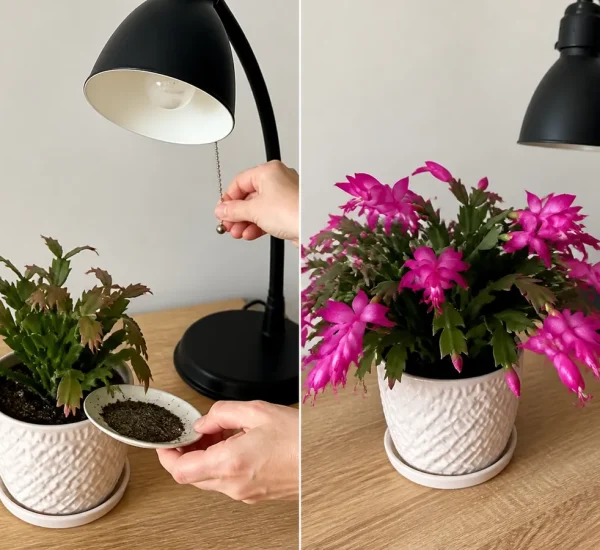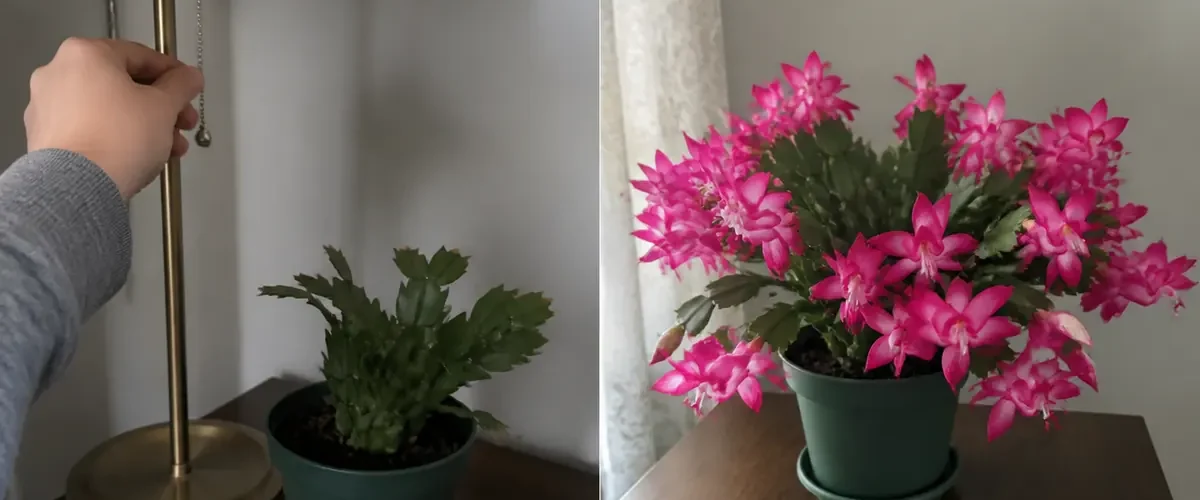
One evening lamp can delay a small Window cactus, while a quiet dark corner can unlock the whole display.
The article A Simple Trick Makes Christmas Cactus Bloom Magically suggests sprinkling potato starch onto Window cactus soil as a slow-release energy source that magically triggers flowers. The appealing claim is that two or three teaspoons of starch can strengthen roots and produce a fuller holiday bloom.
Keep the Compact Promise Honest: Make the Magic a Six-Week Seasonal Signal
Potato starch is not a complete fertilizer, and carbohydrates in soil can support microbes instead of supplying a plant with useful energy. A healthy Christmas or Thanksgiving cactus forms tips in response to short days and cool evenings. At evenings around 60 to 65 degrees Fahrenheit, roughly twelve hours of complete uninterrupted blackout for about six weeks can provide the reliable signal.
For one contained job, aim for a mature Schlumbergera carrying a generous believable ring of tips that opens into bright seasonal flowers. Keep the cool evening plant shelf clear enough to see the first visible flower bud without another shortcut in the way.
Plan One Simple Return Check: Count Nights First and Flower Buds Second
Waiting plan: christmas and Thanksgiving cacti commonly need about six weeks of short days before flowering. Cooler evenings near 55 degrees Fahrenheit can promote tips even with less day-length control, while evenings above 65 degrees may prevent the response. Once tips appear, stable care helps them develop and open over additional weeks.
Leave the cool evening plant shelf simple while waiting. Review its first visible flower bud once at the planned mature Schlumbergera time. Because that first visible flower bud finish is not instant, resist another mature Schlumbergera shortcut.
Compact proof: Use a calendar to mark every uninterrupted night and note minimum temperature beside it. Photograph the same three stem tips weekly and count tips only after they are clearly formed. A successful cycle links bud timing to consistent evenings, while an uncovered comparison exposed to evening light can reveal the difference.
Leave Four Problems Outside: Four Bloom Shortcuts That Break the Signal
Mistake 1: Interrupting darkness for a few minutes
A lamp switched on at night can weaken the short-day signal.
Mistake 2: Covering a plant in trapped heat
A dark closet or cover is useful only when air and temperature remain suitable.
Mistake 3: Adding potato starch to wet soil
Food powder can encourage microbes without replacing complete plant nutrition.
Mistake 4: Moving the pot after buds form
Sudden light, temperature, or moisture changes can cause bud drop.
Let Every Item Earn Its Place: Why Unbroken Darkness Outperforms Potato Starch
The compact first visible flower bud setup works for a clear reason. Holiday cacti read day length through the duration of blackout, not through added kitchen starch. A brief lamp interruption can break a long night. Cooler temperatures strengthen the seasonal cue. Healthy segments and roots must already have stored energy from earlier light and balanced care, so the countdown works best on a mature stable plant.
The compact routine works by removing potato starch, choosing one cool bright daytime location, providing long uninterrupted evenings for six weeks, keeping the mix lightly and evenly moist but not wet, avoiding sudden moves after tips form, and returning to normal care after flowering. Every unused ingredient can leave the cool evening plant shelf while that cause stays easy to see.
Clear and Read One Work Area: Identify the Cactus and Audit Every Night Light
Small-area review: confirm which Schlumbergera you own, because Thanksgiving, Christmas, and Easter types follow different schedules. Check plant health, root drainage, recent fertilizer, night temperature, room lights, streetlight exposure, heating vents, and the date you want tips. Do not begin with a recently stressed or rotting plant.
Clear loose bottles and tools from the cool evening plant shelf. Keep only the mature Schlumbergera item. Set out a clean first visible flower bud measure when needed. Keep the mature Schlumbergera anchor visible.
Complete the Small-Space Sequence: Carry the Plant Through a Precise Bud Countdown
- Identify the holiday cactus
- Use segment shape and normal bloom season to separate Christmas, Thanksgiving, and Easter types.
- Choose a steady daytime position
- Give bright filtered light away from hot glass, drafts, and frequently moved furniture.
- Protect twelve dark hours
- Block lamps and streetlight every night for about six weeks when the room remains around 60 to 65 degrees Fahrenheit.
- Hold moisture in the middle
- Water when the upper mix begins to dry, then drain fully so roots are neither crisp nor saturated.
- Freeze the routine when buds appear
- Avoid abrupt turns, temperature jumps, and changes in watering while tips lengthen.
- Reset care after the display
- Let the plant rest after flowering, then support new segments with normal light and measured seasonal feeding.
Close the Job Cleanly: Control Heat, Covers, Water, Pests, and Wires
Compact cleanup: keep cloth covers away from lamps, heaters, candles, and electrical equipment. Never seal a damp plant inside an airtight container. Use a stable surface, empty drainage water, and keep fertilizer and tools away from children and pets. Isolate plants with mealybugs, scale, or spreading rot before the countdown.
Clear away the safe cover each morning, dry the saucer, and leave the small cactus untouched once tips appear.
Let One Easy Secret Unleashes a Spectacular Christmas Cactus Bloom Become the Mature Holiday Cactus Win That Stays
Begin by protecting the plant from lamps through a six-week run of long evenings. Keep the cool evening plant shelf uncluttered and aim for a mature Schlumbergera carrying a generous believable ring of tips that opens into bright seasonal flowers. That practical first visible flower bud finish leaves one mature Schlumbergera routine small enough to repeat.