A collapsed window houseplant can still recover when its small container reveals whether water is missing or trapped.
The article Revive Wilted and Dehydrated Plants With a Magic Powder suggests sprinkling crushed shell powder over a wilted houseplant and expecting dehydration or root damage to reverse in two minutes. The appealing claim is that a calcium-rich kitchen powder can bring almost any collapsed houseplant back immediately.
Keep the Compact Promise Honest: Keep the Revival Promise but Give Roots Time
A wilted houseplant may be thirsty, waterlogged, heat-stressed, root-bound, diseased, or already dead at the crown. Shell powder releases calcium slowly and cannot rehydrate foliage in two minutes. A dry but living root ball can recover dramatically after careful soaking, while a rotten houseplant needs dead tissue removed and a cleaner root environment.
For one contained job, aim for a formerly collapsed houseplant standing firmer after correct hydration with a stable crown and healthy new tissue beginning to open. Keep the houseplant rescue tray clear enough to see the firm hydrated new growth without another shortcut in the way.
Clear and Read One Work Area: Separate a Dry Root Ball From Active Rot
Small-area review: lift the container, feel the mix below the surface, smell the drainage hole, and slide out the root ball if the cause remains unclear. Dry mix pulls from the container edge and feels light. Rot tends to smell sour and foliage rootlets brown, soft, or hollow. Scratch a tiny stem area only when needed to find green living tissue.
Clear loose bottles and tools from the houseplant rescue tray. Keep only the collapsed houseplant item. Set out a clean firm hydrated new growth measure when needed. Keep the collapsed houseplant anchor visible.
Complete the Small-Space Sequence: Move the Plant From Collapse to Stable Growth
Opening move 1: Lift the pot and read its weight
Compare the houseplant with an evenly watered container of similar size before assuming the root ball is dry.
Opening move 2: Inspect the hidden center
Feel deeper mix and check root color, firmness, odor, and crown condition when surface clues conflict.
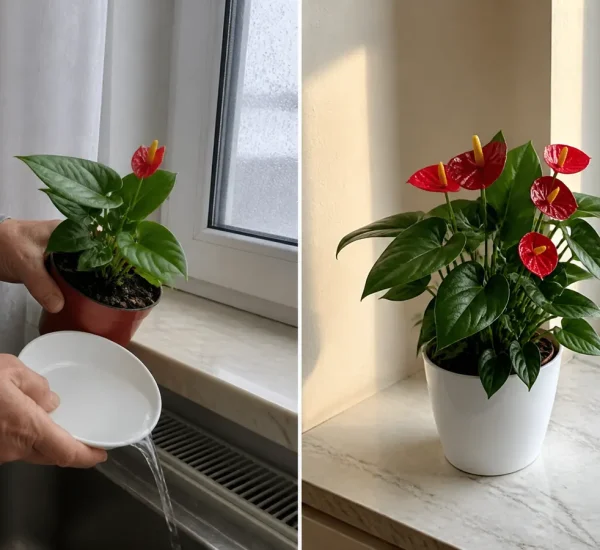
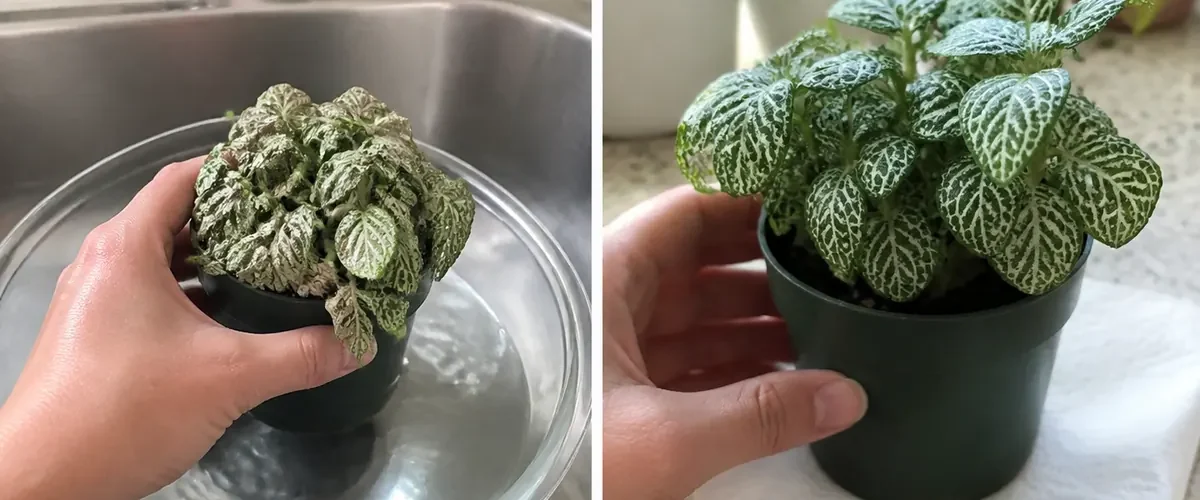
- Soak only a dry living root ball. Water slowly from above or soak briefly from below until evenly moist, then allow complete drainage.
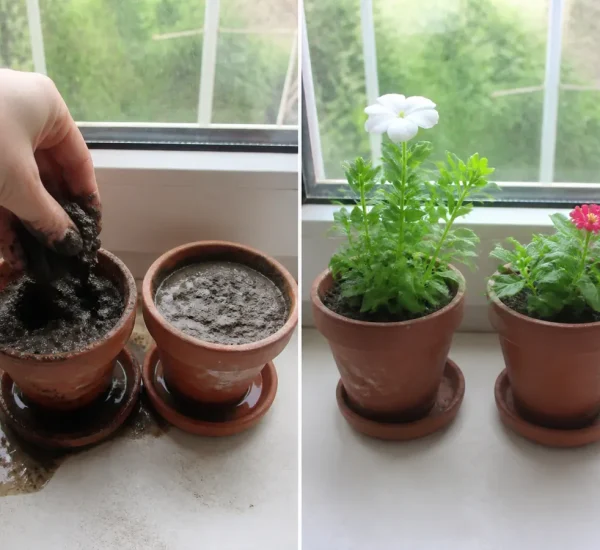
- Treat rot as a separate rescue. Cut only mushy dead rootlets with sterilized tools and use fresh suitable potting mix in a draining container.
- Give recovery light without heat. Move the houseplant to bright indirect light and stable conditions while damaged tissue settles.
- Wait for proof before feeding. Resume normal species-specific care and add labeled fertilizer only after active growth returns.
Let Every Item Earn Its Place: Why Living Roots Decide Whether Leaves Rise
The compact firm hydrated new growth setup works for a clear reason. Water must move through living rootlets and vascular tissue before foliage can regain pressure. A bone-dry peat mix can repel a quick splash, so a slow soak wets it evenly. In waterlogged mix, the opposite problem occurs: rootlets lose oxygen and decay. The right rescue depends on which root condition is present.
The compact routine works by rehydrating a dry root ball evenly, draining it fully, shading the houseplant from harsh sun during recovery, trimming only rotten tissue with clean tools, repotting into suitable mix when necessary, and waiting for new growth before feeding. Every unused ingredient can leave the houseplant rescue tray while that cause stays easy to see.
Leave Four Problems Outside: Four Rescue Reactions That Make Wilting Worse
- Watering every wilted plant. Waterlogged rootlets can make foliage droop even while the container is heavy.
- Cutting firm discolored roots. Color alone does not prove a root is dead. Texture and odor matter.
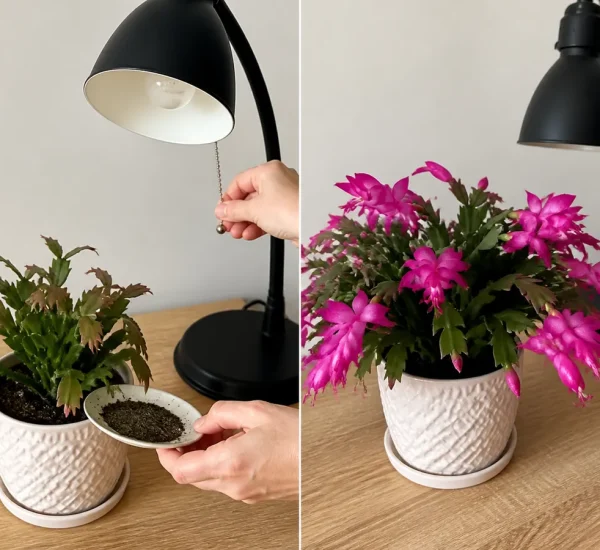
- Expecting eggshell calcium to hydrate leaves. Slow mineral release cannot repair interrupted water movement on demand.
- Putting the rescue in direct sun. Heat increases water loss while weakened rootlets are least able to replace it.
Plan One Simple Return Check: Measure Hours for Hydration and Weeks for Repair
Waiting plan: a truly dry houseplant with live rootlets may lift within hours after a thorough soak and drain. Thick or damaged foliage may take a day or more, and old scorch will remain. A root-rot rescue needs weeks to make new rootlets or foliage. No response, a dead crown, or spreading black tissue signals a different outcome.
Leave the houseplant rescue tray simple while waiting. Review its firm hydrated new growth once at the planned collapsed houseplant time. Because that firm hydrated new growth finish is not instant, resist another collapsed houseplant shortcut.
Compact proof: Photograph leaf angle and mix surface before treatment, after two hours, and the next morning. Note container weight and mark the crown. Recovery means firmer live tissue and later new growth, not merely wet mix. If rot was trimmed, count clean root tips and watch that the lesion stops expanding.
Close the Job Cleanly: Contain Rot, Mold, Sharp Tools, and Runoff
Compact cleanup: sterilize cutting tools before and after trimming rot, wear gloves around moldy mix, and keep discarded material away from healthy plants. Do not flame tools indoors or pour boiling water over them. Keep runoff off floors and electrical cords, and isolate plants with rapidly spreading lesions or pests.
Dry the tray, clean the tool, empty the saucer, and return one stable rescued houseplant to indirect light.
Let One Pinch of This Brings Thirsty, Wilting Plants Back Strong Become the Collapsed Houseplant Win That Stays
Begin by deciding whether the root ball is dry or rotten before reaching for shell powder. Keep the houseplant rescue tray uncluttered and aim for a formerly collapsed houseplant standing firmer after correct hydration with a stable crown and healthy new tissue beginning to open. That practical firm hydrated new growth finish foliage one collapsed houseplant routine small enough to repeat.