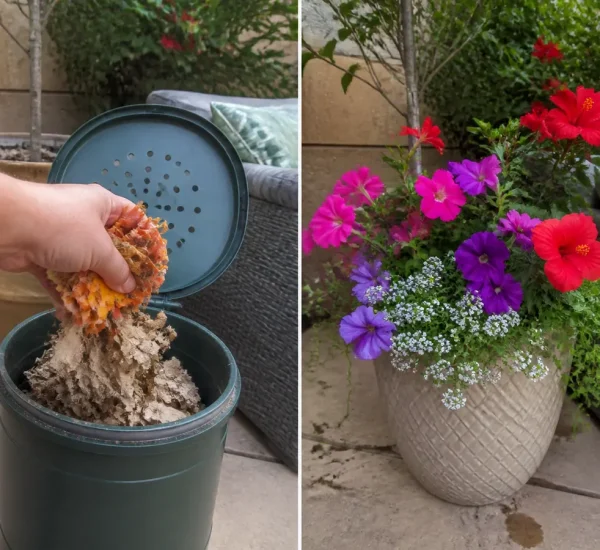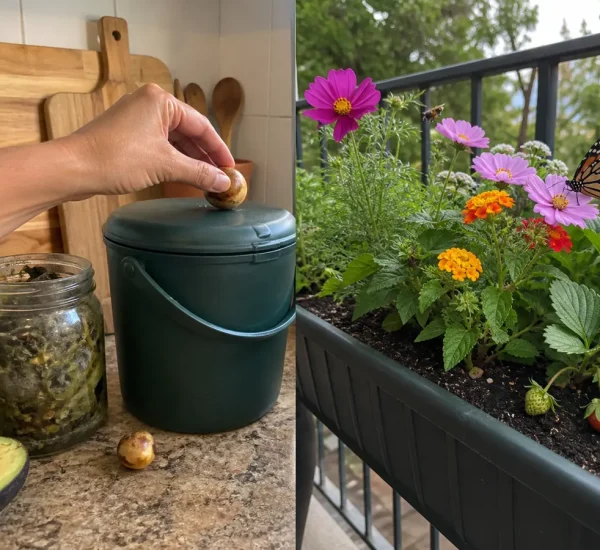
One covered compost tub can turn a week’s banana pieces into something far cleaner than peel water in every pot.
The article Banana Peels Are Too Useful to Throw Away suggests treating fruit skins as an instant fertilizer, flour, or universal food ingredient instead of handling each use with the right composting or food-safety process. The appealing claim is that fruit skins are garden gold that can feed plants immediately and replace several household products.
Keep the Compact Promise Honest: Turn the Gold Claim Into Finished Compost
Fruit skins contain plant nutrients, but those nutrients are locked in fresh organic tissue and are not a balanced instant fertilizer. Whole skins buried in pots can smell, attract pests, and create wet pockets. In a managed small bin, microbes break the skins down with other green and brown materials until the finish is stable enough to improve earth structure.
For one contained job, aim for clean dark compost with an earthy smell, no recognizable peel pieces, and a loose texture ready to enrich garden earth. Keep the covered compost bin clear enough to see the dark crumbly finished compost without another shortcut in the way.
Complete the Small-Space Sequence: Carry Banana Peels Through a Clean Compost Cycle
- Remove every produce sticker
- Keep plastic labels and ties out of the compost before cutting the peel into short pieces.
- Bury pieces inside the active center
- Mix banana pieces below the surface so flies and animals cannot reach a sweet exposed layer.
- Add dry browns at the same visit
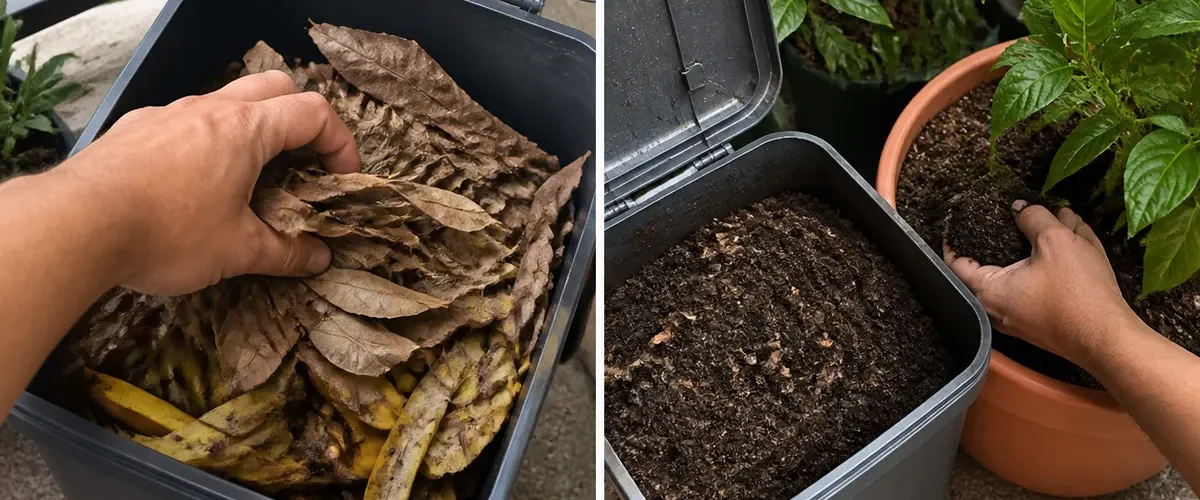
- Cover wet skins with dry leaves, shredded plain cardboard, or another suitable carbon material.
- Set moisture by touch
- The blended pile should feel like a wrung sponge, never dusty and never dripping.
- Turn when the center compacts
- Restore air and spread wet pockets before they become slimy or sour.
- Cure before using around plants
- Wait for an earthy, cool, crumbly finish, then mix a modest amount into earth or potting media as appropriate.
Clear and Read One Work Area: Read Air, Moisture, Carbon, and the Scrap Layer
Small-area review: look over the compost bin for air, moisture, odor, pests, and the balance between wet food pieces and dry leaves or torn cardboard. Confirm the skins are free from produce stickers. If a peel is intended for food, use a tested recipe and appropriate washing rather than treating garden advice as food-safety guidance.
Clear loose bottles and tools from the covered compost bin. Keep only the fruit-scrap compost batch item. Set out a clean dark crumbly finished compost measure when needed. Keep the fruit-scrap compost batch anchor visible.
Leave Four Problems Outside: Four Peel Shortcuts That Attract the Wrong Result
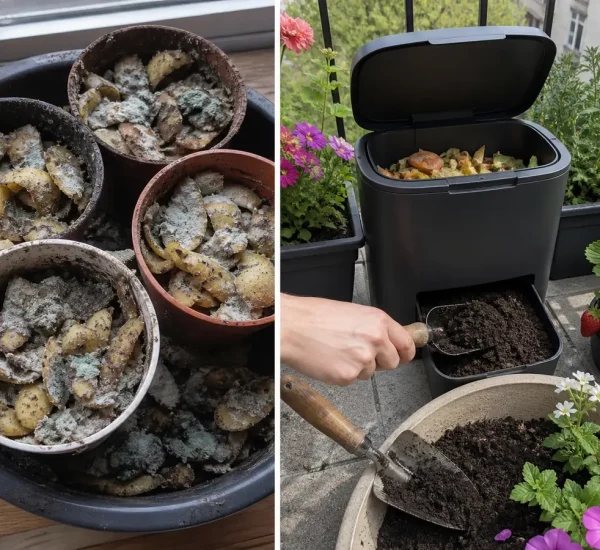
- Burying a whole peel in a pot. A concentrated food scrap can decay unevenly and invite pests close to roots.
- Making banana water for every plant. Unknown strength and low nutrient balance make the finish hard to control.
- Calling compost complete fertilizer. A mature amendment supports earth but may not meet a crop’s measured nutrient needs.
- Using moldy kitchen experiments as food. Culinary use needs a tested food recipe, clean handling, and separate safety decisions.
Let Every Item Earn Its Place: Why Microbial Breakdown Unlocks the Useful Finish
The compact dark crumbly finished compost setup works for a clear reason. Microbes use carbon for energy and nitrogen-rich materials to build cells. A loose blend keeps enough air in the pile for decomposition without a sour anaerobic odor. Finished compost improves water holding and earth structure, but its nutrient content varies, which is why a earth test still guides fertilizer decisions.
The compact routine works by chopping skins, mixing them into an active pile with enough dry carbon material, maintaining wrung-sponge moisture, turning for oxygen, curing the finished batch. And applying it as a earth amendment rather than a complete fertilizer. Every unused ingredient can leave the covered compost bin while that cause stays easy to see.
Plan One Simple Return Check: Wait for Cool Crumbs Instead of a Dark Liquid
Waiting plan: chopped skins soften quickly, but finished compost takes weeks or months depending on pile size, temperature, moisture, and turning. The batch is not ready because the yellow skin disappeared. Wait until the material is dark, crumbly, near ambient temperature, and smells earthy after curing.
Leave the covered compost bin simple while waiting. Review its dark crumbly finished compost once at the planned fruit-scrap compost batch time. Because that dark crumbly finished compost finish is not instant, resist another fruit-scrap compost batch shortcut.
Compact proof: Weigh or count one week’s fruit skins before adding them. Photograph the same compost section every two weeks and log temperature, odor, and visible pieces. Sift a cured sample. Success is a smaller waste stream and stable compost, not a temporary dark liquid or a peel still recognizable beside roots.
Close the Job Cleanly: Control Food Safety, Wildlife, Odor, and Mold
Compact cleanup: wear gloves when handling decomposing pieces, wash hands afterward, and keep the bin covered from children, pets, and wildlife. Do not compost produce stickers, meat, dairy, grease, or diseased material unless the chosen system is designed for them. Stop and rebalance a pile that smells rotten or attracts persistent pests.
Close the lid, sweep the balcony, and keep only one small container of fully cured compost near the pots.
Let Few People Realize How Many Uses Banana Peels Really Have Become the Fruit-Scrap Compost Batch Win That Stays
Begin by cutting fresh fruit skins into the active compost instead of burying them in a flower pot. Keep the covered compost bin uncluttered and aim for clean dark compost with an earthy smell, no recognizable peel pieces, and a loose texture ready to enrich garden earth. That practical dark crumbly finished compost finish leaves one fruit-scrap compost batch routine small enough to repeat.