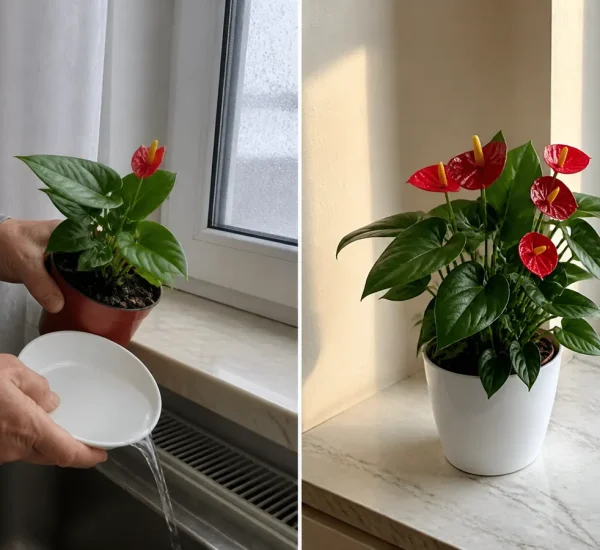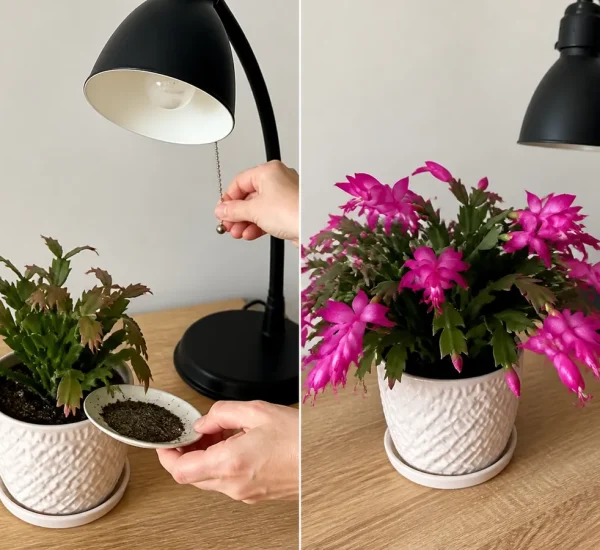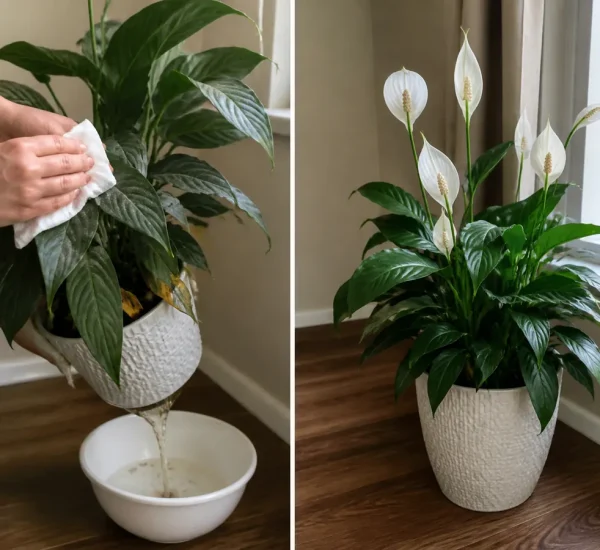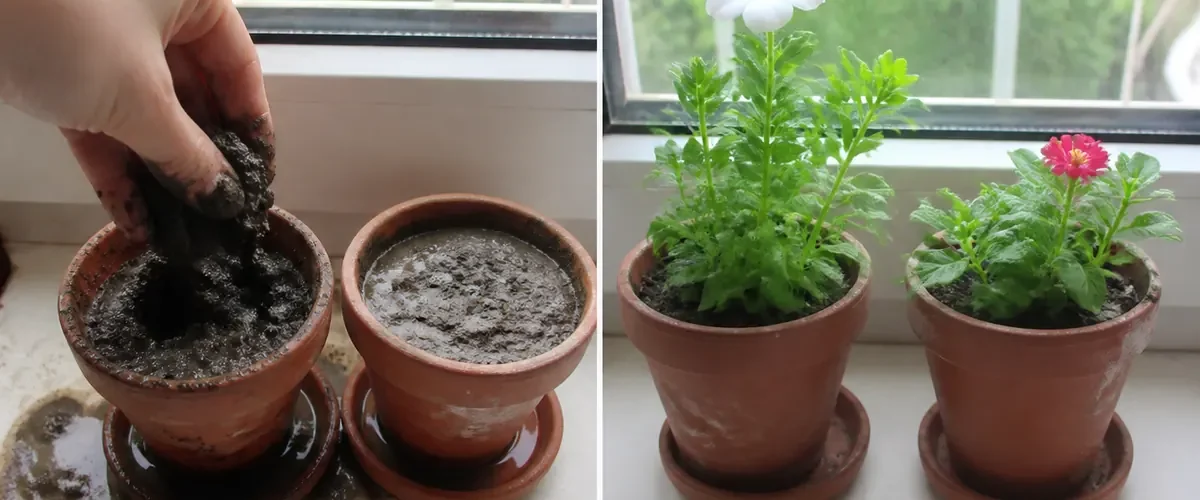
A tired violet and a thirsty geranium need a root check far more than they need the same pharmacy liquid.
The article One Spoonful Brings Geraniums, Violets, and Other Flowers Back suggests using diluted three-percent bubbling liquid as a routine root drench and leaf spray for geraniums, violets, orchids, roses, peace lilies, and begonias. The appealing claim is that one pharmacy spoonful oxygenates mix, kills disease, removes toxins, controls pests, and makes almost every flower bloom.
Keep the Compact Promise Honest: Keep the Flower Revival but Remove the Universal Dose
Bubbling liquid is an oxidizer, not a complete fertilizer or a universal houseplant cure. Concentration, surface, houseplant species, and organic matter change its effect, and routine use can injure rootlets, tops, and helpful microbes. Poor drainage does not become airy because a bubbling liquid is added. The safer revival begins by correcting the physical root problem and identifying any disease or pest.
For one contained job, aim for several formerly tired flower pots with firm new tops, clean root zones, and believable buds returning on their normal schedules. Keep the flowering houseplant shelf clear enough to see the firm new leaf and bud growth without another shortcut in the way.
Plan One Simple Return Check: Follow New Tissue Instead of a Two-Minute Reaction
Waiting plan: a dry living root ball can firm within hours after correct watering. Drainage and repotting changes take days to settle, while new rootlets, tops, and buds require weeks. Species bloom at different seasons. Old yellow tops and damaged tissue will not become new after one drench.
Leave the flowering houseplant shelf simple while waiting. Review its firm new leaf and bud growth once at the planned tired indoor flower group time. Because that firm new leaf and bud growth finish is not instant, resist another tired indoor flower group shortcut.
Compact proof: Label each pot and photograph its crown and drainage area weekly. Note pot weight, new tops, root tips, buds, pests, and odor. Use an untreated healthy reference of the same species when possible. The group succeeds when each houseplant improves under species-matched care without scorch, bleaching, or repeated chemical rescue.
Leave Four Problems Outside: Four Peroxide Assumptions That Delay the Bloom
- Using one dose on every flower. Leaf texture, root type, mix, and sensitivity differ widely across houseplants.
- Pouring peroxide into saturated mix. Bubbles do not restore the stable air spaces lost in collapsed mix.
- Spraying unidentified leaf spots. Oxidizer injury can hide symptoms while the real cause continues.
- Calling bubbling proof of oxygenation. A brief chemical reaction is not evidence of healthy long-term root respiration.
Clear and Read One Work Area: Separate Dry Roots, Wet Roots, Disease, and Poor Light
Small-area review: identify every houseplant before treating the group. Check pot weight, drainage holes, root color and firmness, compacted mix, crown rot, light, temperature, fertilizer salts, insects, and leaf spots. Separate one dry houseplant from one waterlogged houseplant. They can wilt in the same way but need opposite first moves.
Clear loose bottles and tools from the flowering houseplant shelf. Keep only the tired indoor flower group item. Set out a clean firm new leaf and bud growth measure when needed. Keep the tired indoor flower group anchor visible.
Let Every Item Earn Its Place: Why Lasting Root Air Cannot Come From Bubbles
The compact firm new leaf and bud growth setup works for a clear reason. Rootlets respire and need air spaces in moist mix. Oxidizer bubbles do not rebuild a compacted peat mass or repair dead rootlets. Fresh porous medium, drainage, and a reliable wet-dry rhythm restore oxygen over time. Light then supplies houseplant energy, while balanced minerals support the new tissue that can carry buds.
The compact routine works by sorting drought from saturation, opening blocked drainage, repotting collapsed mix when necessary, matching filtered light to each species, watering by root need, using complete labeled nutrition during active growth, and diagnosing pests or disease before treatment. Every unused ingredient can leave the flowering houseplant shelf while that cause stays easy to see.
Complete the Small-Space Sequence: Rebuild Each Flower Pot From the Drainage Hole Up
Opening move 1: Separate the plants by species
Group violets, geraniums, orchids, and other flowers by their real moisture and light needs.
Opening move 2: Read roots before the leaves
Slide out a troubled root ball when needed and compare firm living tissue with dry, hollow, or mushy rootlets.
- Restore physical drainage. Open holes, empty cachepots, and replace collapsed mix with a suitable porous medium.
- Correct water in opposite directions. Soak a dry living root ball evenly, but let saturated rootlets drain and recover before watering again.
- Match light without sudden scorch. Move each houseplant gradually toward the filtered exposure its species needs for active growth.
- Feed only after growth resumes. Use a complete labeled houseplant fertilizer conservatively and seek diagnosis for spreading disease or pests.
Close the Job Cleanly: Control Oxidizers, Chemical Mixing, Rot, and Runoff
Compact cleanup: keep bubbling liquid in its original labeled container away from children, pets, eyes, skin, fabrics, and other cleaners. Never mix it with vinegar, bleach, or household products. Wear gloves around rotten rootlets, sterilize cutters, and use only a houseplant treatment specifically supported by a product label or trusted local guidance.
Cap the oxidizer, dry the shelf, clear the saucers, and leave each small flower pot on its own care rhythm.
Let This Single Spoon Revives Geraniums, Violets, and More Before Your Eyes Become the Tired Indoor Flower Group Win That Stays
Begin by checking drainage and root condition before adding bubbling liquid. Keep the flowering houseplant shelf uncluttered and aim for several formerly tired flower pots with firm new tops, clean root zones, and believable buds returning on their normal schedules. That practical firm new leaf and bud growth finish tops one tired indoor flower group routine small enough to repeat.