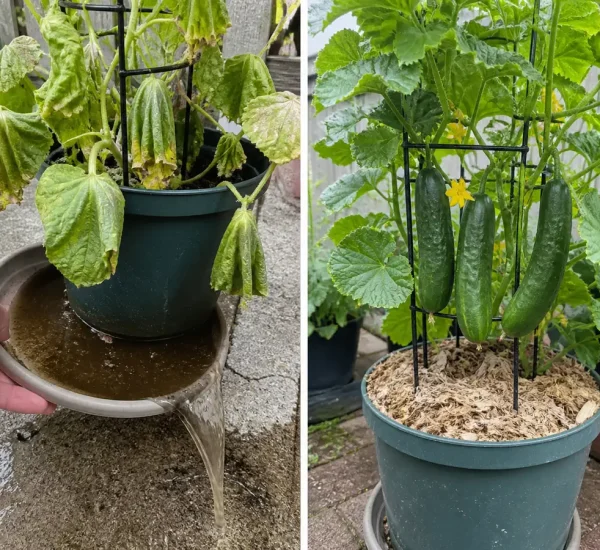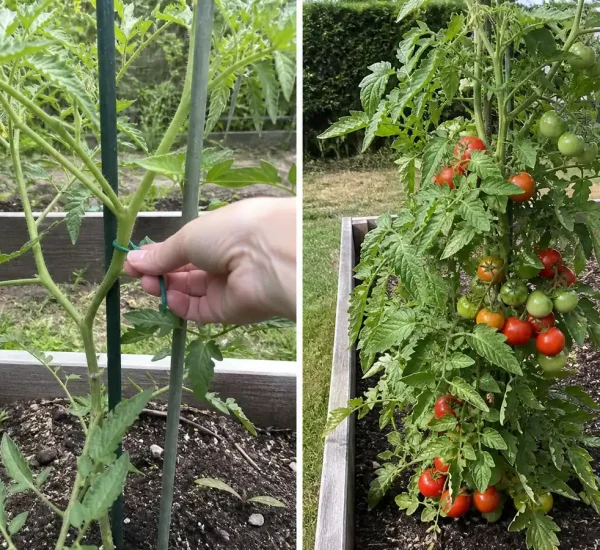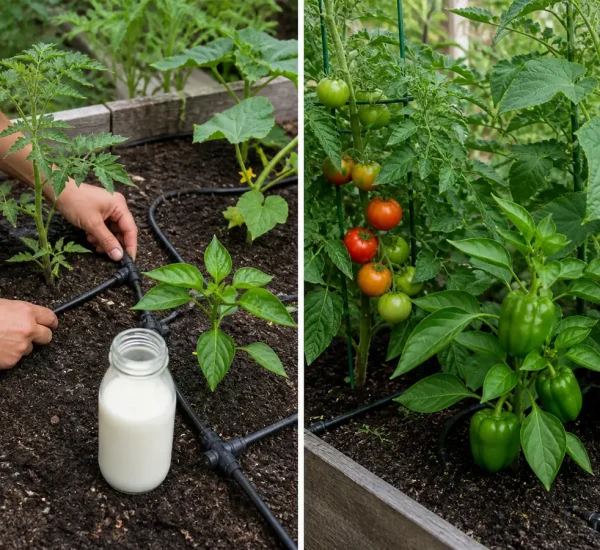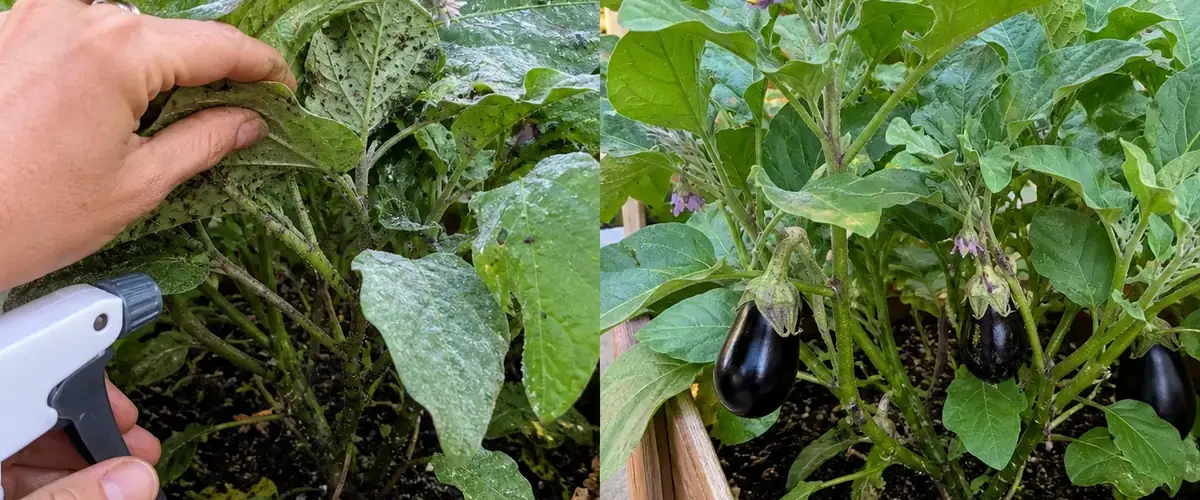
One compact vegetable bed can grow clean new leaves when airflow, irrigation, and the actual disease replace milk and baking soda. Nunca Plantes tomates, pimientos y pepinos sin esto: El secreto para plantas saludables y productivas presents milk, baking soda, and water poured at stems and sprayed on leaves every few weeks as both fertilizer and universal disease shield and claims that the mixture balances soil pH, feeds every crop, prevents rot and mildew, strengthens roots, and produces larger fruit forever.
The compact goal is to protect tomatoes peppers and cucumbers from disease. A contained disease reset can create tomato, pepper, and cucumber plants moving from spreading leaf spots or powdery patches to protected clean new leaves and continued believable fruit development.
Clear One Leaf-Disease Diagnosis Before-Spray Reset Work Zone
For the compact leaf-disease diagnosis before-spray reset check, separate natural leaf markings from powdery growth, then inspect lesion shape and color, upper and lower surfaces, crop species, leaf age, spread pattern, weather, humidity, airflow, spacing, watering route, soil drainage, fertilizer level, pests, stem lesions, root symptoms, and fruit damage.
While testing leaf-disease diagnosis before-spray reset, keep nearby plants, food, tools, and personal items outside the work area. One clear before photograph and one marked check point are enough to make the compact result honest.
The Six-Move Leaf-Disease Diagnosis Before-Spray Reset Routine
- Photograph six leaf clues. Record crop, leaf surface, lesion edge, color, texture, location, and spread before calling every white or brown mark mildew.
- Remove the universal mixture. Stop pouring milk and sodium bicarbonate around roots, and rinse visible residue only when doing so will not spread disease.
- Open and dry the canopy. Restore crop spacing, support stems, remove only the worst infected tissue, and improve airflow without stripping healthy leaves from fruit.
- Move water to the roots. Irrigate early at soil level, mulch against splash, and keep moisture even without leaving the root zone saturated.
- Match control to the diagnosis. Use resistant-crop guidance or a fungicide labeled for the exact crop and disease, following timing, rate, temperature, and harvest directions.
- Judge only clean new growth. Recheck the same plants weekly for new lesions, protected leaves, fruit development, and any treatment injury before repeating or changing control.
Wait for the Leaf-Disease Diagnosis Before-Spray Reset Without Adding Clutter
For this small leaf-disease diagnosis before-spray reset setup, removing badly infected tissue and correcting leaf wetness can reduce new exposure now, while clean leaves over the next one to three weeks show whether spread has slowed. Old lesions will not turn green again, and treatment timing depends on the confirmed disease and label.
During the leaf-disease diagnosis before-spray reset wait, leave only the essential setup in place. Do not add a second remedy because the final transformation needs more time than the first visible change.
Choose the Small-Space Leaf-Disease Diagnosis Before-Spray Reset Promise
Inside this compact setup, milk and baking soda are not a balanced fertilizer, sodium bicarbonate can accumulate or burn leaves, and one spray does not control every fungus, bacterium, or root problem. Resistant varieties, accurate diagnosis, airflow, base watering, sanitation, and a crop-and-disease-labeled product protect clean new growth more reliably.
For one contained setup, the result to chase is tomato, pepper, and cucumber plants moving from spreading leaf spots or powdery patches to protected clean new leaves and continued believable fruit development. Keep every move tied to slowing a correctly identified vegetable disease while preserving clean foliage, fruit, soil structure, beneficial organisms, and harvest safety, so the method remains easy to stop, clean, and repeat.
Make the Leaf-Disease Diagnosis Before-Spray Reset Fit the Same Footprint
Start with photograph six leaf clues, remove the universal mixture, open and dry the canopy; they address the cause before another bottle, pot, or tool is added. Return unused materials to storage as soon as the first correction is complete.
Finish with move water to the roots, match control to the diagnosis, judge only clean new growth. That compact chain supports slowing a correctly identified vegetable disease while preserving clean foliage, fruit, soil structure, beneficial organisms, and harvest safety and leaves the small area with tomato, pepper, and cucumber plants moving from spreading leaf spots or powdery patches to protected clean new leaves and continued believable fruit development, not a second cleanup project.
Close the Leaf-Disease Diagnosis Before-Spray Reset Routine Cleanly
For a safe compact leaf-disease diagnosis before-spray reset routine, treat plant-care products as pesticides when used to control disease. Follow labels and harvest intervals, avoid mixing products, protect skin, eyes, pollinators, water, and neighboring plants, and keep milk mixtures, bicarbonate, sprayers, children, and pets separated.
After leaf-disease diagnosis before-spray reset, remove waste responsibly and clean the tools, and return the area to normal use. The method has not worked if it leaves a hidden hazard behind.
Keep These Four Leaf-Disease Diagnosis Before-Spray Reset Problems Out
- calling every white patch mildew. For leaf-disease diagnosis before-spray reset, it adds clutter without solving the strongest limit.
- pouring sodium into all soils. For leaf-disease diagnosis before-spray reset, it can spread residue, moisture, pests, or stress beyond the test area.
- mixing several sprays. For leaf-disease diagnosis before-spray reset, it turns one contained routine into repeated cleanup.
- expecting damaged leaves to heal. For leaf-disease diagnosis before-spray reset, it sacrifices a stable result for a fast-looking change.
One Soil Secret Produces Strong, Productive Tomato, Pepper, and Cucumber Plants: Keep the Compact Win
Keep the routine only when it leaves tomato, pepper, and cucumber plants moving from spreading leaf spots or powdery patches to protected clean new leaves and continued believable fruit development inside the same clean footprint. Start at photograph six leaf clues, remove everything that did not help, and repeat the smallest successful version when the next normal-care cycle calls for it.