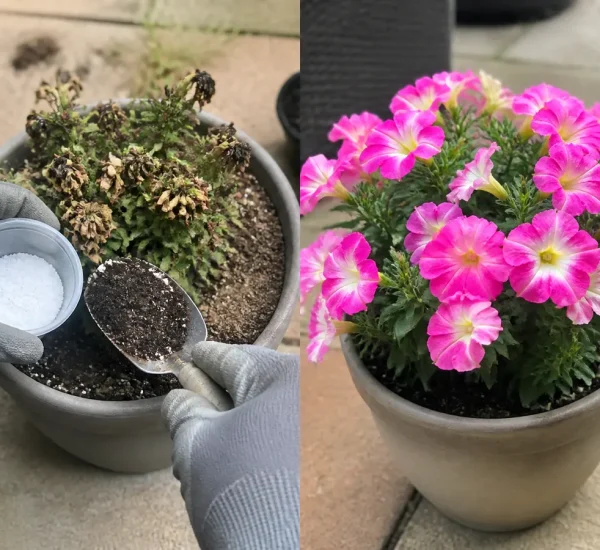
One yellow flower pot and one soil report can keep a hopeful spoon from becoming another root problem.
The article One Teaspoon of Homemade Fertilizer Makes Flowers Bloom for Weeks suggests giving Magnesium salt to nearly every flower, seedling, lawn, tomato, and fruit tree as a universal growth and pest treatment. The appealing claim is that one teaspoon of magnesium sulfate quickly greens plants, strengthens roots, repels pests, improves flavor, and guarantees abundant flowers.
Keep the Compact Promise Honest: Keep the Green Promise for Plants That Truly Lack Magnesium
Magnesium salt supplies magnesium and sulfur, not complete nutrition or pest control. It can improve new growth only when a credible soil or growing-media test and specimen symptoms support a magnesium shortage. Unneeded applications add soluble salts, may disturb nutrient balance, and can injure roots or foliage.
For one contained job, aim for a confirmed deficient flowering specimen producing greener healthy new foliage and returning to its normal rich bloom cycle after one precise correction. Keep the small flower trial clear enough to see the marked newest leaf without another shortcut in the way.
Plan One Simple Return Check: Wait Several Weeks Before Scoring the Bloom Cycle
Waiting plan: the report comes before treatment. A correct application cannot repair all old yellow tissue, so mark the newest leaf and watch later growth over several weeks. Flowering follows the species and season. If the untreated comparison improves equally, magnesium was probably not the limiting factor.
Leave the small flower trial simple while waiting. Review its marked newest leaf once at the planned suspected magnesium-deficient flower time. Because that marked newest leaf finish is not instant, resist another suspected magnesium-deficient flower shortcut.
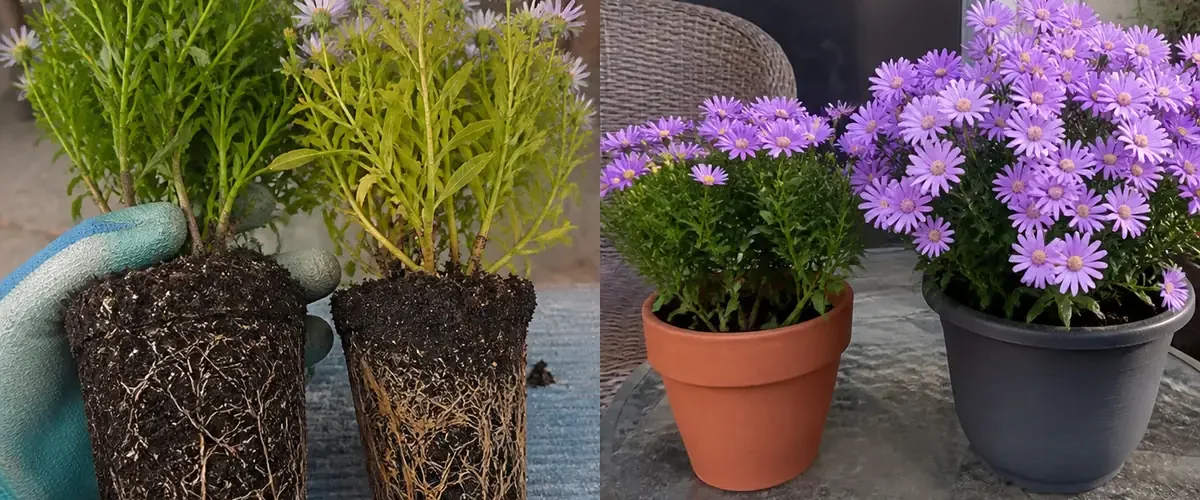
Compact proof: Use two comparable plants or divide a uniform bed only when the testing lab approves treatment. Mark the same-age leaf on each side, note the exact dose and date, and photograph weekly. Compare new leaf color, stem length, buds, and injury. Do not judge by the temporary shine of wet foliage.
Complete the Small-Space Sequence: Run One Precise Two-Pot Magnesium Comparison
- Record the symptom pattern
- Separate old from new foliage in photographs and mark where yellowing begins before adding any product.
- Test the untreated root zone
- Follow testing lab sampling directions and request pH, magnesium, and relevant nutrients for the crop.
- Choose a fair comparison
- Keep one similar specimen or area untreated when practical and ethical, with the same light, water, and base care.
- Follow the written recommendation
- Use the named magnesium source, route, rate, and timing. Do not substitute a viral spoonful.
- Change only that variable
- Hold fertilizer, watering, pruning, and location steady enough for the new-leaf comparison to mean something.
- Stop or repeat from evidence
- End for scorch or decline, and apply again only when the recommendation and later observations support it.
Leave Four Problems Outside: Four Epsom-Salt Claims the Trial Must Reject
Mistake 1: Treating every yellow leaf as magnesium
Water stress, roots, pH, insects, and other nutrients create similar symptoms.
Mistake 2: Dropping crystals into planting holes
Concentrated soluble salt can injure seedlings and fine roots.
Mistake 3: Spraying for pests
Magnesium sulfate is not a reliable substitute for identification and labeled pest control.
Mistake 4: Changing five things at once
The specimen may improve, but the Epsom-salt claim remains unproven.
Clear and Read One Work Area: Separate a Deficiency Pattern From Its Look-Alikes
Small-area review: photograph older foliage and the growing tip under neutral light. Look for interveinal yellowing that begins on older tissue, but also look over roots, drainage, moisture, pests, pH, fertilizer history, calcium and potassium, and recent weather. Submit an untreated root-zone sample and request magnesium when the standard panel does not include it.
Clear loose bottles and tools from the small flower trial. Keep only the suspected magnesium-deficient flower item. Set out a clean marked newest leaf measure when needed. Keep the suspected magnesium-deficient flower anchor visible.
Let Every Item Earn Its Place: Why New Leaves Reveal the Real Nutrient Response
The compact marked newest leaf setup works for a clear reason. Magnesium is part of chlorophyll, and plants can move it from older foliage toward young growth when supply is low. That creates a recognizable pattern, but root damage, pH, other nutrients, water, and disease can look similar. A test narrows the cause, while a small comparison shows whether the recommended correction changes new growth.
The compact routine works by documenting symptoms, testing untreated material, comparing two similar plants or zones, applying only the testing lab-recommended magnesium source and rate, changing no other major variable, and judging the response in new tissue. Every unused ingredient can leave the small flower trial while that cause stays easy to see.
Close the Job Cleanly: Measure Soluble Salt Without Harming People or Water
Compact cleanup: follow the testing lab recommendation and product label. Wear gloves and eye protection while measuring, keep the product dry and labeled, and prevent spills into drains or surface water. For edible plants, use only products and rates allowed locally and observe every harvest instruction.
Seal the salt, wash the measure, store the report, and leave the two pots under the same light.
Let Give Flowers One Teaspoon and Enjoy Weeks of Gorgeous Color Become the Suspected Magnesium-Deficient Flower Win That Stays
Begin by testing the root zone and photographing old and new foliage separately. Keep the small flower trial uncluttered and aim for a confirmed deficient flowering specimen producing greener healthy new foliage and returning to its normal rich bloom cycle after one precise correction. That practical marked newest leaf finish foliage one suspected magnesium-deficient flower routine small enough to repeat.